
Syphilis Screening Test & Treatment Guide Fort Worth ER
Syphilis is a treatable bacterial infection that requires prompt diagnosis and care. If you suspect exposure or need confidential syphilis screening test services, ER Of Fort Worth provides 24/7 rapid testing and medical guidance without judgment.

In This Article
- Understanding Syphilis & Why Screening Matters
- Types of Syphilis Screening Tests Explained
- Primary Syphilis: Early Signs & When to Seek Care
- Secondary Syphilis Symptoms & Progression
- Rapid Plasma Reagin (RPR) Testing at ER Of Fort Worth
- Penicillin Treatment & Recovery Timeline
- Partner Notification & Concurrent Testing
- When to Visit an ER for Syphilis Evaluation
- Frequently Asked Questions
⚡ Key Takeaways
- Syphilis screening tests include rapid plasma reagin (RPR) and treponemal-specific tests, both available at ER Of Fort Worth 24/7.
- Early-stage primary syphilis and secondary syphilis are highly treatable with penicillin-based antibiotics when diagnosed promptly.
- Sexual partners of confirmed syphilis cases must be tested and treated to prevent reinfection and transmission.
- Untreated syphilis progresses through multiple stages and can cause serious organ damage, making early screening critical.
- Same-day or rapid testing allows for immediate diagnosis and treatment initiation without delayed care.
Understanding Syphilis & Why Screening Matters
Syphilis is a sexually transmitted bacterial infection caused by the spirochete Treponema pallidum. Once contracted, the disease progresses through distinct stages—each with characteristic symptoms—if left untreated. What makes syphilis particularly important to address is that early diagnosis and treatment with antibiotics are highly effective, while delayed care allows the infection to advance to more serious stages affecting the heart, brain, and other vital organs.
For residents of Fort Worth, Keller, Alliance, Saginaw, and surrounding areas in North Texas, understanding syphilis screening is essential for sexual health. Confidential, judgment-free testing is a fundamental part of preventive care. Whether you have symptoms, suspect exposure, or are seeking routine screening as part of comprehensive sexual health maintenance, knowing when and where to obtain a syphilis screening test can prevent serious complications and protect your partner's health.
Many people with early-stage infection have no symptoms at all, which is why screening during routine medical visits—and especially after potential exposure—is critical. The infection spreads through direct contact with syphilis sores (chancres), typically during sexual contact. A single exposure carries significant transmission risk, making partner notification and concurrent testing essential components of effective treatment.
Types of Syphilis Screening Tests Explained
Two main categories of syphilis screening tests exist: nontreponemal tests and treponemal tests. Both are available at ER Of Fort Worth and play complementary roles in diagnosis and monitoring.
Nontreponemal tests such as the rapid plasma reagin (RPR) test detect antibodies your immune system produces in response to syphilis infection. RPR testing is fast, inexpensive, and ideal for initial screening. These tests can become negative over time as your immune response changes, or after successful treatment—making them useful for monitoring treatment effectiveness. However, they can occasionally produce false positives in other conditions.
Treponemal tests directly detect antibodies specific to the syphilis bacterium itself. Examples include the fluorescent treponemal antibody absorption (FTA-ABS) test and the treponemal pallidum particle agglutination (TP-PA) test. These tests remain positive for life, even after successful treatment, so they confirm infection rather than measure treatment response. They are typically used to verify a positive RPR result.
In clinical practice, most ER facilities use a two-step approach: perform an RPR first, then confirm with a treponemal test if RPR is positive. This strategy minimizes false positives while ensuring accurate diagnosis. At ER Of Fort Worth, our medical team can discuss which test approach is right for your situation and provide rapid results to guide immediate care decisions.
Primary Syphilis: Early Signs & When to Seek Care
Primary syphilis is the earliest stage of infection and is defined by the appearance of a chancre—a firm, round, painless ulcer at the site where the bacterium entered the body. The chancre typically appears 3 to 90 days after exposure, though the average is around 3 weeks. Many people mistake the chancre for a pimple, ingrown hair, or minor wound because it is usually painless and may have a clean base with a slightly raised border.
The chancre can appear on the genitals, mouth, lips, hands, or any area that made contact with an infected partner. Even without treatment, the chancre will heal on its own within 3 to 6 weeks—but this does not mean the infection has resolved. The bacteria continue to spread throughout the body, progressing to secondary syphilis if untreated. This is why early detection through syphilis screening test protocols is so important: catching infection at the primary stage allows for rapid treatment before systemic involvement occurs.
If you discover a suspicious ulcer or painless sore in the genital area, mouth, or other location after recent sexual contact, seek evaluation at ER Of Fort Worth or a local urgent care facility. Early STD testing during this window is straightforward and can confirm or rule out syphilis quickly. Additionally, if you learn that a sexual partner has syphilis, you should be tested immediately regardless of whether you have symptoms—primary syphilis may be present without obvious signs.
Secondary Syphilis Symptoms & Progression
Secondary syphilis develops weeks to months after the primary chancre appears (or sometimes while the chancre is still present). At this stage, the infection has spread throughout the bloodstream and affects multiple body systems. Symptoms of secondary syphilis are varied and can mimic many other illnesses, which sometimes delays diagnosis.
Common signs of secondary syphilis include:
- Widespread rash covering the trunk and extremities, often including the palms of the hands and soles of the feet (a distinctive finding)
- Fever, fatigue, and general malaise
- Swollen lymph nodes in the neck, armpit, and groin
- Sore throat and muscle aches
- Patchy hair loss on the scalp or body
- Mucous patches in the mouth or genital area (highly contagious)
- Condyloma lata—flat, wart-like lesions in warm, moist areas
Because these symptoms overlap with viral infections, allergic reactions, and other conditions, secondary syphilis is sometimes misdiagnosed or missed entirely. This is why any rash accompanied by fever and lymph node swelling warrants syphilis screening, especially if there is a history of recent unprotected sexual contact. At ER Of Fort Worth, clinicians are trained to maintain high suspicion for syphilis and can order rapid plasma reagin testing to clarify the diagnosis.
Secondary syphilis is still highly responsive to antibiotic treatment. Without care, the infection enters a latent phase—during which symptoms disappear but the organism remains in the body—and eventually progresses to tertiary syphilis, which can cause irreversible damage to the heart, brain, and other organs.

Rapid Plasma Reagin (RPR) Testing at ER Of Fort Worth
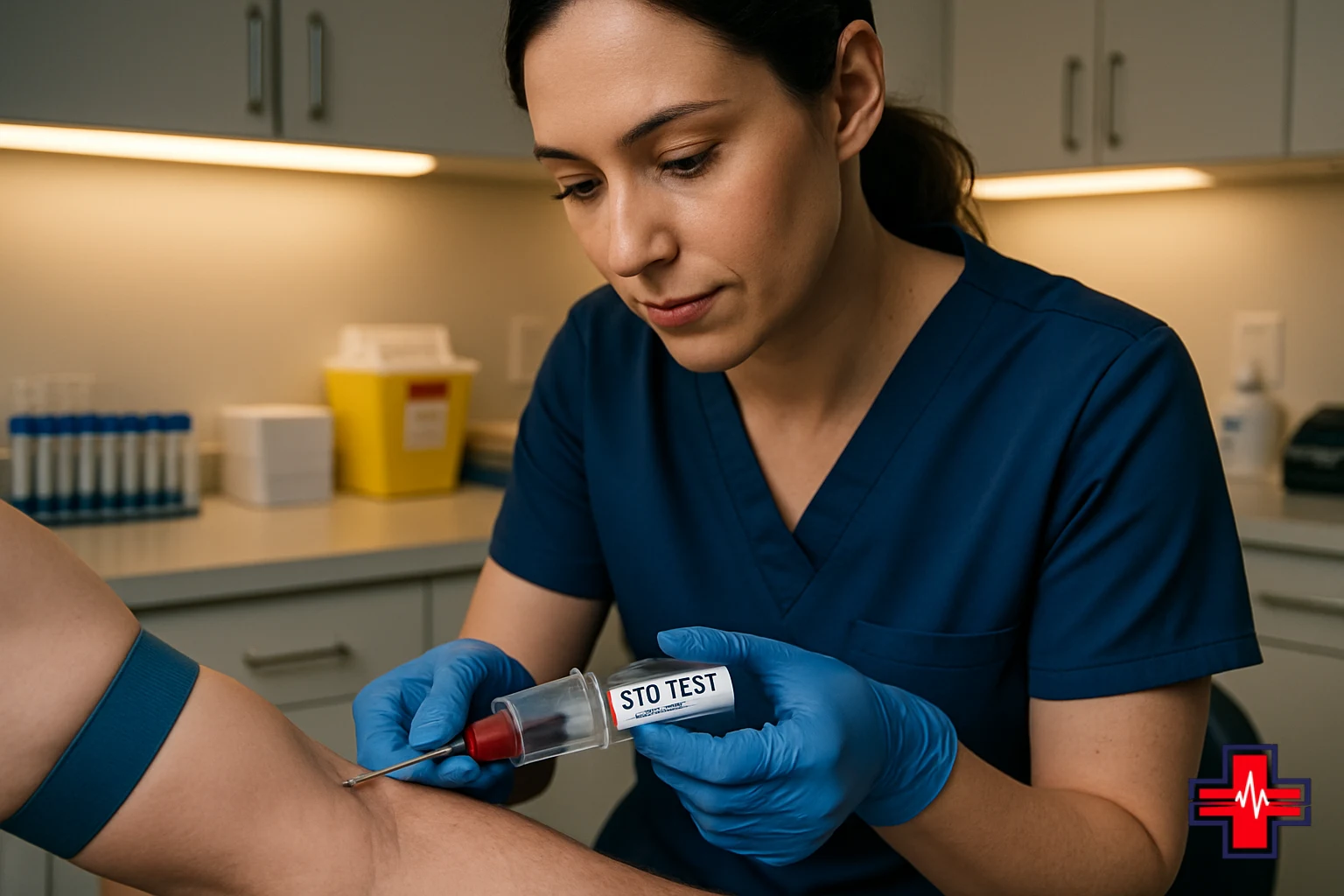
The rapid plasma reagin (RPR) test is one of the most widely used syphilis screening tests and offers several advantages for urgent care settings. RPR testing requires only a small blood sample—typically drawn from a finger stick or arm vein—and can produce results in minutes to hours depending on laboratory capacity. At ER Of Fort Worth, we perform RPR testing with the goal of providing same-day or rapid results so treatment decisions can be made promptly.
During RPR testing, the blood sample is mixed with cardiolipin antigen. If antibodies to syphilis are present, visible particles will clump together (agglutinate) in a characteristic pattern. The test is quantitative, meaning the result includes a titer (dilution level) that reflects the antibody concentration in your blood. High titers often indicate recent or active infection, while lower titers may suggest older, treated infection.
One important aspect of RPR testing is that results can fluctuate. After successful treatment with antibiotics—typically penicillin—the RPR titer gradually decreases and may eventually become negative. This makes RPR useful for monitoring treatment response. However, a negative RPR does not rule out syphilis if the infection is very recent (within the first 1 to 2 weeks, before antibodies develop) or if the patient is in late-stage disease. This is why treponemal confirmatory testing is performed on all positive RPR results.
At ER Of Fort Worth, if you test positive on RPR, our medical team will order confirmatory treponemal testing and discuss penicillin-based treatment options without delay. We serve Fort Worth, Keller, Alliance, North Richland Hills, Haslet, Haltom City, and other nearby communities with confidential, rapid testing 24/7.
Penicillin Treatment & Recovery Timeline
Penicillin is the gold-standard, first-line treatment for all stages of syphilis and has been the mainstay of therapy for over 70 years. The specific penicillin formulation, dose, and duration depend on the stage of disease and individual factors such as pregnancy status, allergies, and renal function.
For primary and secondary syphilis: Benzathine penicillin G, typically given as a single intramuscular injection, is the standard treatment. This single-dose approach ensures compliance and provides effective bacterial killing. For patients who are pregnant, penicillin is the only medication known to reliably treat maternal infection and prevent congenital syphilis in the fetus.
For early latent syphilis (infection diagnosed within the first year): Benzathine penicillin G is administered as a single dose.
For late latent syphilis or tertiary syphilis: Treatment requires three weekly intramuscular injections of benzathine penicillin G to achieve adequate tissue penetration and eradicate the organism.
For penicillin-allergic patients: Doxycycline, ceftriaxone, or azithromycin may be used, though these alternatives have variable efficacy and are generally considered less reliable than penicillin. Pregnant patients who are allergic to penicillin may require desensitization protocols to safely receive penicillin.
After treatment initiation, follow-up blood tests are performed at 6 and 12 months to confirm declining RPR titers and microbiological cure. Most patients tolerate penicillin injections well, though mild soreness at the injection site is common. Approximately 10% of patients experience a Jarisch-Herxheimer reaction—a brief fever, chills, and achiness occurring within hours of the first penicillin dose—that resolves within 24 hours and does not require discontinuation of therapy.
Sexual partners must abstain from sexual contact until they have been tested and, if positive, have completed treatment. Many public health departments assist with partner notification and testing coordination.
Partner Notification & Concurrent Testing
When syphilis is diagnosed, identifying and treating sexual partners is essential to prevent reinfection of the index patient and to halt ongoing transmission in the community. This process is called partner notification or partner tracing, and it is a cornerstone of syphilis control efforts.
If you have been diagnosed with syphilis, your healthcare provider at ER Of Fort Worth will discuss partner notification—either through direct provider notification (with your permission) or through local health department assistance. You are encouraged to inform recent sexual partners (typically within the past 3 months for primary and secondary syphilis, and up to 1 year for early latent syphilis) so they can seek evaluation and treatment if necessary.
Partners should be tested regardless of whether they have symptoms, as primary syphilis may not have obvious signs. If a partner is tested and found to be negative but the exposure is very recent (within 2 weeks), they may be offered presumptive treatment to prevent infection from developing. If found to be positive, they will require the same antibiotic regimen as the index patient.
Public health departments in Fort Worth, Keller, Saginaw, and throughout Tarrant County provide free or low-cost syphilis testing and treatment services. Many health departments will conduct confidential partner notification on behalf of patients who prefer not to inform partners directly. This service protects privacy while ensuring that infected individuals receive care and transmission is interrupted.
When to Visit an ER for Syphilis Evaluation
If you are experiencing a life-threatening emergency, call 911 or go to the nearest emergency room immediately. While uncomplicated syphilis in early stages does not typically constitute a medical emergency, certain scenarios warrant urgent ER evaluation.
Visit ER Of Fort Worth if you have:
- Suspected primary syphilis (painful or painless ulcer) with systemic symptoms such as fever or lymphadenopathy and need rapid testing
- Secondary syphilis rash accompanied by high fever, shortness of breath, or neurological symptoms such as severe headache or confusion
- Symptoms concerning for neurosyphilis (meningitis presentation with fever, stiff neck, and headache) or cardiovascular syphilis (aortic insufficiency with chest pain or palpitations)
- Pregnancy with known or suspected syphilis exposure requiring urgent evaluation and treatment initiation to prevent congenital infection
- Allergic reaction to prescribed syphilis antibiotics
- Need for same-day or rapid syphilis screening test and treatment initiation after suspected exposure or partner notification
ER Of Fort Worth operates 24/7 at Heritage Trace Parkway in Fort Worth and serves patients from Keller, Alliance, Saginaw, Haslet, Watauga, Roanoke, North Richland Hills, Haltom City, Bedford, Southlake, Grapevine, and Flower Mound. We provide rapid blood testing, physician evaluation, and immediate treatment planning without requiring an appointment. If your situation is less urgent, you can also schedule evaluation at your primary care physician's office or a public health department STD clinic during business hours.
Confidentiality is paramount. All syphilis testing and treatment at ER Of Fort Worth is handled with full privacy protections, and clinical staff approach all patients with respect and without judgment. Early diagnosis and treatment dramatically improve outcomes and prevent serious complications, so seeking timely care is always the right choice.
Frequently Asked Questions
Can syphilis be cured completely?
Yes, syphilis is curable with antibiotics, especially if diagnosed and treated in the primary or secondary stages. Penicillin is the first-line treatment and is highly effective. However, any organ damage that occurred before treatment cannot be reversed, which is why early diagnosis is critical.
How long does it take to get syphilis screening test results?
Rapid plasma reagin (RPR) testing can produce results in minutes to hours at ER Of Fort Worth. Confirmatory treponemal testing may take an additional few hours to a day depending on laboratory processing. Same-day or next-day results are typical in most cases.
Is syphilis screening painful?
No. Syphilis screening requires only a small blood sample drawn from your finger or arm, similar to routine blood work. The procedure causes minimal discomfort and takes just a few seconds.
Can I get syphilis more than once?
Yes. Successfully treating syphilis with antibiotics does not provide immunity. You can be reinfected if you have sexual contact with another infected person. Practicing safe sex and partner testing are essential for prevention.
What if I'm allergic to penicillin?
Alternative antibiotics such as doxycycline or ceftriaxone can be used for penicillin-allergic patients, though they may be less effective in certain stages. Pregnant patients who are allergic to penicillin may need desensitization to receive penicillin safely. Discuss your allergy history with your ER physician at ER Of Fort Worth.
Do I need to tell my partner if I have syphilis?
Yes. Notifying sexual partners is critical so they can be tested and treated if necessary. Your healthcare provider or local health department can help with confidential partner notification if you prefer not to contact partners directly.