
Pediatric Burn Treatment in Fort Worth: Child-Centered
Burns are among the most common injuries affecting children, and immediate specialized care makes a critical difference in recovery. ER Of Fort Worth provides 24/7 pediatric burn treatment designed around the unique medical and emotional needs of children.
In This Article
- Why Pediatric Burn Treatment Differs from Adult Care
- Recognizing Burn Severity in Children
- First-Aid Do's and Don'ts Before Emergency Care
- Emergency Assessment and Pediatric Burn Protocols
- Age-Appropriate Pain Management and Family-Centered Care
- When to Seek Immediate Emergency Care for Pediatric Burns
- Recovery, Scarring, and Follow-Up Care
- Frequently Asked Questions
⚡ Key Takeaways
- Pediatric burns require different assessment and treatment protocols than adult burns because children have thinner skin and metabolic differences that affect fluid loss and infection risk.
- Cool running water for 10–20 minutes is the most effective first-aid step for minor burns; never use ice, butter, or oils.
- Seek immediate emergency care for any burn covering more than 1% of the child's body surface, burns on the face, hands, feet, joints, or genitals, or any burn that appears deep or doesn't blanch when pressed.
- Age-appropriate analgesia, family-centered care, and psychological support are essential components of pediatric burn treatment that reduce trauma and improve healing outcomes.
- ER Of Fort Worth's pediatric emergency team treats burns 24/7 and coordinates with specialists for complex cases requiring transfer or ongoing inpatient care.
Why Pediatric Burn Treatment Differs from Adult Care
Children's bodies respond to burn injury very differently than adults. A child's skin is significantly thinner and more delicate, meaning that identical heat exposure often causes deeper injury in a young patient. Additionally, children have higher metabolic rates, which accelerates fluid loss through burned tissue—a critical factor that emergency medicine teams must account for when calculating fluid resuscitation.
Developmental stage also influences pediatric burn care. Infants and toddlers cannot communicate pain clearly and are at highest risk for accidental burns from hot tap water, spilled liquids, and contact with hot surfaces. Preschoolers may not understand cause-and-effect or danger, making them vulnerable to exploration-related burns. School-age children and adolescents have better comprehension but may engage in risk-taking behavior. Each age group requires different communication styles, pain assessment approaches, and family involvement strategies during emergency treatment.
At ER Of Fort Worth, our pediatric emergency team understands these developmental differences and structures burn care around the child's age, cognitive ability, and emotional state. Our approach integrates evidence-based pediatric protocols with family-centered care—keeping parents informed, involved, and supported throughout the treatment process.
Recognizing Burn Severity in Children
Not all burns are created equal. Understanding burn depth and extent helps you decide whether home care, urgent care, or emergency room evaluation is necessary. Burns are clinically classified into three categories based on depth: superficial (first-degree), partial-thickness (second-degree), and full-thickness (third-degree and beyond).
Superficial burns (first-degree) affect only the outermost layer of skin. The skin is red, may be slightly swollen, and is painful to touch but does not blister. A typical sunburn is a first-degree burn. These burns are often managed at home with cool water, gentle moisturizers, and age-appropriate pain relief.
Partial-thickness burns (second-degree) extend into the deeper skin layer (dermis) and present with blistering, redness, swelling, and significant pain. The skin may appear mottled or striped. These burns require professional evaluation, especially in children, because of the risk of infection and scarring. A partial-thickness burn larger than a quarter or located on sensitive areas should be seen in the emergency room.
Full-thickness burns (third-degree and deeper) destroy all layers of skin and may involve underlying muscle or bone. The burned area may appear white, charred, leathery, or translucent. Surprisingly, full-thickness burns may be less painful initially because nerve endings are destroyed, but any full-thickness burn is a life-threatening emergency requiring immediate 911 response or transport to a burn center.
The extent of the burn is measured as a percentage of total body surface area (BSA). For children, clinicians use the "Rule of Nines," which divides the body into sections of 9% (or multiples of 9) to quickly estimate total burned area. A burn covering more than 1% of the child's body surface area warrants professional evaluation at ER Of Fort Worth or a hospital emergency room.
First-Aid Do's and Don'ts Before Emergency Care
The first moments after a burn injury profoundly affect healing and pain. Correct first-aid can significantly reduce tissue damage and make professional treatment easier.
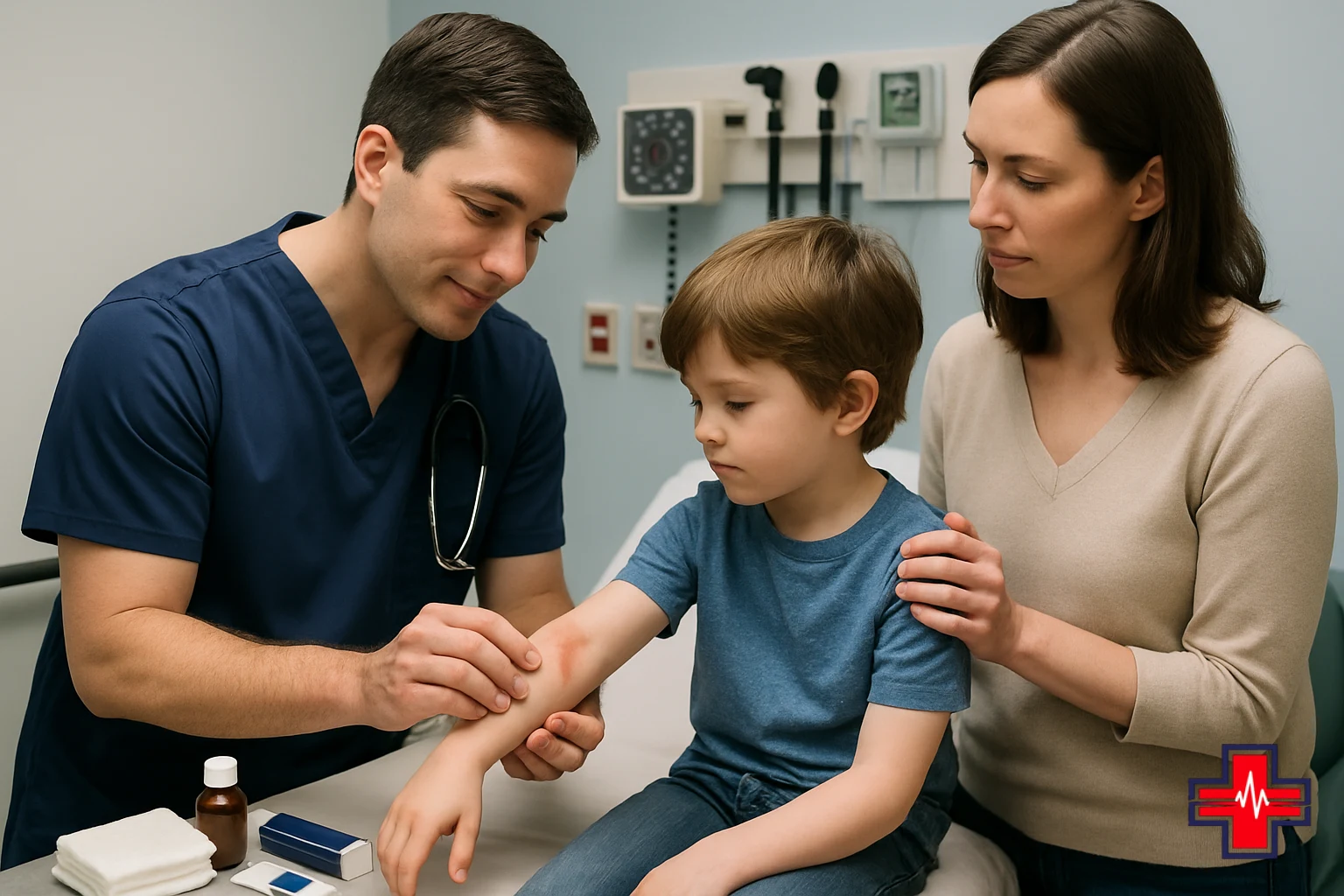
DO remove the child from the source of heat immediately and safely. If clothing is on fire, use the "stop, drop, and roll" technique or wrap the child in a blanket to smother flames. Once the heat source is gone, remove any clothing that is not stuck to the skin, as residual heat will continue to damage tissue.
DO cool the burn with cool (not ice-cold) running water for 10–20 minutes. This is the single most effective first-aid measure. Cool water stops the burn from progressing deeper by removing residual heat. If running water is unavailable, cool wet compresses work, though they cool more slowly. Cooling for the appropriate duration is more important than using ice, which can cause additional cold injury.
DO NOT apply ice directly to the burn. Ice can cause frostbite-like injury to already-damaged tissue and causes painful vasoconstriction that impairs healing.
DO NOT use butter, oils, ointments, or home remedies such as toothpaste or egg white. These trap heat and increase infection risk. They also make it harder for medical staff to assess the injury.
DO NOT pop blisters. Blisters provide natural protection against infection. Medical teams may open blisters in a sterile environment if necessary.
DO cover the burn loosely with a clean, dry cloth after cooling to prevent contamination and provide comfort. If the child is being transported to the emergency room, this covering should remain in place so that medical staff can assess the injury without unnecessary disturbance.
DO give age-appropriate oral pain relief if the child is conscious and able to swallow. Over-the-counter acetaminophen or ibuprofen, dosed by weight, can reduce discomfort during transport. Do not delay transfer to emergency care to administer medication.
Emergency Assessment and Pediatric Burn Protocols
When a child arrives at ER Of Fort Worth with a burn injury, our pediatric emergency team follows a systematic, child-centered assessment protocol. The first priority is always stabilizing the airway, breathing, and circulation (the ABCs). If the burn involved smoke inhalation or occurred in an enclosed space, we assess for airway injury and administer oxygen if needed.
Our clinicians then perform a detailed burn assessment, measuring the exact extent and depth of the injury. This assessment guides decisions about fluid resuscitation, wound care, infection prevention, and whether the child requires specialist care or transfer to a dedicated pediatric burn center.
For burns involving more than 10–15% of body surface area in children, or any full-thickness burn, IV fluid resuscitation is initiated using pediatric-specific formulas that account for the child's weight and the burn size. This prevents complications such as organ failure and shock. Our ER team places IV lines, begins fluid therapy, and monitors vital signs continuously.
Tetanus status is reviewed and updated if necessary. If the burn is circumferential (wraps completely around an arm, leg, chest, or neck), our team watches closely for compartment syndrome or breathing compromise and discusses whether specialized surgical consultation is needed.
Wound care in the emergency setting focuses on gentle cleaning, removal of any loose or dead tissue (debridement), and application of topical antimicrobial agents to prevent infection. Our approach is as gentle as possible to minimize additional pain and trauma to the child.
Age-Appropriate Pain Management and Family-Centered Care
Pain management in pediatric burn care is not a secondary concern—it is central to the healing process and the child's psychological well-being. Uncontrolled pain increases stress, impairs immune function, and can lead to long-term anxiety around medical care. At ER Of Fort Worth, our team uses multimodal analgesia tailored to the child's age, developmental level, and the severity of the burn.
For minor burns managed at the bedside, topical anesthetics (such as lidocaine cream) and cooling techniques reduce pain without systemic medication. For moderate burns, our team may administer age-appropriate oral or IV analgesics such as acetaminophen, ibuprofen, or opioids under close monitoring. For extensive burns or procedures such as wound cleaning and dressing, procedural sedation may be offered to allow the child to remain comfortable and still while the team provides care.
One critical difference in pediatric burn treatment is that pain assessment must account for the child's inability to self-report clearly. Our staff use validated pediatric pain scales (such as the FACES scale for younger children) that rely on facial expressions, body posture, and behavioral cues. This ensures that we recognize and respond to pain even when a child cannot verbalize it.
Family-centered care is a cornerstone of our approach. Parents are encouraged to remain present during assessment and treatment, as parental presence reduces anxiety in children and provides medical staff with valuable developmental and behavioral history. We explain each step in age-appropriate language, prepare the child for what to expect, and involve parents in comfort measures. This transparency and collaboration reduce fear and build trust.
We also recognize the emotional impact of burn injuries on families. Parents often experience guilt, grief, and anxiety about scarring and long-term outcomes. Our team provides clear information, realistic expectations, and connections to support resources, including social work and psychology services when indicated.
When to Seek Immediate Emergency Care for Pediatric Burns
If you are experiencing a life-threatening emergency, call 911 or go to the nearest emergency room immediately.
Understanding which burns require emergency evaluation can prevent delays in critical care. Call 911 or come immediately to ER Of Fort Worth if your child has any of the following:
Size and location criteria: Any burn covering more than 1% of the body surface area; any burn on the face, hands, feet, genitals, joints, or major body creases (such as the inner elbow or groin); any circumferential burn that wraps around a body part.
Depth and appearance: Any burn that appears deep, does not blanch (turn white) when pressed, has blistering, or appears charred or white; any full-thickness burn; any burn with mixed depths (some areas appear superficial while others are deep).
Mechanism of injury: Any burn caused by flame, hot liquid, or contact with a hot surface that is not clearly a minor splash; any burn caused by electricity, chemicals, or radiation; any burn sustained during a fall, motor vehicle accident, or other trauma; any burn that raises concern for non-accidental injury (abuse).
Age and medical factors: Any burn in an infant or child under 5 years of age, as these children are at higher risk for complications and infection; any burn in a child with underlying medical conditions (such as diabetes or immune compromise) that impair healing; any burn accompanied by other injuries.
Signs of systemic involvement: Difficulty breathing, stridor (high-pitched breathing sound), or hoarseness suggesting airway injury; confusion, lethargy, or altered mental status; nausea, vomiting, or abdominal pain; signs of shock (pale, cold, clammy skin; rapid heartbeat; weakness).
When in doubt, bring your child to ER Of Fort Worth for evaluation. Our 24/7 facility is staffed to manage pediatric burns of all severities, and our team can guide you on whether home care, topical treatment, or admission is appropriate. We are located at 4561 Heritage Trace Parkway, Suite 117, Fort Worth, TX 76244 and serve families throughout Fort Worth, Keller, Alliance, Saginaw, Haslet, Watauga, Roanoke, North Richland Hills, Haltom City, Bedford, Southlake, Grapevine, and Flower Mound.
Recovery, Scarring, and Follow-Up Care
Recovery from a pediatric burn extends well beyond the emergency room visit. The extent and duration of healing depend on the burn's depth and size. Superficial burns typically heal within 1–2 weeks without scarring. Partial-thickness burns may take 2–3 weeks or longer and often result in some scarring or pigmentation changes. Full-thickness burns require grafting and heal over months or years, with significant scarring.
At ER Of Fort Worth, our emergency team does not simply treat the acute injury—we coordinate ongoing care. Before discharge, we provide detailed wound-care instructions, prescribe appropriate topical treatments and pain medication, and schedule follow-up appointments with the child's primary care physician or a burn specialist.
Scar management is an important part of long-term recovery. Early intervention with silicone-based products, pressure garments, and sun protection can minimize hypertrophic scarring. For older children and adolescents, the psychological impact of visible scars should not be underestimated. Counseling and support groups can help children process the injury and develop healthy coping strategies.
Infection is a major concern during healing and can turn a minor burn into a serious complication. Parents receive clear signs of infection to watch for: increasing redness, warmth, swelling, pus or foul-smelling discharge, red streaking extending up the limb, fever, or lethargy. If any of these appear, the child should return to the emergency room or see their primary care physician immediately. For moderate infections, IV antibiotics may be administered at the ER; minor infections can often be managed with oral antibiotics prescribed by a physician.
Functional recovery is another key goal. If the burn involved joints or large areas of the hand or foot, physical or occupational therapy helps restore range of motion and strength. Our team connects families with these rehabilitation services and provides clear guidance on home exercises and activity progression.
Finally, prevention is paramount. After a child has experienced a burn, parents are often more vigilant. We encourage safety measures such as setting water heaters to safe temperatures (below 120°F), keeping the child away from cooking areas, supervising use of lighters and matches, and installing smoke alarms. For families in the Fort Worth area, local fire departments often provide free home safety inspections and smoke detectors—an excellent resource to prevent future injuries.
Frequently Asked Questions
What should I do immediately after my child gets burned?
Remove the child from the heat source, remove any non-adherent clothing, and cool the burn with cool (not ice-cold) running water for 10–20 minutes. Cover loosely with a clean, dry cloth. If the burn is extensive, blistering, deep, or on sensitive areas, transport to ER Of Fort Worth or call 911. Do not apply ice, oil, butter, or home remedies.
How do I know if my child's burn needs emergency care?
Seek emergency care for any burn larger than 1% of body surface area, any burn on the face, hands, feet, joints, or genitals, any deep or charred-appearing burn, any burn from flame or chemicals, or any burn in a child under 5 years old. When in doubt, bring your child to ER Of Fort Worth for professional evaluation.
Will my child's burn leave a scar?
Superficial burns typically heal without scarring. Partial-thickness burns often result in some scarring or pigmentation changes. Full-thickness burns require grafting and heal with significant scarring. Early intervention with silicone products, pressure garments, and sun protection can minimize scar appearance. Your medical team will provide specific scar-management guidance based on your child's injury.
How is pain managed during pediatric burn treatment?
ER Of Fort Worth uses age-appropriate pain medications, topical anesthetics, cooling techniques, and sometimes procedural sedation to keep your child comfortable. Our team uses pediatric pain scales based on behavior and appearance, since young children cannot always verbalize pain. We also involve parents in comfort measures, which reduces your child's anxiety.
What happens if my child's burn gets infected?
Watch for increasing redness, warmth, pus, foul odor, red streaking, fever, or lethargy. If any of these signs appear, return to the emergency room or contact your child's primary care physician. Infections can be treated with topical or oral antibiotics for minor cases, or IV antibiotics for more serious infections. Early detection and treatment prevent complications.
Is ER Of Fort Worth equipped to handle serious pediatric burns?
Yes. ER Of Fort Worth operates 24/7 with a pediatric emergency team trained in child-centered burn assessment, IV fluid resuscitation, infection prevention, and pain management. For very extensive burns or specialized surgical needs, we coordinate transfer to a dedicated pediatric burn center while providing immediate stabilizing care.