Burn Injury ER Fort Worth 24/7: When to Seek Emergency Care
Burn injuries range from minor kitchen mishaps to life-threatening trauma, and knowing when your burn needs emergency care is critical. ER Of Fort Worth operates 24/7 to provide immediate assessment and treatment for all burn severity levels.
In This Article
- Understanding Burn Severity: First, Second, Third, and Fourth Degree
- Burn Classifications by Location: Why Location Matters
- Immediate First Aid Steps Before Reaching the ER
- When to Seek Emergency Care for Burn Injury ER Fort Worth
- Specialized Burn Treatment at ER Of Fort Worth
- Burn Injury Recovery and Prevention in Fort Worth Communities
- Frequently Asked Questions About Burn Injuries
- Frequently Asked Questions
⚡ Key Takeaways
- Burns larger than 3 inches, deeper than the outer skin layer, or covering the face, hands, joints, or genitals require immediate emergency room evaluation.
- The first 15–20 minutes of cool water irrigation (not ice) can significantly reduce burn depth and pain if applied promptly.
- ER Of Fort Worth provides 24/7 burn assessment, specialized wound care, pain management, and rapid referral to burn centers when needed.
- Never apply ice directly, use butter, oil, or home remedies—clean running water and sterile dressings are the only safe initial treatments.
- Respiratory distress, signs of inhalation injury, or burns from explosions or confined spaces demand immediate 911 emergency response, not self-transport.
Understanding Burn Severity: First, Second, Third, and Fourth Degree
If you are experiencing a life-threatening emergency, call 911 or go to the nearest emergency room immediately.
Burn severity is classified into four degrees based on depth of skin damage. First-degree burns affect only the outermost layer of skin (epidermis) and appear red, painful, and dry—similar to sunburn. These typically heal within one to two weeks without scarring and rarely require emergency intervention unless they cover large areas or affect the face and hands.
Second-degree burns penetrate the epidermis and into the dermis (the layer beneath), causing redness, blistering, swelling, and severe pain. Partial-thickness burns of this type require careful wound care to prevent infection and may leave some scarring. Any second-degree burn larger than a postage stamp or covering a sensitive area warrants professional medical evaluation at an emergency room.
Third-degree burns destroy both the epidermis and dermis, extending into deeper tissue layers. The skin appears charred, white, leathery, or translucent, and paradoxically may be painless because nerve endings are destroyed. Fourth-degree burns are the most severe, affecting muscle, bone, and deeper structures. Both third- and fourth-degree burns are medical emergencies requiring immediate transport to a hospital with burn center capabilities.
The distinction between these degrees determines not only pain level and healing time but also infection risk, fluid loss, and need for skin grafting. Burns treatment at our ER begins with rapid assessment of depth, extent, and location to guide immediate and ongoing care protocols.
Burn Classifications by Location: Why Location Matters
A burn's location on the body significantly impacts healing, scarring, infection risk, and functional outcome. Burns on the face, neck, and hands require emergency room evaluation even if they appear superficial, because these areas are cosmetically and functionally critical. Facial burns risk corneal injury if near the eyes, and hand burns affect dexterity and fine motor function.
Burns over joints—elbows, knees, shoulders, wrists, and ankles—demand special attention because scar contracture can restrict movement and require surgical intervention. Similarly, burns on the genitals, buttocks, and inner thighs are prone to infection and warrant immediate professional care regardless of apparent depth.
Circumferential burns that wrap entirely around an extremity or the torso can act as a tourniquet as swelling occurs, cutting off blood supply. These "compartment syndrome" burns may require emergency surgical intervention (escharotomy) to restore circulation and are absolute indications for transport to a burn center.
Inhalation burns—where heat or toxic fumes damage the respiratory tract—are among the most dangerous. Patients may initially appear stable but develop airway swelling hours later. Any burn sustained in a closed space, near the mouth or nose, or accompanied by singed nasal hair, carbonaceous sputum, or hoarse voice signals potential inhalation injury and requires immediate emergency evaluation.
In the Fort Worth area, including communities like Keller, Saginaw, and Haslet, ER Of Fort Worth and nearby facilities assess location-specific burn patterns and arrange rapid transfer to specialized burn centers when needed.
Immediate First Aid Steps Before Reaching the ER
The first minutes after a burn injury are critical. Stop the burning process immediately: remove the person from the heat source, extinguish flames (drop and roll if clothing is on fire), and separate them from hot surfaces or steam.
Cool the burn using cool (not cold) running water for 10–20 minutes. This reduces pain, prevents deeper penetration of heat, and limits swelling. Avoid ice, which can cause frostbite-like injury to already damaged tissue. If running water is unavailable, use cool compresses or immerse the area in cool water. Do not apply ice packs directly to the skin.
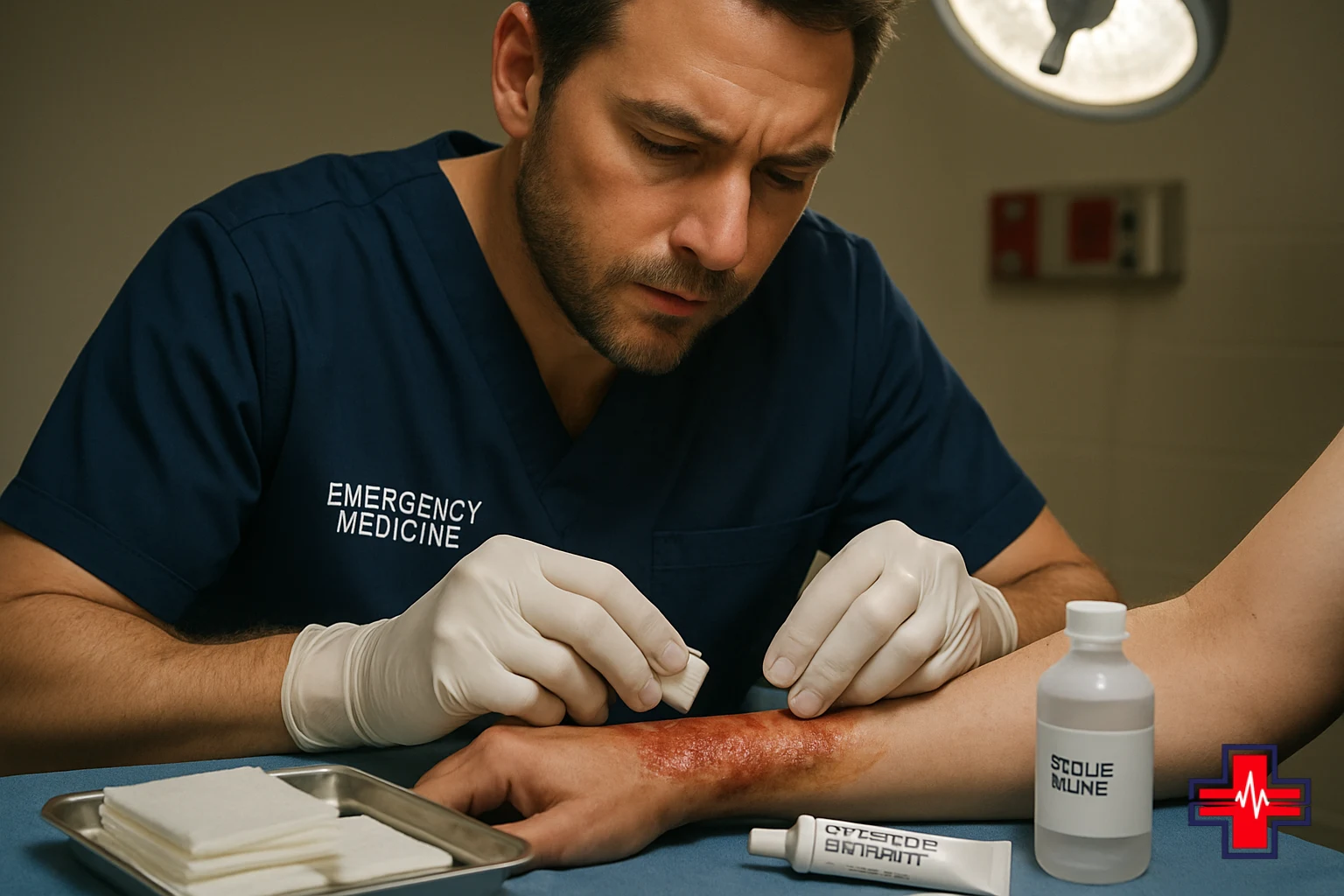
Once cooled, remove jewelry, watches, rings, and tight clothing that may trap swelling. Cover the burn loosely with a clean, dry, non-stick cloth or sterile gauze to reduce contamination and pain from air exposure. Do not apply home remedies such as butter, oil, toothpaste, vinegar, or egg whites—these trap heat, promote infection, and complicate professional assessment.
For chemical burns, flush the affected area with copious amounts of cool running water for at least 15–20 minutes (longer for some alkali burns). Remove contaminated clothing carefully. Never attempt to neutralize chemical burns with acids or bases, as chemical reactions may generate additional heat. For inhalation of toxic fumes, move the person to fresh air immediately and monitor breathing.
Elevate burned extremities above the level of the heart if possible to reduce swelling. If the person is alert and not vomiting, offer small sips of cool water (not ice water) to maintain hydration, but avoid food until cleared by medical staff.
Do not break blisters, apply cream, or attempt deeper wound cleaning at home. Transport the patient to burns treatment at ER Of Fort Worth or call 911 if the burn is extensive, deep, or affecting critical areas.
When to Seek Emergency Care for Burn Injury ER Fort Worth
Certain burns always warrant emergency room evaluation. Call 911 or go immediately to Fort Worth Emergency Room or our 24/7 facility if:
- The burn is larger than 3 inches in diameter or covers more than 1–2% of body surface area (roughly the size of the person's palm)
- The burn is deeper than first degree (blistering, charring, or leathery appearance)
- The burn involves the face, hands, feet, joints, genitals, or buttocks
- The burn is circumferential (wraps entirely around an extremity or the torso)
- The person has respiratory distress, singed nasal hair, carbonaceous sputum, or signs of inhalation injury
- The burn is from a chemical, electrical, or explosion-related source
- The person is an infant, young child, or elderly individual (these populations are at higher risk for complications)
- The person has pre-existing conditions (heart disease, diabetes, immunosuppression) that affect healing
- The burn was sustained in a confined space or involved loss of consciousness
Even if a burn seems minor, seek urgent care if it is painful despite first aid, shows signs of infection (increasing redness, warmth, pus, or red streaking), or fails to improve within a few days. Residents of North Richland Hills, Watauga, Roanoke, and surrounding areas can reach ER Of Fort Worth quickly for professional assessment.
Minor first-degree burns covering small areas may be managed with home care—continued cool water immersion, aloe vera gel, and oral pain relievers—but consult a healthcare provider if you are uncertain about severity.

Specialized Burn Treatment at ER Of Fort Worth
Upon arrival at ER Of Fort Worth, our emergency team performs rapid assessment using standardized burn evaluation protocols. We calculate the percentage of body surface area affected (using the Rule of Nines), determine burn depth, identify location-specific risks, and screen for inhalation injury.
Blood tests and imaging may be ordered to assess severity, screen for carbon monoxide poisoning (in smoke-inhalation cases), and identify other injuries. Wound photographs document baseline appearance for later comparison and are shared with specialized burn centers if transfer is needed.
Pain management is a priority. We provide topical anesthetics, oral or intravenous pain relievers, and sedation if necessary for wound cleaning and dressing. IV antibiotics are administered for burns at high risk of infection or covering large areas. IV fluids are initiated if the burn is extensive, as fluid loss through damaged skin is severe and can lead to shock.
Wound cleaning removes debris, dead tissue, and foreign matter. We apply sterile dressings—often non-adherent gauze, specialized burn wraps, or topical antimicrobial agents—to protect the wound and reduce infection risk. Tetanus prophylaxis is offered if the person's vaccination status is uncertain.
For severe or complex burns—third-degree, fourth-degree, circumferential, facial, or burns covering large areas—we coordinate rapid transfer to a specialized burn center equipped for advanced wound care, surgical intervention, and prolonged management. Our staff at ER Of Fort Worth works closely with burn centers throughout the Dallas-Fort Worth metroplex and beyond.
Follow-up wound care instructions, pain management guidance, signs of infection to monitor, and specialist referrals are provided at discharge. Patients in Southlake, Grapevine, Flower Mound, Alliance, and Bedford can access our 24/7 facility for both initial assessment and post-discharge follow-up.
Burn Injury Recovery and Prevention in Fort Worth Communities
Burn recovery extends far beyond the emergency room visit. Small burns typically heal within 1–3 weeks with minimal scarring, while larger or deeper burns may require weeks to months of wound care, physical therapy, and psychological support. Scar tissue can contract and restrict movement, particularly over joints, necessitating ongoing treatment to preserve function.
Infection is the leading complication during recovery. Signs include increased warmth, redness beyond the burn edges, purulent drainage, fever, or red streaking up the arm or leg. Contact a healthcare provider immediately if these develop, as IV antibiotics may be needed.
Hypertrophic (thick, raised) scarring is common in deeper burns and can be managed with silicone gel sheets, compression garments, steroid injections, or laser therapy. Psychological effects—including anxiety, depression, or post-traumatic stress—are common after significant burns and warrant counseling or psychiatric support.
Prevention is paramount. In Fort Worth and surrounding areas like Haltom City and Bedford, fire safety education reduces burn risk: install working smoke detectors, practice escape routes, keep flammable materials away from heat sources, and teach children to respect fire and heat. Prevent scalds by setting water heater temperature below 120°F, testing bathwater before immersion, and keeping hot liquids away from table edges and children.
Chemical burns are often preventable through proper storage and handling of caustic substances, wearing gloves and eye protection when handling cleaning agents, and keeping chemicals out of reach of children. Electrical burns can be avoided by installing ground-fault circuit interrupters (GFCIs), keeping electrical appliances away from water, and having qualified electricians inspect home wiring.
If a significant burn does occur, immediate action—cool water, clean dressing, rapid transport to Alliance TX Emergency Room or ER Of Fort Worth 24/7—saves tissue, reduces complications, and improves long-term outcomes. Our experienced emergency physicians and nursing staff are available around the clock to provide expert burn assessment and initial treatment.
Frequently Asked Questions About Burn Injuries
Below are answers to common questions about burn injuries and emergency care at ER Of Fort Worth.
Frequently Asked Questions
Can I treat a small burn at home, or should I always go to the ER?
Small first-degree burns (like sunburn) covering less than 1–2% of body surface can often be managed at home with cool water, aloe vera, and pain relievers. However, any burn larger than a postage stamp, with blistering, affecting the face or hands, or not improving within a few days should be evaluated at an emergency room or urgent care center. When in doubt, contact ER Of Fort Worth 24/7 for guidance.
What should I do immediately after a burn injury?
Stop the burning (remove from heat source, extinguish flames), cool the burn with cool running water for 10–20 minutes, remove jewelry and tight clothing, cover with a clean dry cloth, and avoid ice, butter, or home remedies. If the burn is large, deep, on the face/hands, or from chemicals or electricity, call 911 or go immediately to ER Of Fort Worth.
How long does it take for a burn to heal?
First-degree burns typically heal within 1–2 weeks without scarring. Second-degree burns may take 2–3 weeks and may leave some scarring. Third- and fourth-degree burns require hospitalization and specialized care, with healing taking weeks to months and often requiring skin grafts and extensive rehabilitation.
What is the difference between a thermal, chemical, and electrical burn?
Thermal burns result from contact with fire, hot liquids, or hot objects. Chemical burns occur from caustic substances (acids, bases, solvents) and require prolonged cool water irrigation and specialist assessment. Electrical burns damage tissue beneath the skin surface and can cause cardiac arrhythmias; all electrical burns require emergency evaluation, even if the surface appears minor.
Should I apply ice directly to a burn?
No. Ice can cause frostbite-like injury to already damaged tissue. Use cool (not cold) running water or cool compresses for 10–20 minutes. Avoid ice packs, butter, oils, toothpaste, vinegar, and other home remedies—these trap heat and complicate professional care.
When does a burn require transfer to a specialized burn center?
Burns covering more than 10–15% of body surface area, all third- and fourth-degree burns, circumferential burns, facial or hand burns, inhalation injuries, or burns in very young, very old, or medically complex patients typically require burn center care. ER Of Fort Worth coordinates rapid transfer when needed.
What are signs of infection after a burn injury?
Watch for increasing redness or warmth beyond the burn edges, pus or discolored drainage, fever, swelling that worsens after day 2–3, or red streaking up the arm or leg. Contact a healthcare provider or return to the ER immediately if these develop, as infection can escalate rapidly in burn wounds.
Is ER Of Fort Worth open 24/7 for burn injuries?
Yes. ER Of Fort Worth is open 24/7 at 4561 Heritage Trace Parkway, Suite 117, Fort Worth, TX 76244 to provide immediate assessment and treatment for all burn injuries. Call 817-945-4200 or go to the facility directly for urgent or emergent burns.