
Chest Pain ER Near Keller TX: 24/7 Emergency Room Care
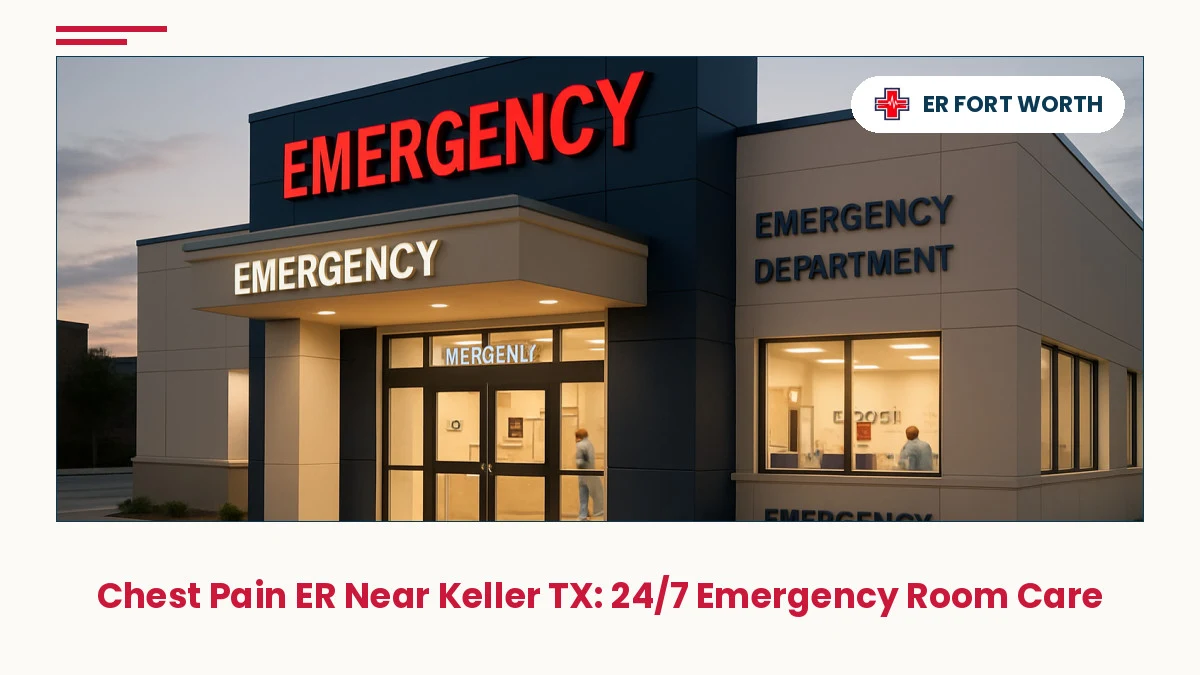
Chest pain demands immediate medical attention—it's one of the most common reasons people visit emergency rooms, and distinguishing between serious cardiac events and less urgent conditions requires professional evaluation. If you're in Keller, Texas, or nearby North Richland Hills, Roanoke, or Haslet, ER Of Fort Worth provides round-the-clock chest pain assessment and treatment.
In This Article
- When to Seek Emergency Chest Pain Care
- Red Flags That Demand Immediate Attention
- Non-Cardiac Causes of Chest Discomfort
- What to Expect at a Keller-Area Emergency Room
- Diagnostic Tests for Chest Pain at the ER
- After Your Chest Pain Evaluation
- Accessing 24/7 Chest Pain Care Near Keller, Texas
- Frequently Asked Questions
⚡ Key Takeaways
- Seek immediate emergency care (call 911) if chest pain is accompanied by shortness of breath, arm pain, jaw pain, nausea, or dizziness.
- ER Of Fort Worth operates 24/7 and provides rapid assessment, EKG testing, and blood work to rule out cardiac and life-threatening conditions.
- Not all chest pain is cardiac—anxiety, muscle strain, and acid reflux cause chest discomfort, but only trained emergency physicians can safely determine the cause.
- Freestanding emergency rooms near Keller offer faster triage and specialized chest pain protocols than many urgent care centers.
- Time is critical in cardiac events; do not wait or self-diagnose—seek professional evaluation immediately if symptoms develop.
When to Seek Emergency Chest Pain Care
If you are experiencing a life-threatening emergency, call 911 or go to the nearest emergency room immediately.
Chest pain is a symptom that bridges multiple medical conditions—some benign and some life-threatening. The challenge for patients and families is knowing when discomfort in the chest warrants an emergency room visit versus waiting for a primary care appointment or trying home remedies. The safest approach: any new, unexplained, or severe chest pain should be evaluated by an emergency physician.
Residents of Keller, Watauga, Roanoke, and surrounding areas in the Fort Worth metroplex often face this dilemma, especially when symptoms begin at night or on weekends. A nearby chest pain ER near Keller eliminates travel delays and provides the rapid assessment that cardiac emergencies demand. The American Heart Association emphasizes that time-sensitive evaluation can mean the difference between full recovery and catastrophic outcomes in acute coronary events.
Chest pain that is mild, reproducible with movement or position change, or clearly linked to heartburn or anxiety may sometimes be managed in an urgent care setting if accompanied by normal vital signs. However, when in doubt, seek emergency evaluation. Emergency rooms maintain protocols and diagnostic capabilities that allow physicians to rapidly determine whether your chest pain represents a cardiac emergency or another condition requiring treatment.
Red Flags That Demand Immediate Attention
Certain chest pain presentations are unmistakable warning signs of serious cardiovascular or life-threatening events. Learn these red flags so you or a loved one can respond decisively.
- Chest pain accompanied by shortness of breath: This combination is a hallmark presentation of acute coronary syndrome, pulmonary embolism, pneumonia, or other cardiopulmonary emergencies. Do not delay—call 911 immediately.
- Pain radiating to the arm, neck, jaw, or back: Classic cardiac chest pain often radiates beyond the chest itself. Left arm and jaw pain are particularly concerning for myocardial infarction.
- Sudden onset of severe, crushing chest pain: Described as a weight or pressure on the chest, this presentation raises concern for heart attack or aortic dissection.
- Chest pain with nausea, dizziness, or fainting: These associated symptoms suggest systemic cardiovascular compromise and require urgent evaluation.
- Chest pain with rapid or irregular heartbeat: Arrhythmias accompanying chest pain may indicate acute cardiac stress.
- Chest pain triggered by exertion, relieved by rest: This classic anginal pattern suggests inadequate coronary blood flow and demands cardiac evaluation.
- Persistent chest pain lasting more than a few minutes: Unlike musculoskeletal discomfort, cardiac and pulmonary chest pain tends to be sustained.
If you experience any of these scenarios—especially if you have risk factors such as hypertension, diabetes, smoking history, or family history of early cardiac disease—proceed directly to an emergency room or call 911. Patients in Haslet, Saginaw, and Keller can reach ER Of Fort Worth in minutes for rapid chest pain evaluation.
Non-Cardiac Causes of Chest Discomfort
Not every instance of chest pain signals a heart problem. Many common, treatable conditions cause chest discomfort and account for the majority of emergency room chest pain evaluations. Understanding these helps contextualize your symptoms while emphasizing that only emergency physicians should make the determination.
Musculoskeletal chest pain arises from muscle strain, rib injury, or costochondritis (inflammation where ribs attach to the sternum). This pain is usually sharp, reproducible when you press on the chest wall, and worsens with movement or deep breathing. It does not radiate to the arm or jaw and resolves with rest, anti-inflammatory medication, or physical therapy.
Acid reflux and gastroesophageal disease (GERD) produce a burning sensation in the chest, often triggered by large meals, lying down, or fatty foods. Antacids typically provide relief. However, some cardiac patients mistake heart attack for severe indigestion, so persistent or atypical reflux symptoms warrant ER evaluation.
Anxiety and panic attacks cause intense chest tightness, rapid heartbeat, shortness of breath, and a sense of impending doom. Patients often fear a heart attack, which compounds anxiety. Emergency rooms rule out cardiac causes first, then address the anxiety component.
Pulmonary conditions such as pneumonia, bronchitis, or pneumonia produce pleuritic chest pain (sharp pain that worsens with deep breathing or coughing). Fever, cough, and abnormal lung sounds on examination help distinguish these from cardiac causes.
Pericarditis (inflammation of the heart's outer lining) causes central chest pain that worsens when lying down and improves when sitting forward. It may follow a viral illness.
Bloating and gas can compress the chest and cause discomfort, especially in the left upper abdomen. Position changes and passing gas often resolve the pain.
Even when symptoms seem clearly non-cardiac, emergency evaluation provides reassurance and proper diagnosis. Patients in Grapevine, Southlake, and Alliance can access chest pain ER care to confirm their symptoms are not dangerous.
What to Expect at a Keller-Area Emergency Room
Walking through the doors of an emergency room with chest pain can feel overwhelming. Knowing what happens next—and why—reduces anxiety and helps you participate effectively in your care.
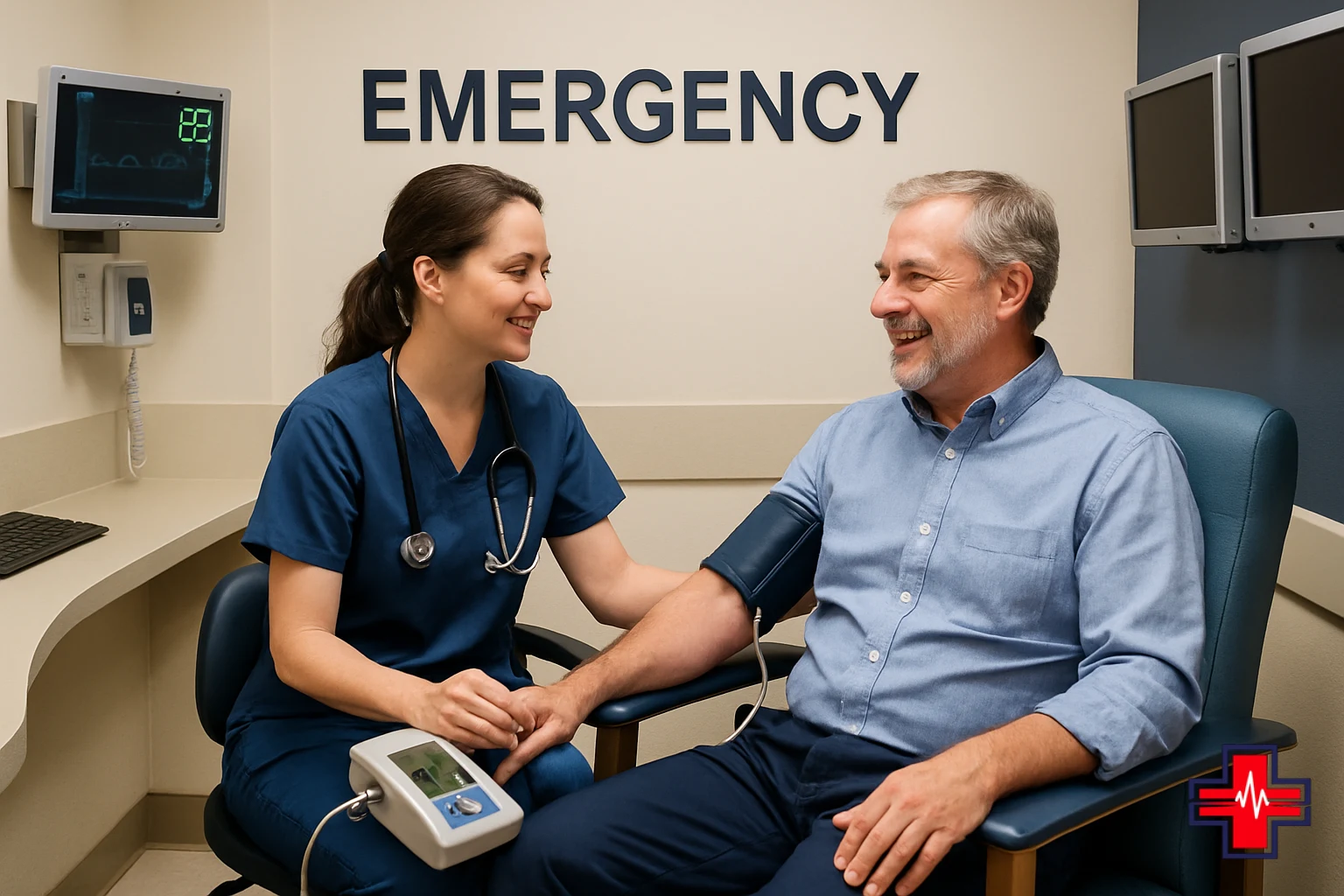
Triage and vital signs: Upon arrival, a nurse will assess your vital signs (blood pressure, heart rate, temperature, respiratory rate, and oxygen saturation) and gather a brief history of your symptoms. Be as specific as possible about when the pain started, what it feels like, what makes it better or worse, and whether you have associated symptoms like nausea or shortness of breath.
Rapid EKG and initial labs: Chest pain protocols at ER Of Fort Worth and other emergency centers prioritize electrocardiography (EKG) within minutes of arrival. This painless test records your heart's electrical activity and can reveal signs of cardiac injury or arrhythmia. The ER will also draw blood for blood tests measuring cardiac biomarkers (troponin and others) to detect evidence of heart muscle damage.
Physician evaluation: An emergency physician will perform a focused history and physical examination, asking about risk factors, prior cardiac disease, medications, and family history. They'll listen to your heart and lungs, assess your extremities for signs of clotting disorders, and evaluate your overall stability.
Observation and repeat testing: Depending on initial findings, you may be observed for several hours with repeat EKGs and blood tests, as cardiac biomarkers rise over time following a heart attack. This serial testing increases diagnostic sensitivity.
Advanced imaging if indicated: If initial tests raise concern, the ER may order chest X-ray, CT angiography (to rule out blood clots), or cardiac ultrasound (echocardiography) depending on your presentation.
ER Of Fort Worth's 24/7 availability means you won't face delays for weekend or overnight chest pain—immediate care is always available to residents of Keller, North Richland Hills, Roanoke, and Watauga.

Diagnostic Tests for Chest Pain at the ER
Modern emergency medicine relies on rapid, accurate diagnostic tests to determine the cause of chest pain and guide treatment. Here's what you should understand about the tests used for chest pain evaluation.
Electrocardiogram (EKG or ECG): This is the first-line test for chest pain. Adhesive patches on your chest, arms, and legs connect to a machine that records your heart's electrical activity. The EKG takes just a few minutes and detects abnormal rhythms, heart attack patterns, and electrical disturbances. It provides critical information in seconds.
Troponin and cardiac biomarkers: Blood tests measure proteins released by damaged heart muscle. Troponin I and troponin T are highly specific markers of myocardial injury. High-sensitivity troponin assays can detect even minute amounts, improving early diagnosis. A negative troponin at presentation doesn't rule out acute coronary syndrome—serial measurement (repeat blood draws) over hours is necessary.
B-type natriuretic peptide (BNP): This test measures a hormone released when the heart is under stress. Elevated BNP may indicate heart failure or other cardiac conditions contributing to chest pain.
Chest X-ray: A simple radiograph can reveal pneumonia, pneumothorax (collapsed lung), or pulmonary edema (fluid in the lungs) as causes of chest pain. It also shows the heart's size and contour.
Computed tomography (CT) angiography: If pulmonary embolism (blood clot in the lung) is suspected, CT angiography with contrast is the gold-standard test. It shows whether a clot is blocking a pulmonary artery and causing chest pain and shortness of breath.
Echocardiography (cardiac ultrasound): This bedside ultrasound visualizes the heart's structure and function. It can reveal wall motion abnormalities, valve problems, or pericardial effusion (fluid around the heart).
Stress testing: If initial tests are normal but coronary disease is suspected, your ER physician may arrange outpatient stress testing to see whether your heart responds normally to exertion.
ER Of Fort Worth maintains state-of-the-art diagnostic equipment enabling rapid testing for patients from Keller, Alliance, and surrounding areas.
After Your Chest Pain Evaluation
The ER evaluation concludes with one of several outcomes, each guiding your next steps.
Rule-out of acute coronary syndrome: If your EKGs, biomarkers, and imaging show no evidence of heart attack or other acute cardiac disease, you're cleared for discharge with instructions to follow up with your primary care physician or cardiologist. The ER physician will discuss your symptoms, any identified risk factors, and lifestyle or medication adjustments to reduce future cardiac risk. Many patients discharged from the ER feel relieved and are encouraged to schedule preventive cardiology visits.
Admission to the hospital: If test results confirm or strongly suggest acute coronary syndrome, heart failure, arrhythmia, or another condition requiring admission, you'll be transferred to the hospital's cardiac care unit or intensive care unit for continuous monitoring, specialized treatment (such as IV medications or cardiac catheterization), and further management.
Treatment and discharge for non-cardiac causes: If your chest pain stems from musculoskeletal strain, acid reflux, anxiety, or other non-cardiac conditions, the ER provides appropriate treatment—anti-inflammatories, antacids, anxiolytics, or antibiotics for infection—and sends you home with discharge instructions and follow-up recommendations. Some patients receive prescriptions or are advised to schedule specialist visits.
Observation unit admission: In some cases, your initial tests are inconclusive, and serial EKGs or biomarkers are warranted. Rather than admitting to the full hospital, you may spend several hours in an observation unit for repeat testing and monitoring.
Always ask your ER physician to clarify your diagnosis, explain any abnormal findings, and outline what follow-up care you need. Request written discharge instructions and don't hesitate to return or call 911 if symptoms recur.
Accessing 24/7 Chest Pain Care Near Keller, Texas
For residents of Keller, Haslet, Saginaw, Watauga, Roanoke, North Richland Hills, Haltom City, Bedford, Southlake, Grapevine, and Flower Mound, finding a trustworthy chest pain ER near Keller, TX ensures rapid access to cardiac evaluation without long travel times.
ER Of Fort Worth operates a freestanding emergency room at 4561 Heritage Trace Parkway, Suite 117, Fort Worth, TX 76244, just minutes from Keller and surrounding communities. The facility is open 24 hours a day, 7 days a week, with a focus on rapid triage and evidence-based chest pain protocols. You can call ahead at 817-945-4200 or use online check-in to streamline your arrival if your condition is stable enough to allow.
When to call 911 versus driving to the ER: If you're experiencing severe, crushing chest pain, shortness of breath, loss of consciousness, severe dizziness, or any sign of cardiac emergency, call 911 immediately. Paramedics can provide oxygen, establish IV access, and begin cardiac monitoring en route, potentially administering life-saving medications like aspirin or nitroglycerin. If your symptoms are less severe or stable, you may drive yourself or have someone drive you to the nearest freestanding ER.
What to bring: Have your photo ID, insurance card, and a list of current medications available when you arrive. If possible, bring a family member or trusted person who can provide details about your medical history and help communicate with physicians.
ER Of Fort Worth's board-certified emergency physicians and nursing staff bring years of experience managing chest pain across diverse patient populations. Whether your pain is cardiac, musculoskeletal, pulmonary, or gastrointestinal, the emergency team will perform thorough evaluation and provide definitive diagnosis and treatment.
Don't wait or minimize chest pain. Your heart health is too important to ignore. Visit ER Of Fort Worth's chest pain service page for more information or call 817-945-4200 now with any questions about our services and how we can help you.
Frequently Asked Questions
Should I drive myself to the ER for chest pain or call 911?
Call 911 if your chest pain is severe, accompanied by shortness of breath, arm or jaw pain, dizziness, or loss of consciousness. Paramedics provide oxygen and cardiac monitoring en route. If your symptoms are mild to moderate and stable, you or a trusted driver can go to the ER, but don't delay. When in doubt, call 911.
How long does a chest pain evaluation at the ER take?
Initial assessment, EKG, and blood work typically occur within 15–30 minutes. Serial cardiac biomarker testing requires a few hours of observation. Total ER time ranges from 2–8 hours depending on findings and whether admission is needed. Freestanding ERs like ER Of Fort Worth often have shorter waits than hospital emergency departments.
Can anxiety cause chest pain that mimics a heart attack?
Yes. Panic attacks and anxiety disorders produce chest tightness, rapid heartbeat, and shortness of breath that feel like cardiac emergencies. However, only emergency physicians can distinguish anxiety-related chest pain from true cardiac events through EKG, biomarkers, and imaging. Always seek evaluation if uncertain.
What if my chest pain tests are normal but symptoms continue?
Normal EKG and cardiac biomarkers rule out acute myocardial infarction, but persistent chest pain warrants follow-up with your primary care physician or cardiology specialist. The ER will provide discharge instructions and referral recommendations. Don't ignore ongoing symptoms—schedule prompt outpatient evaluation.
Is a freestanding ER appropriate for chest pain, or should I go to a hospital?
Freestanding ERs like ER Of Fort Worth are fully equipped with EKG machines, labs, imaging, and board-certified physicians trained to diagnose and stabilize chest pain emergencies. If hospitalization is needed, patients are safely transferred to hospital facilities. For acute chest pain, the nearest ER is the best ER.
What are the early signs of a heart attack?
Early signs include chest pain or pressure, shortness of breath, pain radiating to the arm or jaw, nausea, cold sweats, and fatigue. Women may experience atypical symptoms like indigestion or back pain. Any concerning symptoms warrant immediate ER evaluation or 911 call.