
What Causes Sudden Chest Pain? Diagnostic Guide
Sudden chest pain can trigger immediate alarm—and for good reason. While some causes are serious medical emergencies, others are benign. Understanding what might be causing your chest discomfort helps you decide whether to call 911 or visit an emergency room.
In This Article
- Life-Threatening Causes of Sudden Chest Pain
- Cardiac Emergencies: Heart Attack and Angina
- Vascular and Pulmonary Causes of Acute Chest Discomfort
- Gastrointestinal and Musculoskeletal Chest Pain
- Anxiety, Panic, and Other Non-Emergent Causes
- Diagnostic Approach to Chest Pain in the ER
- When to Seek Emergency Care for Chest Pain
- Frequently Asked Questions
⚡ Key Takeaways
- If you are experiencing a life-threatening emergency, call 911 or go to the nearest emergency room immediately.
- Cardiac causes—including myocardial infarction and unstable angina—require immediate evaluation and can be fatal if untreated.
- Non-cardiac conditions such as pulmonary embolism, pneumonia, and aortic dissection are also life-threatening and require urgent assessment.
- Musculoskeletal pain, anxiety, and gastrointestinal issues account for many chest pain cases but still warrant professional evaluation to rule out serious disease.
- Seek emergency care for chest pain accompanied by shortness of breath, diaphoresis, nausea, or pain radiating to the arm, jaw, or back.
Life-Threatening Causes of Sudden Chest Pain
If you are experiencing a life-threatening emergency, call 911 or go to the nearest emergency room immediately.
Sudden chest pain etiology spans a spectrum from immediately life-threatening to benign. The most critical challenge in emergency medicine is distinguishing between conditions that can cause sudden cardiac death or organ failure versus those that pose minimal risk. This distinction determines whether a patient requires immediate hospital transport or can safely wait for outpatient evaluation.
Acute coronary syndrome (ACS)—encompassing both myocardial infarction and unstable angina—accounts for approximately 20–30% of acute chest pain presentations in emergency departments. Other serious vascular, pulmonary, and gastrointestinal conditions make up another significant portion. The remaining cases are typically musculoskeletal, anxiety-related, or benign in nature, but clinical assessment is essential to rule out life-threatening disease.
Fort Worth residents and those in surrounding areas including Keller, Southlake, North Richland Hills, and Grapevine have access to 24/7 emergency evaluation at ER Of Fort Worth, where board-certified physicians and nurses can rapidly assess the cause of sudden chest pain using electrocardiography, blood biomarkers, and imaging studies.
Cardiac Emergencies: Heart Attack and Angina
Myocardial infarction (MI)—commonly called a heart attack—occurs when coronary artery blood flow is severely reduced or blocked, preventing oxygen delivery to heart muscle. This triggers cell death and can disrupt the electrical and mechanical function of the heart, potentially causing fatal arrhythmias. Symptoms typically include substernal (behind the breastbone) pressure or heaviness, often radiating to the left arm, jaw, neck, or back. Many patients also experience diaphoresis (profuse sweating), dyspnea (shortness of breath), nausea, and a sense of impending doom.
Unstable angina represents a related but distinct condition: transient insufficient blood flow to the heart muscle that causes chest pain or discomfort but does not cause permanent damage. Distinguishing angina from MI requires professional chest pain evaluation with serial electrocardiograms and cardiac biomarker testing (troponin levels). Classic angina pain is typically triggered by exertion or emotional stress and resolves with rest or nitroglycerin. Unstable angina occurs at rest or with minimal exertion and does not fully resolve with rest.
Risk factors for acute coronary syndrome include age (men ≥45, women ≥55), smoking, hypertension, elevated cholesterol, diabetes, obesity, family history of early cardiac disease, and sedentary lifestyle. However, MI can occur in younger individuals and those without traditional risk factors, particularly in women, who may present with atypical symptoms such as fatigue, indigestion, or arm pain in the absence of typical chest pressure.
Seek immediate emergency care or call 911 for chest pain accompanied by shortness of breath, sweating, nausea, or radiation to the arm, neck, or jaw. Early recognition and treatment within the first few hours after symptom onset significantly improves outcomes for heart attack patients.
Vascular and Pulmonary Causes of Acute Chest Discomfort
Pulmonary embolism (PE) occurs when a blood clot lodges in the pulmonary arteries, blocking blood flow to the lungs. Patients may experience sudden onset pleuritic chest pain (pain worsened by deep breathing), shortness of breath, and in severe cases, hemodynamic collapse. Risk factors include recent surgery, prolonged immobility (long flights, bed rest), active cancer, hypercoagulable disorders, and lower-extremity DVT (deep vein thrombosis). Diagnosis typically requires CT pulmonary angiography (CTPA) or ventilation-perfusion imaging. If pulmonary embolism is suspected, blood clot treatment in the emergency room may include anticoagulation therapy or thrombolysis.
Aortic dissection is a catastrophic condition in which the inner layer of the aorta tears, allowing blood to flow between the layers. Patients describe sudden, severe, tearing chest or back pain, often accompanied by hypertension, neurological deficits, or signs of shock. This is a surgical emergency requiring immediate CT angiography and cardiothoracic intervention. Mortality is extremely high without treatment.
Pneumonia and other lower respiratory tract infections can cause pleuritic chest pain, especially when the infection involves the pleural surface. Pneumonia treatment in the ER typically involves chest X-ray, blood tests, and often IV antibiotics. Symptoms include chest discomfort, cough, fever, and fever requiring professional evaluation.
Spontaneous pneumothorax (collapsed lung) presents with acute pleuritic chest pain and dyspnea, particularly in tall, thin young men or those with underlying lung disease. A chest X-ray will confirm the diagnosis. Small pneumothoraces may resolve spontaneously; larger ones require needle aspiration or chest tube placement.
Acute pericarditis (inflammation of the heart's outer lining) causes sharp, pleuritic chest pain that often improves with sitting forward and worsens with lying flat. Viral infections, autoimmune disease, or post-cardiac injury can trigger pericarditis. An EKG typically shows characteristic diffuse ST elevation, and echocardiography may reveal a pericardial effusion.
Gastrointestinal and Musculoskeletal Chest Pain
Gastroesophageal reflux disease (GERD) is one of the most common non-cardiac causes of chest pain. Acid reflux irritates the esophageal lining, producing a burning sensation in the chest that may mimic cardiac pain. GERD pain typically worsens after meals, when lying down, or at night, and improves with antacids. It is often accompanied by regurgitation, dysphagia (difficulty swallowing), or hoarseness. While usually benign, GERD must be differentiated from true cardiac disease, which is why evaluation by an emergency physician is prudent if the pain is new or severe.
Peptic ulcer disease and acute gastritis cause epigastric (upper abdominal) pain that can radiate to the chest. The pain may be associated with nausea, vomiting, or hematemesis (coughing up blood). Blood tests can help assess for anemia from gastrointestinal bleeding, and endoscopy may be needed for definitive diagnosis.
Musculoskeletal chest pain from costochondritis (inflammation of the cartilage connecting ribs to the sternum), rib fractures, or muscle strain is extremely common. This type of pain is reproducible on palpation (tenderness when pressing on the chest wall), worsens with certain movements or positions, and typically does not radiate. Orthopedic emergencies involving the rib cage or sternum may require imaging to rule out fractures. Back pain from thoracic spine pathology can also present as chest discomfort.
Patients in the Fort Worth area, including those in Alliance, Haslet, Watauga, and Roanoke, can have musculoskeletal and gastrointestinal causes evaluated at our emergency room to ensure cardiac disease is appropriately ruled out before attributing symptoms to benign causes.

Anxiety, Panic, and Other Non-Emergent Causes
Anxiety and panic disorder are responsible for a substantial proportion of non-cardiac chest pain presentations. Panic attacks can produce chest tightness, hyperventilation, tachycardia (rapid heart rate), tremor, and a profound sense of fear or impending doom—mimicking cardiac symptoms. Hyperventilation lowers carbon dioxide levels, causing tingling in the extremities and lightheadedness. The pain is typically brief (minutes to an hour) and occurs in clusters or after stressful events.
However, it is critical to recognize that anxiety-related chest pain is a diagnosis of exclusion: serious cardiac and non-cardiac causes must be ruled out first through appropriate testing. Even patients with a known history of panic disorder can suffer a heart attack, so new or atypical chest pain warrants professional evaluation.
Precordial catch syndrome is a benign condition characterized by sudden, sharp, brief (seconds to minutes) stabbing pain on the left side of the chest near the heart. It is most common in children and young adults and is self-limiting, though patients are often frightened by its intensity and sudden onset.
Hypertension can cause chest discomfort or a sensation of pressure, particularly when blood pressure is severely elevated. Patients may also report headache, vision changes, or dyspnea if end-organ damage is occurring (hypertensive emergency).
Other causes include thyroid disorders, anemia, and medication side effects. Female patients approaching or in menopause may experience atypical chest symptoms related to hormonal changes or hot flashes.
Residents of Keller, Southlake, Flower Mound, and surrounding North Texas communities can access prompt evaluation and reassurance at ER Of Fort Worth when anxiety-related or other non-emergent causes are suspected, ensuring peace of mind and appropriate care.
Diagnostic Approach to Chest Pain in the ER
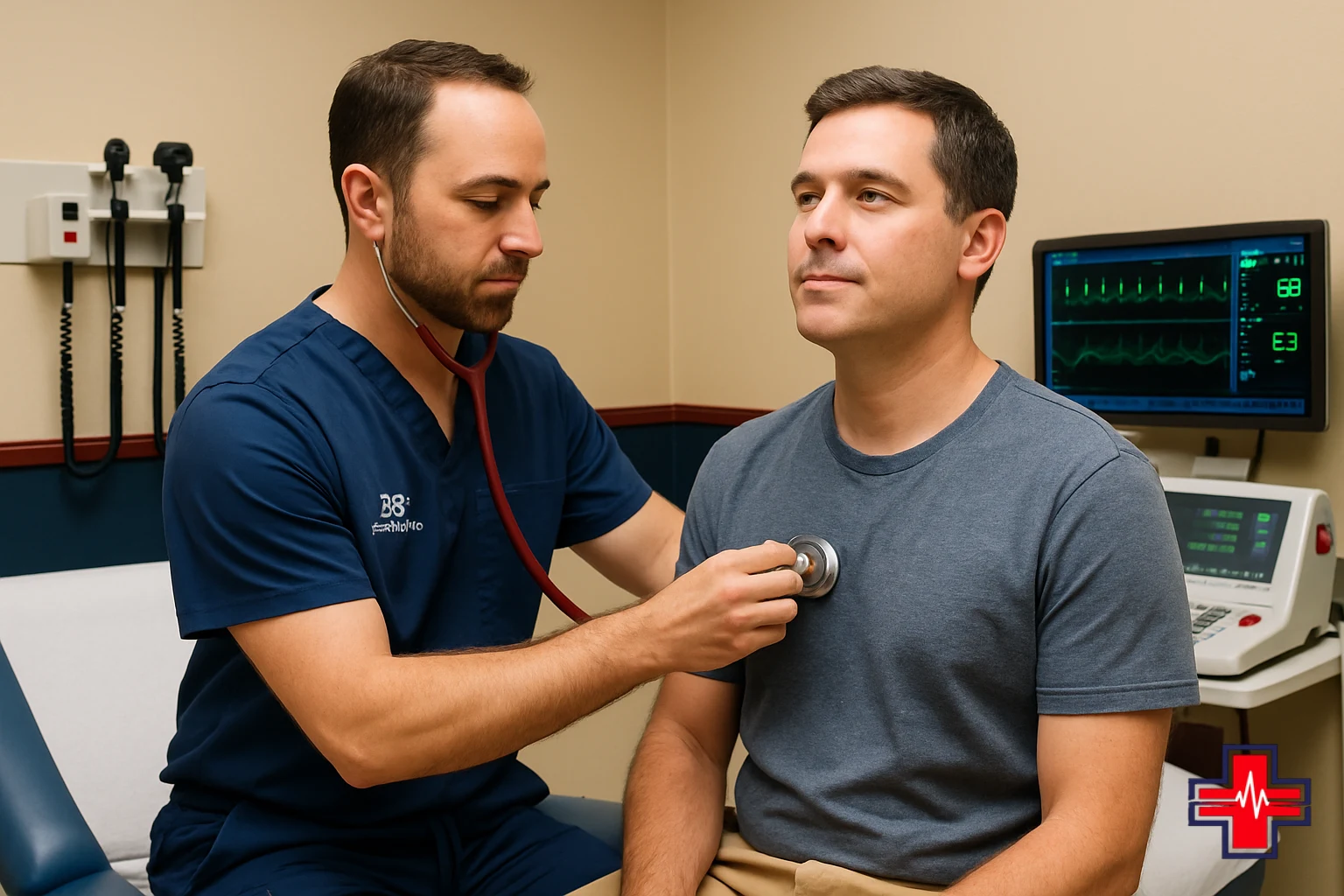
Emergency physicians follow a systematic approach to chest pain evaluation, beginning with a detailed history and physical examination. Key elements include the onset, character (pressure, sharp, burning, aching), severity, radiation pattern, associated symptoms (diaphoresis, dyspnea, nausea), and aggravating or alleviating factors. Risk factors for cardiac disease are carefully assessed, and a complete vital signs assessment (blood pressure, heart rate, respiratory rate, oxygen saturation, temperature) is performed.
The electrocardiogram (EKG) is typically obtained within minutes of arrival and remains the cornerstone of acute chest pain differential diagnosis. An EKG may reveal acute ST-elevation (indicating active transmural myocardial infarction), ST-depression or T-wave inversions (suggesting ischemia), or may be entirely normal even in the setting of ongoing ischemia or infarction, particularly in the earliest minutes of symptom onset.
Cardiac biomarkers, particularly high-sensitivity troponin, are obtained via blood tests and are sensitive indicators of myocardial injury. Serial troponin measurements (initial, 3 hours, and sometimes 6 hours) help determine whether myocardial necrosis has occurred. Blood tests also assess complete blood count, metabolic panel, and D-dimer (useful for PE risk stratification).
Chest radiography is often obtained to evaluate for pneumonia, pneumothorax, aortic widening, or pulmonary edema. Computed tomography (particularly CTPA for suspected PE or CTA of the chest for suspected aortic pathology) may be indicated based on the clinical presentation.
Echocardiography can be performed at the bedside to assess cardiac function, wall motion abnormalities, or pericardial effusion. This is particularly valuable when acute coronary syndrome, myocarditis, or pericarditis is suspected.
ER Of Fort Worth's 24/7 operations and board-certified physicians enable rapid diagnostic assessment using these modalities, ensuring timely diagnosis and treatment of serious causes of chest pain while appropriately reassuring patients with benign etiologies.
When to Seek Emergency Care for Chest Pain
If you are experiencing a life-threatening emergency, call 911 or go to the nearest emergency room immediately.
Seek emergency care for chest pain if you experience any of the following:
- Chest pressure, heaviness, or tightness, particularly if new or different from previous episodes
- Pain radiating to the left arm, right arm, jaw, neck, or back
- Shortness of breath accompanying chest discomfort
- Diaphoresis (excessive sweating) or a cold, clammy sensation
- Nausea or vomiting with chest pain
- Palpitations (awareness of rapid or irregular heartbeat) with chest discomfort
- Syncope (fainting) or near-syncope (lightheadedness) with chest pain
- Severe, sudden chest pain with shortness of breath, particularly if accompanied by back pain (concerning for aortic dissection or PE)
- Pleuritic chest pain (pain worsened by deep breathing) with fever, cough, or dyspnea (concerning for pneumonia or PE)
- Chest pain after trauma or a fall, even if the injury seems minor
- Persistent chest pain lasting more than a few minutes that does not improve with position changes or over-the-counter antacids
Do not delay seeking care while trying home remedies or waiting to see if symptoms resolve on their own. In Fort Worth and nearby communities such as Bedford, Haltom City, Watauga, and Haslet, residents can visit ER Of Fort Worth for immediate evaluation. For life-threatening symptoms (chest pain with severe dyspnea, syncope, or signs of shock), call 911 rather than self-drive to the emergency room.
Chest pain that is reproducible on palpation, occurs only with movement, or is associated with anxiety but has never been evaluated medically still warrants professional assessment. Many patients with benign causes of chest pain experience significant anxiety until serious disease is ruled out; this reassurance is a valuable outcome of emergency department evaluation.
Summary: Understanding Sudden Chest Pain Causes
Sudden chest pain causes span a wide spectrum of severity, from immediately life-threatening conditions such as acute myocardial infarction, pulmonary embolism, and aortic dissection to benign musculoskeletal or anxiety-related discomfort. The critical challenge is that serious disease cannot be reliably excluded based on symptoms alone; professional medical evaluation with EKG, cardiac biomarkers, and imaging is essential.
A thorough understanding of the differential diagnosis of acute chest discomfort helps patients and caregivers make informed decisions about when to seek emergency care. If you or a loved one experiences unexplained, severe, or concerning chest pain, do not hesitate to visit an emergency room or call 911. ER Of Fort Worth offers 24/7 evaluation and treatment for all causes of chest pain discomfort, providing rapid diagnosis and peace of mind for patients throughout Fort Worth, Keller, Alliance, and surrounding North Texas communities.
Early recognition and professional evaluation can be lifesaving. When in doubt, seek emergency care—this is never the wrong decision when chest pain is involved.
Frequently Asked Questions
What are the most common causes of sudden chest pain?
Non-cardiac causes account for approximately 90% of chest pain presentations, including musculoskeletal pain, GERD, anxiety, and muscle strain. However, serious cardiac causes (myocardial infarction, unstable angina) and non-cardiac emergencies (pulmonary embolism, aortic dissection, pneumonia) must be ruled out through professional evaluation.
How can I tell if my chest pain is cardiac or anxiety-related?
Anxiety-related chest pain is often sharp, brief, and associated with hyperventilation or panic symptoms, while cardiac pain is typically described as pressure or heaviness and may radiate to the arm, jaw, or back. However, anxiety does not exclude cardiac disease, and new or atypical chest pain requires professional evaluation to confirm the cause.
Is it safe to wait and see if chest pain goes away on its own?
No. Serious conditions such as heart attack, pulmonary embolism, and aortic dissection can be rapidly fatal. Any new, severe, or concerning chest pain warrants immediate emergency evaluation. Delaying care can result in irreversible organ damage or death.
What tests are performed in the ER for chest pain?
Standard tests include an electrocardiogram (EKG), cardiac biomarkers (troponin) via blood draw, chest X-ray, and sometimes CT imaging or echocardiography. These tests help identify or rule out serious causes such as myocardial infarction, pulmonary embolism, pneumonia, and aortic disease.
When should I call 911 versus driving to the ER?
Call 911 immediately if you have chest pain accompanied by severe shortness of breath, fainting, signs of shock (pale, cold, clammy skin), or sudden severe pain with back involvement (possible aortic dissection). For other significant chest pain, you may drive to the nearest ER, but do not delay if you feel unsafe driving.
Can musculoskeletal chest pain be serious?
Pure musculoskeletal chest pain (reproducible on palpation, worsened by movement) is typically benign. However, all new chest pain should be professionally evaluated to exclude serious underlying disease before attributing it to muscle strain or costochondritis.