
Back Injury After Fall or Accident: ER Evaluation Steps
A fall or collision can cause back injuries ranging from muscle strain to serious spinal trauma. Understanding the evaluation process at an emergency room helps you know what to expect and ensures your spine receives proper assessment.
In This Article
- When to Seek ER Care for Back Injury After Fall
- Initial Assessment Process at the Emergency Room
- Imaging and Diagnostic Tests for Back Injury Trauma
- Neurological Evaluation and Spine Injury Assessment
- Immediate Treatment and Pain Management Approaches
- Recovery Planning and Follow-Up Care After ER Visit
- Frequently Asked Questions About Back Injury Evaluation
- Frequently Asked Questions
⚡ Key Takeaways
- Seek immediate ER care if you experience severe back pain, numbness, tingling, or loss of bowel/bladder control after a fall.
- The ER evaluation includes medical history, physical examination, and imaging (X-rays, CT, or MRI) to assess spinal structure and nerve function.
- Even moderate back pain from trauma warrants professional evaluation because internal injuries may not be immediately obvious.
- Immobilization and pain management are first-line treatments while doctors rule out fractures and neurological involvement.
- Document the accident details and any symptoms you noticed immediately afterward to help ER physicians make accurate assessments.
When to Seek ER Care for Back Injury After Fall
If you are experiencing a life-threatening emergency, call 911 or go to the nearest emergency room immediately.
Not every fall results in a serious back injury, but certain warning signs demand immediate evaluation. If you experience severe, stabbing back pain that began right after a fall or accident, do not wait—visit an ER immediately. You should also seek emergency care if your back pain is accompanied by numbness, tingling, or weakness in your legs or feet, as these symptoms suggest possible nerve or spinal cord involvement.
Loss of bowel or bladder control, inability to move your legs, or sudden loss of sensation below the point of injury are medical emergencies requiring 911 dispatch. Additionally, if the fall involved significant force (such as a motor vehicle collision, fall from height, or blow to the spine), seek ER evaluation even if pain seems mild initially. Internal injuries and fractures may not produce obvious symptoms in the first hours.
For residents of Fort Worth, Keller, Alliance, Saginaw, and surrounding areas in Tarrant County, ER Of Fort Worth provides 24/7 trauma evaluation and imaging. Pain that worsens over the first few hours, swelling visible along the spine, or deformity of the back also warrants prompt ER assessment.
Initial Assessment Process at the Emergency Room
When you arrive at the ER with back pain after a fall or accident, the medical team will immediately prioritize your safety and comfort. Upon arrival, you will provide details about how the injury occurred—the type of fall, any forces involved, whether you struck your head or other body parts, and whether you lost consciousness. This history helps physicians understand the trauma mechanism and what structures may be at risk.
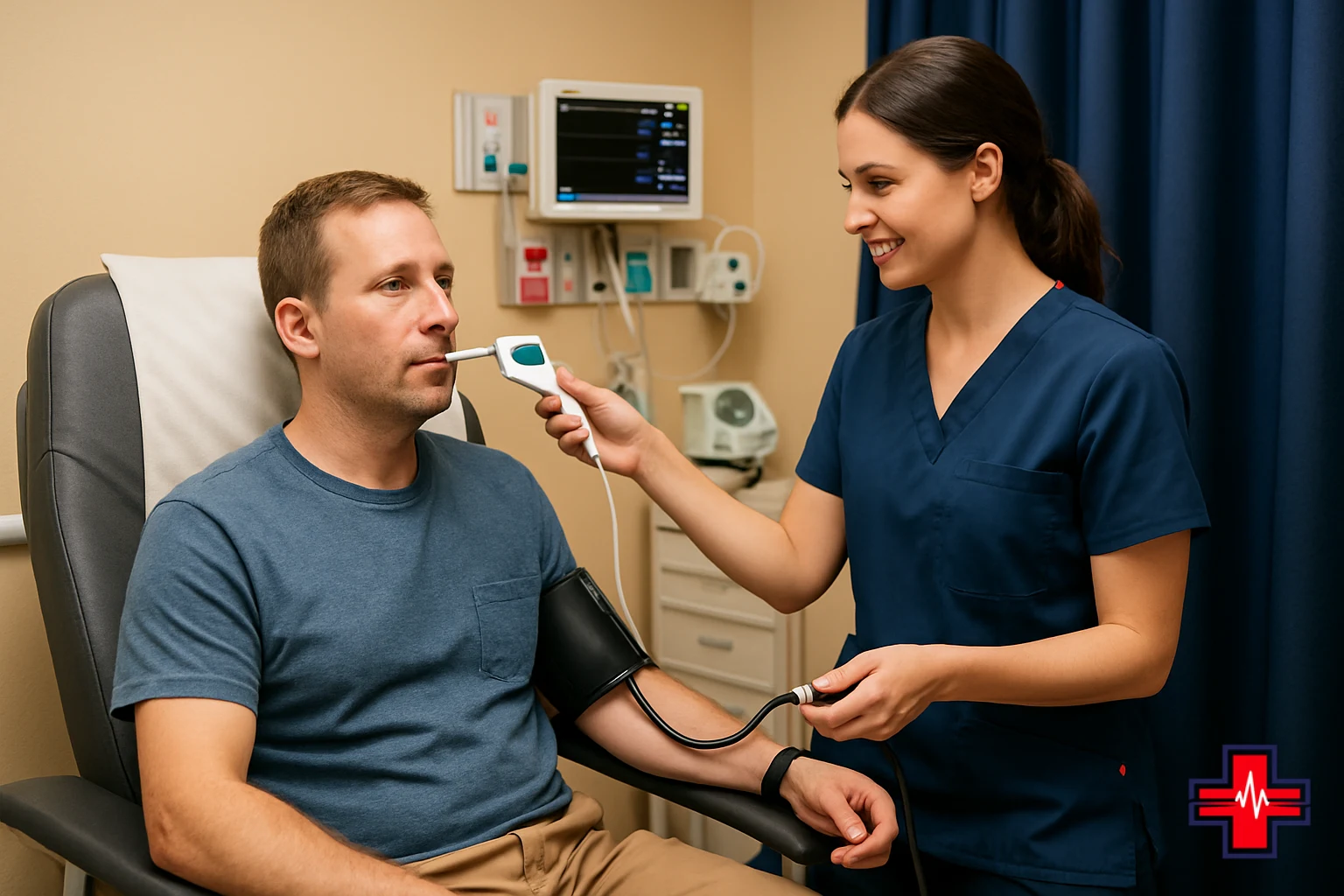
A nurse will assess your vital signs (heart rate, blood pressure, respiratory rate, temperature) and evaluate your pain level. You will be asked about the exact location of back pain, whether pain radiates into your legs or arms, and whether you noticed any tingling, numbness, or weakness immediately after the accident. The medical team will also inquire about any previous back injuries, existing spine conditions, medications you take, and allergies.
Next, a physician or advanced practice clinician will perform a detailed physical examination. This includes palpating (feeling) along your spine to identify areas of tenderness, swelling, or deformity, and checking your range of motion while being mindful not to worsen any potential fracture. They will assess muscle strength, reflexes, and sensation in your legs and feet. This comprehensive initial evaluation establishes a baseline and guides decisions about imaging and further testing.
Imaging and Diagnostic Tests for Back Injury Trauma
Modern ERs like ER Of Fort Worth are equipped with advanced imaging to evaluate spinal injuries quickly. X-rays are typically the first imaging study for suspected back injury, as they reveal fractures, misalignments, and basic bone structure. Radiographs of the thoracic (mid-back) and lumbar (lower-back) spine are often ordered depending on where pain is localized.
If initial X-rays are unclear or if physicians suspect more complex injury, a CT (computed tomography) scan may be performed. CT imaging provides detailed cross-sectional images of the spine, vertebral bodies, and surrounding soft tissues, making it especially valuable for detecting subtle fractures or evidence of spinal cord compression. CT can be completed within minutes, which is important in trauma situations.
An MRI (magnetic resonance imaging) may be ordered if there is concern about spinal cord injury, ligament damage, or soft-tissue injury, though MRI typically takes longer and is sometimes arranged as a follow-up rather than in the immediate ER setting. Blood tests are standard in trauma evaluation to check for anemia, infection, or metabolic abnormalities that might complicate recovery. If neurological symptoms are present, additional tests such as nerve conduction studies or electromyography may be recommended by a specialist.
Neurological Evaluation and Spine Injury Assessment
A critical part of ER evaluation after back injury is thorough neurological assessment. ER physicians will perform multiple tests to determine whether the spinal cord or nerve roots have been damaged. You will be asked to move your legs in specific directions (up, down, side to side) to assess motor strength. The doctor will test reflexes in your knees and ankles using a reflex hammer, looking for abnormal or absent responses that might indicate nerve involvement.
Sensation testing involves checking whether you can feel light touch, pinprick, and temperature change in different areas of your legs and feet. Any deficit in sensation that corresponds to a particular spinal nerve distribution helps localize the injury. The ER team will also check for specific findings such as loss of rectal tone or anal sensation, which would suggest cauda equina syndrome—a surgical emergency involving compression of nerves at the base of the spinal cord.
Imaging results are interpreted by radiologists and emergency physicians to identify fractures, dislocations, or spinal cord swelling (edema). If imaging or neurological findings suggest significant spinal cord injury, the ER team will arrange urgent consultation with a spine surgeon or neurosurgeon, potentially for transfer to a facility with advanced spine trauma capabilities. Documentation of all neurological findings at the time of ER evaluation creates an important baseline for comparison during recovery.

Immediate Treatment and Pain Management Approaches
Once the ER team has assessed your back injury, immediate management focuses on protecting the spine from further damage and controlling pain. If a spinal fracture is suspected or confirmed, you may be placed in a rigid cervical collar, thoracic brace, or lumbar support device to limit movement and allow healing. Careful immobilization is especially important if neurological symptoms are present, as any additional movement could worsen spinal cord compression.
Pain management in the ER typically begins with IV medications if pain is severe. Opioid analgesics, non-steroidal anti-inflammatory drugs (NSAIDs), or muscle relaxants may be administered intravenously to provide rapid relief while tests are being completed and results are reviewed. The goal is to alleviate pain while maintaining enough alertness to allow neurological reassessment and communication with the clinical team.
Anti-inflammatory medications help reduce swelling around the spine and injured tissues, which can also reduce nerve irritation and pain. In cases of suspected spinal cord injury, some ERs may administer high-dose corticosteroids early in the treatment window, as evidence suggests this may reduce secondary spinal cord damage—though this approach is debated and individualized by the treating physician.
Physical positioning is also therapeutic: a neutral spine position (supported by pillows or bracing) reduces stress on injured structures. The ER may apply ice packs to the injury site during the initial hours to reduce swelling. Throughout your ER stay, vital signs are monitored continuously, and reassessment occurs frequently to ensure no deterioration occurs and to evaluate response to treatment.
Recovery Planning and Follow-Up Care After ER Visit
Before discharge from the ER, the medical team will provide clear discharge instructions tailored to your specific injury. If a fracture is present, you will receive guidance on bracing or immobilization, activity restrictions, and wound or skin-care instructions if there are abrasions. The ER will give you a written summary of findings, imaging results (often on a CD or electronic transfer), and any medications prescribed for home use, such as pain relievers or muscle relaxants.
You will be provided with a referral for orthopedic spine evaluation, neurosurgery, or physical medicine and rehabilitation, depending on injury severity. Follow-up imaging may be recommended at specific intervals to monitor healing. It is crucial to attend all recommended follow-up appointments, as spinal injuries can evolve over time and some complications may not be apparent immediately.
Activity restrictions are important during early recovery. You may be advised to avoid heavy lifting, bending, twisting, or strenuous activity for several weeks. Gradual return to normal activity, guided by your follow-up physician and perhaps a physical therapist, helps prevent re-injury. Some patients benefit from referral to specialists in spine rehabilitation or pain management if chronic pain develops.
If you experience any new or worsening symptoms after discharge—such as increased pain, new numbness, loss of bowel/bladder function, or severe weakness—return to the ER immediately. Patients in the Fort Worth, North Richland Hills, Bedford, Haltom City, Watauga, Roanoke, Haslet, Saginaw, Keller, Southlake, Grapevine, and Flower Mound areas can reach ER Of Fort Worth 24/7 for urgent reassessment.
Comprehensive Fall and Trauma Evaluation at ER Of Fort Worth
Fall & Trauma ER services at modern freestanding emergency rooms are designed to handle the full spectrum of injuries from accidents. Beyond back-specific assessment, a trauma patient may require evaluation of the head, neck, chest, abdomen, and extremities, as multi-system injury is common in significant falls. The ER team uses a systematic approach (often called the primary survey) to identify life-threatening conditions first, followed by comprehensive secondary assessment.
For back injuries specifically, the trauma team coordinates with radiology, orthopedics, and neurology to ensure no aspect of the injury is overlooked. Advanced trauma training enables ER physicians to recognize subtle signs of serious spinal injury and make rapid decisions about imaging, specialist consultation, and transfer if needed. Having access to orthopedic emergency expertise within the ER setting streamlines evaluation and reduces time to definitive diagnosis.
Documentation during ER evaluation is meticulous, creating a detailed medical record that guides all subsequent care. This record becomes invaluable if you need specialist follow-up, physical therapy, or if legal documentation is required for insurance or liability purposes related to the accident.
Frequently Asked Questions About Back Injury Evaluation
How long does ER evaluation for a back injury typically take? The initial assessment (vital signs, history, physical exam) takes 15–30 minutes. Imaging such as X-rays adds another 30–45 minutes. Additional tests or specialist consultation can extend the visit to 2–4 hours or longer depending on findings.
Can I drive myself to the ER after a back injury? If you have significant pain, numbness, or weakness affecting your ability to operate a vehicle safely, or if you are unsure about your condition, it is safer to call 911 or have someone drive you. This also ensures you receive evaluation immediately upon arrival rather than spending time checking in.
Will I need surgery for a back injury after a fall? Many back injuries heal with conservative management (rest, bracing, physical therapy, medication). Surgery is typically reserved for spinal cord compression causing neurological symptoms, unstable fractures, or severe ligament injury. The ER team will provide initial assessment; final surgical decisions are made by spine surgeons based on detailed imaging and clinical status.
Is it normal to have back pain several hours after a fall, even if initial ER exam seemed normal? Yes. Inflammation and muscle spasm can develop over hours, and some injuries (such as stable fractures or ligament tears) may not produce immediate severe pain. If pain worsens or new symptoms develop, return to the ER for reassessment.
What should I bring to the ER after a fall? Bring your insurance card, photo ID, a list of current medications, and any medical records related to previous spine issues. If possible, have someone document details of the accident (how you fell, what forces were involved, witnesses). This information helps ER physicians understand the injury mechanism.
Frequently Asked Questions
What are the first signs of a serious back injury after a fall?
Severe, sharp back pain beginning immediately after the fall is a warning sign. Additional red flags include numbness or tingling in the legs, weakness or inability to move the legs, loss of bowel or bladder control, and visible deformity of the spine. Any of these symptoms requires immediate ER evaluation.
Can a back fracture be missed on initial X-rays?
Some fractures, particularly stress fractures or hairline fractures, may not be obvious on initial X-rays and may require CT imaging for detection. This is why ER physicians may order additional imaging if clinical suspicion remains high despite normal X-ray findings.
How do ER doctors tell the difference between a muscle strain and a fracture?
Physical examination findings (such as point tenderness over a vertebra, visible deformity, severe pain with any movement) combined with imaging distinguish fractures from muscle strain. Muscle strain typically causes diffuse tenderness and pain that worsens with certain movements but improves with rest and anti-inflammatory medication.
What happens if the ER finds a spinal cord injury?
Spinal cord injury is managed with immobilization, high-dose anti-inflammatory medication if indicated, and urgent specialist consultation. Depending on severity and hospital capabilities, you may be transferred to a trauma center or specialty spine facility for advanced care and potential surgery.
Do I need follow-up imaging after an ER visit for back injury?
Follow-up imaging depends on the initial findings. Simple muscle strains may not require follow-up imaging. Confirmed fractures are often re-imaged 4–6 weeks after injury to assess healing. Your ER discharge summary and specialist referral will outline any recommended follow-up imaging schedule.
Can back pain from a fall get worse days later?
Yes. Inflammation, muscle spasm, and swelling can increase over the first 48–72 hours after injury. If pain worsens significantly or new symptoms develop (such as numbness or weakness), return to the ER for reassessment, as this may indicate evolving spinal cord compression.