
Swollen Face & Jaw Abscess: ER-Level Dental Emergency
A swollen face or jaw abscess may seem like a dental problem—but it can rapidly escalate into a medical emergency affecting your airway and breathing. ER Of Fort Worth provides 24/7 evaluation for severe facial swelling and infection.
In This Article
⚡ Key Takeaways
- Swollen face or jaw abscess accompanied by fever, difficulty swallowing, or shortness of breath is a medical emergency requiring immediate ER evaluation.
- Facial cellulitis from dental infection can spread to deeper tissues and potentially compromise the airway within hours.
- ER imaging and blood tests can identify the source and severity of infection that a dental X-ray alone may not reveal.
- IV antibiotics and airway management are critical interventions that urgent care cannot provide—only a 24/7 emergency room can.
- Do not attempt to drain a facial abscess at home; infection can worsen dramatically and spread to the bloodstream.
When Facial Swelling Becomes an Emergency
Not every swollen jaw or minor facial puffiness requires an ER visit. Many people experience mild swelling from a dental infection and manage it with antibiotics prescribed by their dentist over several days. However, swollen face symptoms that appear suddenly, worsen rapidly, or occur alongside fever, difficulty breathing, or trouble swallowing represent a true medical emergency.
If you experience a swollen face that develops over hours rather than days, or if facial swelling is accompanied by body temperature above 104°F, confusion, or difficulty opening your mouth, call 911 or go to the nearest emergency room immediately. Do not wait for a dental appointment or assume home remedies will resolve it.
Residents throughout the Fort Worth area—including Keller, Saginaw, Haslet, North Richland Hills, and Roanoke—should recognize that severe dental infections can progress from manageable to life-threatening within a short window. ER Of Fort Worth operates 24/7 specifically to handle these urgent situations when your family dentist's office is closed.
Signs of Serious Dental Infection & Abscess
A dental abscess is a localized pocket of infected pus typically rooted in tooth decay, gum disease, or a cracked tooth. Small abscesses confined to the gum line may cause mild swelling and tooth pain but remain manageable with prompt dental treatment. Red flags that signal a more serious infection requiring emergency evaluation include:
- Facial swelling that affects one side of the face, cheeks, chin, or jaw line
- Swelling that extends beyond the mouth to the neck or throat
- Fever (temperature of 101°F or higher), chills, or night sweats
- Severe pain that does not respond to over-the-counter pain relief
- Difficulty swallowing, chewing, or opening the mouth fully
- Pus drainage from the tooth or gum (often with a foul taste or odor)
- Lymph node swelling in the neck or jaw area
- General malaise—fatigue, weakness, or feeling systemically unwell
Many people assume that if they can eat soft foods or tolerate mild discomfort, the infection is contained. This is dangerous thinking. An abscess can appear outwardly small but harbor a large, deep pocket of infection spreading between tissue planes where antibiotics alone cannot penetrate.
Airway Risk & Facial Cellulitis
The most critical risk from a serious dental abscess is progression to facial cellulitis—a spreading bacterial infection of the skin and soft tissues of the face and neck. Unlike a localized abscess, cellulitis involves inflamed tissue across a broader area and can advance toward the airway (the passage through which you breathe).
When cellulitis develops in the submandibular region (the area beneath the jaw) or involves the floor of the mouth, swelling can compress or narrow the airway, making breathing difficult. This is called airway emergency and requires immediate intervention. Patients may report:
- Muffled voice or "hot potato" speech
- Difficulty swallowing saliva or liquids
- Stridor (a high-pitched breathing sound)
- Shortness of breath or feeling like something is blocking the throat
- Rapid or labored breathing
Once airway compromise begins, minutes matter. The infection can spread rapidly along tissue planes, and swelling can completely obstruct breathing. Shortness of breath combined with facial swelling is a reason to call 911 immediately rather than drive yourself to the ER.
Residents of Watauga, Haltom City, Alliance, and surrounding communities should not delay seeking care hoping the swelling will resolve overnight. Facial cellulitis does not improve without aggressive medical intervention.
ER Diagnosis: Imaging & Blood Tests
When you arrive at ER Of Fort Worth with facial swelling and suspected abscess, the clinical team will perform a thorough evaluation including vital signs, airway assessment, and physical examination of the affected area. To confirm the diagnosis and gauge infection severity, the ER will order:
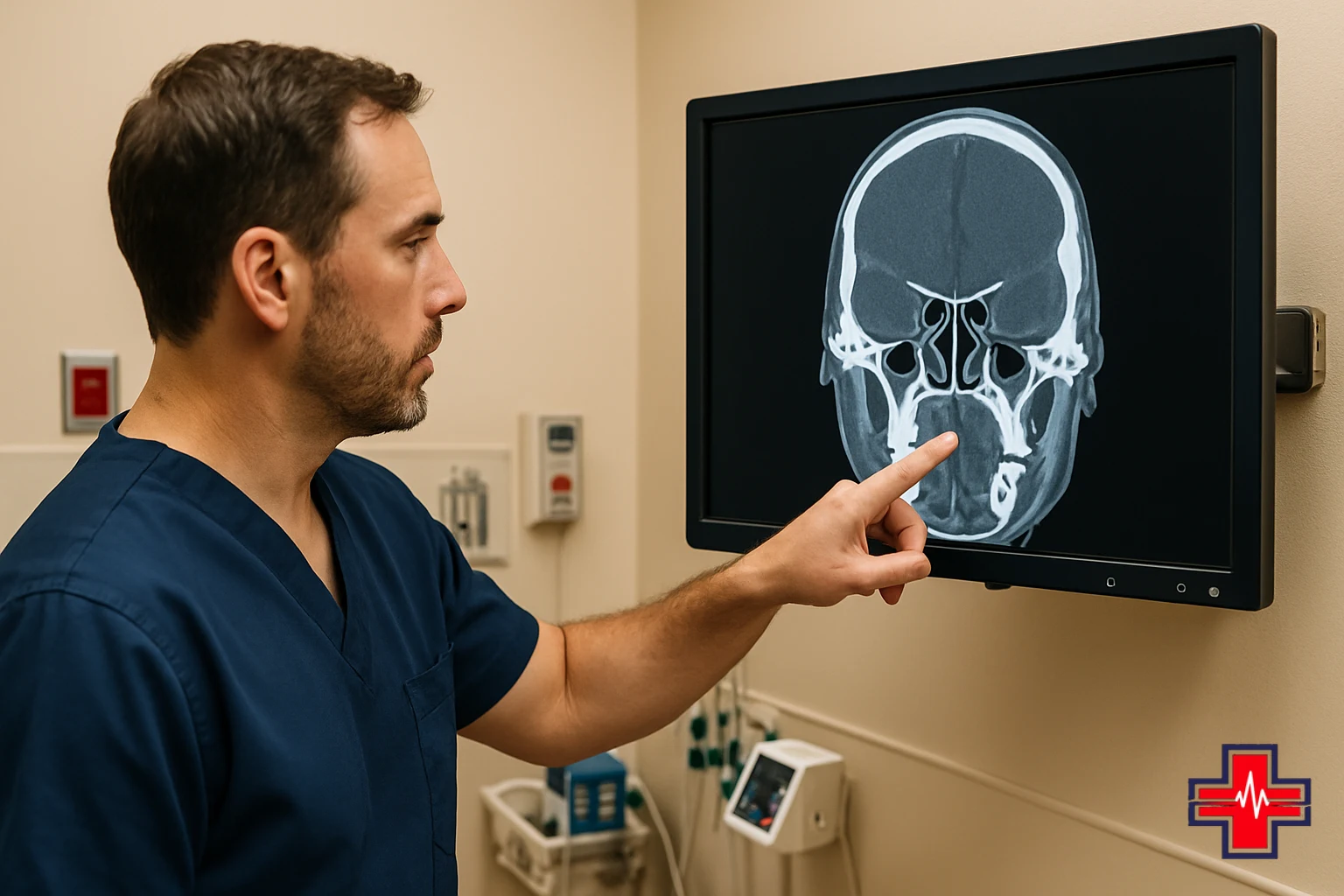
- CT scan of the head and neck: Provides detailed imaging to locate the abscess, measure its size, determine if it has spread, and assess airway patency
- Blood tests: Complete blood count (CBC) and blood cultures to confirm infection and identify the causative organism (typically oral bacteria)
- Panoramic or intraoral dental X-ray: May be performed to identify the source tooth or underlying dental pathology
ER imaging reveals information that a dental office X-ray cannot provide—specifically, whether infection has spread beyond the tooth socket into surrounding facial spaces, the neck, or toward vital structures like blood vessels or the airway. This information is essential for determining whether you need hospitalization, surgical drainage, or immediate airway management.
Blood cultures are particularly important because they can detect if bacteria has entered the bloodstream (bacteremia), which signals systemic infection requiring intensive monitoring and tailored antibiotic therapy.

IV Antibiotics & Airway Management
The cornerstone of ER treatment for severe dental abscess and facial cellulitis is prompt IV antibiotics. Unlike oral antibiotics prescribed by a dentist, intravenous antibiotics deliver high drug concentrations directly into the bloodstream, reaching infected tissue much more rapidly and effectively. The ER will:
- Initiate broad-spectrum IV antibiotics to cover common oral pathogens while awaiting culture results
- Establish IV access for medication administration and fluid resuscitation if needed
- Monitor airway status continuously using pulse oximetry, visual inspection, and serial physical exams
- Assess swallowing function to ensure the patient can safely eat and drink
- Consider airway intervention (such as intubation or emergency tracheostomy) if swelling threatens to obstruct breathing
In cases where the abscess is large, localized, and accessible, the ER may coordinate with an oral surgeon or ENT specialist for drainage. However, emergency teams prioritize airway safety and infection control over immediate drainage—securing the airway and starting antibiotics comes first.
Patients requiring hospitalization for IV antibiotics, airway monitoring, or surgical intervention will be admitted from the ER. Those with mild-to-moderate infection and good airway status may be discharged home with close follow-up, oral antibiotic continuation, and urgent dental or surgical referral.
The ER physicians at ER Of Fort Worth in downtown Fort Worth and serving Grapevine, Flower Mound, Southlake, and nearby areas have extensive experience managing airway emergencies and coordinating care with specialists to prevent catastrophic outcomes.
Prevention & Follow-Up Dental Care
After successful ER treatment for facial swelling and abscess, your recovery depends on aggressive follow-up care to eliminate the underlying dental problem. Do not assume that IV antibiotics have permanently solved the issue. An abscess recurs unless the source tooth is treated (typically extraction or root canal therapy by a dentist or endodontist).
Prevention measures to reduce abscess risk include:
- Brushing twice daily with fluoride toothpaste
- Flossing daily to remove food debris and plaque from between teeth
- Rinsing with antiseptic mouthwash if recommended by your dentist
- Seeking dental care promptly for cavities, gum disease, or cracked teeth
- Avoiding hard candy, ice chewing, or other behaviors that crack teeth
- Getting routine dental checkups every 6 months
- Managing underlying conditions like diabetes or immune disorders that increase infection risk
If you are prescribed oral antibiotics after your ER visit, complete the full course even if symptoms resolve. Stopping antibiotics early allows resistant bacteria to re-establish infection. Schedule your follow-up dental appointment within 48 hours of discharge, and attend all appointments with your dentist or oral surgeon.
Should you develop a swollen face again—even if minor—contact your dentist immediately rather than waiting. Early intervention prevents escalation to the severe airway-threatening infections that require ER care.
When to Call 911 vs. Drive to the ER
Call 911 immediately if you experience:
- Difficulty breathing or stridor
- Inability to swallow saliva or any liquids
- Severe throat tightness or sensation of choking
- Confusion, altered mental status, or loss of consciousness
- Severe, uncontrolled fever with profound weakness
- Facial swelling that is visibly worsening by the minute
Drive to the nearest ER (or call for non-emergency transport) if you have:
- Moderate facial swelling with fever above 101°F
- Severe jaw or tooth pain with noticeable facial puffiness
- Difficulty opening your mouth or chewing, but no airway compromise
- Pus drainage from a tooth or gum with systemic symptoms
When in doubt, it is better to be evaluated at the ER than to delay. ER Of Fort Worth is available 24/7 at 4561 Heritage Trace Parkway, Suite 117, Fort Worth, TX 76244 (phone: 817-945-4200). If you are experiencing a life-threatening emergency, call 911 or go to the nearest emergency room immediately.
Residents of Bedford, Keller, Watauga, and all surrounding North Texas communities have access to our 24/7 facility. Online check-in is available to streamline your arrival.
Frequently Asked Questions
Can I treat a swollen jaw abscess at home with salt water rinses and antibiotics?
Salt water rinses may provide comfort, but they cannot eliminate a true abscess. Oral antibiotics prescribed by a dentist work slowly and may fail if the abscess is large or deep. If facial swelling is rapidly worsening, accompanied by fever, or causing difficulty swallowing or breathing, you need ER evaluation and IV antibiotics, not home remedies. Delaying ER care risks airway compromise.
Is it dangerous to have a dental abscess?
Yes. While small abscesses may remain localized, they can progress to facial cellulitis, airway obstruction, or spread to the bloodstream (sepsis). Serious dental infections have caused deaths when airway swelling was not recognized or treated in time. Any abscess with fever, facial swelling, or difficulty swallowing requires urgent medical evaluation.
What is the difference between a dental abscess and facial cellulitis?
A dental abscess is a localized pocket of pus, usually rooted in a single tooth. Facial cellulitis is a spreading bacterial infection of broader facial and neck tissues. Cellulitis is more dangerous because it can advance toward the airway and bloodstream. Cellulitis typically causes fever, widespread swelling, and systemic symptoms; an abscess may cause only localized pain and minor swelling.
How quickly can a dental abscess become life-threatening?
Progression varies, but serious cellulitis or airway involvement can develop over hours. If you wake up with a swollen jaw and fever that worsens throughout the day, the infection is advancing. Do not wait overnight hoping it will improve; seek ER evaluation immediately to prevent airway compromise or sepsis.
Will the ER drain my abscess, or do I need to see a surgeon?
The ER will manage the acute medical emergency—controlling infection with IV antibiotics, securing the airway, and ordering imaging. The actual source (the tooth) is addressed by a dentist or oral surgeon, often days or weeks after acute infection is controlled. Some ER teams coordinate with surgeons for urgent drainage if needed, but that decision depends on imaging and clinical assessment.
What does swelling toward the airway feel like?
Early signs include muffled speech, difficulty swallowing saliva, tightness in the throat, or a sensation that something is blocking your airway. You may hear high-pitched breathing (stridor) or feel short of breath. These are medical emergencies. Call 911 immediately if you experience these symptoms alongside facial swelling.