
Fever with Severe Headache: ER Warning Signs in Fort Worth
A fever paired with a severe headache may feel like a routine illness, but this combination can indicate a medical emergency requiring immediate evaluation. ER of Fort Worth is equipped to diagnose and treat serious conditions that present with fever and neurological symptoms around the clock.
In This Article
- Why Fever with Severe Headache Matters
- Dangerous Conditions Behind Fever and Severe Headache
- Red Flag Symptoms: When to Call 911 Immediately
- Fever with Neurological Symptoms in Children
- ER Diagnosis and Treatment Approach
- What to Expect at ER of Fort Worth
- When Urgent Care Isn't Enough for Fever Headache
- Prevention and Follow-Up Care
- Frequently Asked Questions
⚡ Key Takeaways
- Fever with severe headache, stiff neck, or sensitivity to light can signal meningitis—a life-threatening infection requiring immediate 911 call or ER visit.
- Encephalitis, sepsis, and intracranial infections commonly present as fever paired with neurological symptoms like confusion, altered consciousness, or seizures.
- Adults with fever exceeding 103°F and severe headache, or any child with high fever and severe headache, should receive emergency evaluation without delay.
- Call 911 immediately if fever with severe headache is accompanied by difficulty breathing, loss of consciousness, or purple/red rash.
- ER of Fort Worth operates 24/7 to provide rapid triage, diagnostic imaging, blood cultures, and IV antibiotics when infection is suspected.
Why Fever with Severe Headache Matters
If you are experiencing a life-threatening emergency, call 911 or go to the nearest emergency room immediately.
The combination of fever and severe headache is one of the most important symptom pairings in emergency medicine. While most fevers resolve on their own and mild headaches are common, when these two symptoms occur together—especially if the headache is sudden, intense, and different from your usual pattern—they can signal serious infections affecting the central nervous system or bloodstream.
In the Fort Worth area, including communities like Keller, Saginaw, Haslet, and Watauga, emergency rooms see a steady stream of patients presenting with fever and headache. Many are benign viral illnesses, but some represent true medical emergencies where minutes matter. Meningitis, encephalitis, and sepsis are conditions that announce themselves through exactly this combination of symptoms, and delayed recognition can lead to permanent disability or death.
The key challenge is distinguishing between a typical viral illness and a potentially catastrophic infection. This is where prompt emergency evaluation becomes essential. ER of Fort Worth maintains the diagnostic tools and clinical expertise to rapidly assess fever with severe headache and rule out life-threatening causes.
Dangerous Conditions Behind Fever and Severe Headache
Meningitis is the most feared diagnosis when fever and severe headache occur together. This is inflammation of the membranes surrounding the brain and spinal cord, caused by bacterial or viral infection. Bacterial meningitis progresses rapidly and can be fatal within hours of symptom onset. Classic signs include fever, severe headache, stiff neck (difficulty bringing the chin to the chest), and sensitivity to light. However, not all patients display every sign, which is why professional evaluation is crucial.
Encephalitis involves inflammation of the brain tissue itself, often caused by viral infection (including herpes simplex virus and other pathogens). Fever with severe headache may be accompanied by confusion, personality changes, seizures, or hallucinations. Patients often appear acutely ill and disoriented, requiring immediate hospitalization and specialized imaging.
Sepsis occurs when an infection—originally localized to one area—spreads into the bloodstream and triggers a systemic inflammatory response. A patient with sepsis presents with fever (or sometimes low temperature), severe headache, confusion, rapid heart rate, and signs of organ dysfunction. This is a medical emergency that demands rapid recognition and treatment with IV antibiotics and supportive care.
Intracranial infections such as brain abscess or subdural empyema (infection in the space between brain and skull) can produce fever and headache along with focal neurological deficits like weakness on one side of the body, speech difficulty, or vision changes.
Severe influenza or other viral infections can occasionally trigger secondary bacterial infections or neurological complications, resulting in high fever combined with worsening headache, delirium, or loss of consciousness.
Less common but serious causes include Rocky Mountain spotted fever (transmitted by ticks in Texas), West Nile virus, and other arboviral infections that present with fever, headache, and potential neurological deterioration.
Red Flag Symptoms: When to Call 911 Immediately
Do not wait for an appointment or attempt to drive yourself to the ER if you experience any of the following alongside fever and severe headache:
- Stiff neck or difficulty bending the neck forward: This is a hallmark sign of meningitis and demands immediate 911 response.
- Severe sensitivity to light (photophobia): Even mild light causes discomfort or pain to the eyes.
- Altered consciousness, confusion, or delirium: The patient cannot think clearly, does not recognize familiar people, or is difficult to arouse.
- Seizures or convulsions: Uncontrolled muscle contractions or loss of consciousness.
- Purple or red rash that does not blanch (fade when pressed): This petechial or purpuric rash can indicate meningococcal sepsis and is a dire warning sign.
- Severe difficulty breathing or shortness of breath: Combined with fever and headache, this suggests systemic infection or respiratory compromise.
- Loss of consciousness or inability to stay awake: Any unexplained coma or severe lethargy demands emergency evaluation.
- Severe or sudden-onset headache (thunderclap quality): If the headache is the worst of your life and came on within seconds, seek immediate care even without fever initially present.
- Fever above 104°F in an adult: Extremely high fever raises concern for serious infection.
- High fever (103°F or above) with neurological symptoms in a child: Children can deteriorate rapidly with serious infections.
In these situations, call 911 rather than attempting self-transport. Paramedics can initiate preliminary assessment and alert the receiving ER to prepare for a potential meningitis or sepsis case.
Fever with Neurological Symptoms in Children
Children present a particular challenge because they cannot always communicate their symptoms clearly, and their vital signs change more rapidly than in adults. Parents and caregivers in North Richland Hills, Haltom City, Bedford, and throughout the Fort Worth metroplex should be alert to fever combined with any neurological sign in a child.
Pediatric red flags for fever with severe headache include:
- High fever (103°F or higher) accompanied by severe headache, stiff neck, or inconsolable crying.
- Unusual drowsiness, difficulty waking, or unresponsiveness.
- Confusion, disorientation, or not recognizing parents.
- Seizures or convulsions (even brief ones warrant emergency evaluation).
- Bulging fontanelle (soft spot) in infants under 18 months—a sign of increased pressure in the skull.
- Rash with fever, especially petechial (pinpoint red/purple spots) or purpuric (larger bruise-like spots).
- Irritability out of proportion to the fever level.
- High-pitched or unusual cry.
- Extreme fatigue or lethargy beyond what a typical fever would cause.
Pediatric Emergency Care at ER of Fort Worth is staffed with clinicians trained in rapid assessment and stabilization of sick children. If your child has fever with any of these neurological symptoms, do not delay seeking emergency evaluation. Early recognition and treatment of childhood meningitis and encephalitis are critical to preventing serious complications.

ER Diagnosis and Treatment Approach
When a patient arrives at ER of Fort Worth with fever and severe headache, the emergency team follows a rapid, systematic protocol to identify or rule out life-threatening causes.
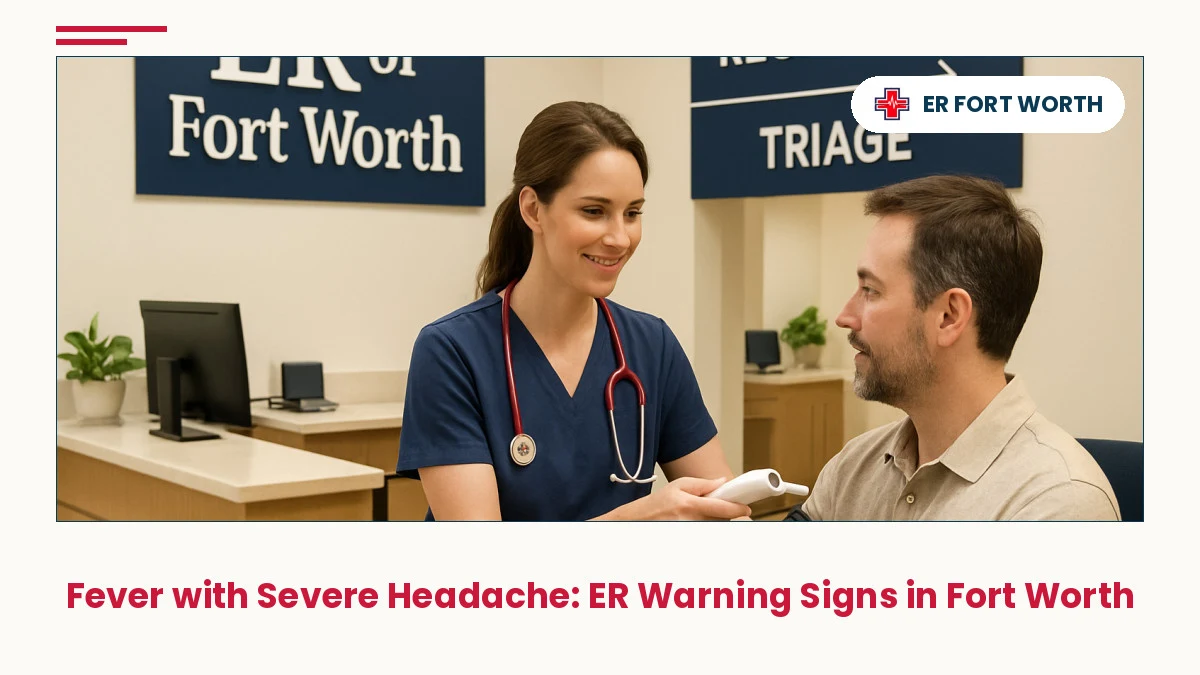
Initial Assessment and Triage: Vital signs are taken immediately, including temperature, heart rate, blood pressure, respiratory rate, and oxygen saturation. A focused neurological examination checks for meningeal signs (neck stiffness, Kernig sign, Brudzinski sign), mental status changes, focal weakness, or abnormal reflexes.
Blood Tests: Blood Tests are ordered urgently, including a complete blood count (CBC) to assess white blood cell elevation, blood cultures to identify bacterial pathogens, metabolic panel to evaluate organ function, and inflammatory markers like C-reactive protein (CRP) or procalcitonin to assess severity of infection. These tests guide antibiotic selection and help confirm or exclude sepsis.
Lumbar Puncture (Spinal Tap): If meningitis is suspected based on clinical findings or labs, a lumbar puncture may be performed to obtain cerebrospinal fluid (CSF) for analysis. CSF is examined for cell count, glucose, protein, and cultured for bacteria and viruses. This test is the gold standard for diagnosing meningitis, though antibiotics are often given before the procedure if clinical suspicion is high—never delaying treatment waiting for confirmation.
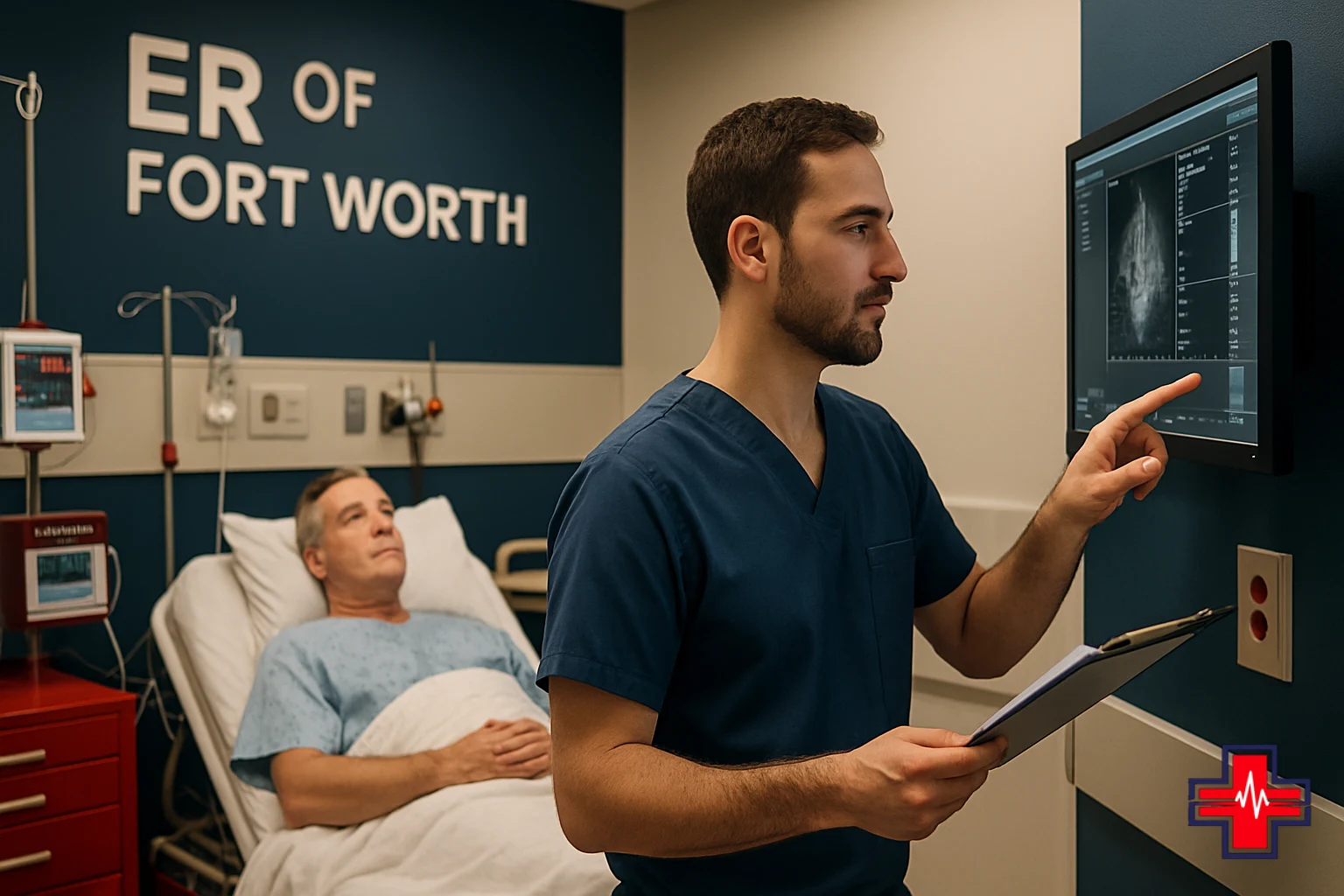
Imaging: A CT scan or MRI of the head may be obtained to rule out intracranial masses, abscess, or other structural causes of headache, and to assess for signs of encephalitis or increased intracranial pressure.
Treatment Initiation: If meningitis or sepsis is suspected, IV Antibiotics are started empirically without waiting for culture results—this is standard of care and can be life-saving. Broad-spectrum antibiotics covering common bacterial pathogens (such as ceftriaxone, vancomycin, and ampicillin) are administered immediately. IV fluids are given to maintain blood pressure and organ perfusion. Acetaminophen or ibuprofen may be used for fever management, though some clinicians avoid NSAIDs in suspected meningitis.
Supportive Care: Oxygen is provided if saturation is low. Close monitoring of vital signs, mental status, and urine output continues throughout the ER stay. If the patient deteriorates or requires intubation, critical care resources are mobilized.
The entire diagnostic and treatment sequence—from arrival to first antibiotic dose—typically occurs within minutes at a well-staffed emergency room. This rapid response is why seeking immediate ER care for fever with severe headache and red-flag symptoms is so critical.
What to Expect at ER of Fort Worth
ER of Fort Worth, located at 4561 Heritage Trace Parkway, Suite 117, Fort Worth, TX 76244, is a 24/7 freestanding emergency room equipped to manage fever with severe headache and suspected serious infections. Here's what you can expect upon arrival.
Rapid Triage: You will be evaluated quickly by nursing staff who assess vital signs and symptom severity. Patients with fever, severe headache, and neurological symptoms are prioritized for immediate physician evaluation.
Physician Evaluation: A board-certified emergency physician conducts a detailed history and physical examination, paying special attention to meningeal signs and neurological status. Fever Treatment protocols are initiated alongside diagnostic workup.
Diagnostic Testing: Blood work and imaging occur in rapid sequence. ER of Fort Worth has on-site laboratory and imaging capabilities to minimize delays. If a lumbar puncture is indicated, it is performed under sterile conditions by experienced clinicians.
Treatment: IV lines are established for fluid and antibiotic administration. If meningitis is suspected, antibiotics are given within the hour of arrival—a critical quality metric in emergency care.
Coordination of Care: Depending on diagnosis and severity, you may be transferred to a hospital ICU for ongoing management, or discharged home with close follow-up if the evaluation rules out serious infection and symptoms are mild.
Communication: The care team explains findings, next steps, and any recommendations for follow-up before you leave the ER. You can use our Online Check-In feature to reduce waiting time if you are heading to ER of Fort Worth.
ER of Fort Worth serves residents of Fort Worth, Keller, Alliance, Saginaw, Haslet, Watauga, Roanoke, North Richland Hills, Haltom City, Bedford, Southlake, Grapevine, and Flower Mound with the same standard of emergency care 24 hours a day.
When Urgent Care Isn't Enough for Fever Headache
Many people wonder whether they should visit an urgent care clinic or an ER when experiencing fever and headache. The answer depends on severity and associated symptoms. ER vs. Urgent Care outlines the general differences, but for fever with severe headache, the decision is often clear.
Urgent care is appropriate for:
- Low-grade fever (under 101°F) with mild headache and no neurological symptoms.
- Fever and mild headache in a patient with no stiff neck, confusion, or rash.
- Known viral illness (cold, flu) with expected fever and headache but otherwise well appearance.
ER is necessary for:
- Fever with severe headache (8/10 pain or higher, or worst headache of life).
- Any fever with stiff neck, photophobia, or confusion.
- High fever (103°F or above) with any neurological symptom.
- Fever with rash, especially petechial or purpuric.
- Fever with altered consciousness, seizures, or difficulty breathing.
- Any combination of fever and neurological symptoms in a child.
Urgent care clinics lack the imaging, laboratory capacity, and physician expertise to rapidly rule out meningitis, encephalitis, or sepsis. They cannot perform lumbar punctures or administer IV antibiotics at the scale needed for serious infections. If you are uncertain whether your symptoms warrant ER-level care, err on the side of caution—a comprehensive ER evaluation will provide peace of mind or identify a serious condition early enough to treat effectively.
Prevention and Follow-Up Care
While fever with severe headache cannot always be prevented, certain measures reduce the risk of serious infections.
Vaccination: Meningococcal and pneumococcal vaccines reduce the incidence of bacterial meningitis. The CDC recommends meningococcal vaccination for adolescents and young adults, and pneumococcal vaccination for certain age groups and those with chronic conditions. Influenza and COVID-19 vaccines may prevent viral infections that could lead to secondary complications.
Hygiene and Exposure Prevention: Handwashing, respiratory etiquette (covering coughs and sneezes), and avoiding close contact with sick individuals reduce transmission of viral and bacterial infections. Insect repellent and protective clothing help prevent tick-borne diseases like Rocky Mountain spotted fever, and mosquito avoidance reduces West Nile virus risk in Texas.
Prompt Treatment of Infections: Treating respiratory, urinary, and skin infections early—before they progress to sepsis—is a key prevention strategy. If you have fever and headache that initially appears mild but worsens, do not hesitate to seek evaluation.
Follow-Up After ER Visit: If you are evaluated in the ER for fever and severe headache and discharged home, follow-up with your primary care physician within 24–48 hours is important. If antibiotics were prescribed, complete the full course even if you feel better. Watch for any return of neurological symptoms, worsening headache, or new rash, and return to the ER immediately if these occur.
Contacts of Meningitis Patients: If you learn you were exposed to someone with meningitis, contact your doctor immediately. Prophylactic antibiotics may be recommended for close contacts to prevent transmission.
Recovery from meningitis or encephalitis can be gradual, and some patients experience lingering headaches, fatigue, or cognitive changes. Your primary care doctor or a neurologist can help manage these post-infection symptoms and guide your return to normal activities.
Frequently Asked Questions
What is the difference between viral and bacterial meningitis presenting with fever and severe headache?
Both viral and bacterial meningitis present with fever, severe headache, and stiff neck, but bacterial meningitis progresses more rapidly, causes more severe systemic symptoms (high fever, sepsis), and is more likely to cause death or disability without treatment. Viral meningitis is often self-limited but still requires ER evaluation to rule out bacterial disease. Laboratory analysis of cerebrospinal fluid (lumbar puncture) and blood cultures distinguish between the two.
Can a bad migraine with fever be mistaken for meningitis?
Migraine and meningitis can both cause severe headache, but meningitis includes fever, stiff neck, photophobia, and neurological symptoms (confusion, altered consciousness) that migraines alone do not cause. If you have severe headache with fever and any neurological symptom, seek emergency evaluation to rule out infection rather than assuming it is migraine. Migraine Relief ER services can help if testing rules out infection.
How quickly does meningitis develop after fever and headache start?
Bacterial meningitis can progress from first symptoms to severe illness in 24–48 hours, and in some cases more rapidly. Viral meningitis typically develops over 1–2 days. This is why seeking immediate ER evaluation when fever and severe headache occur together is critical—waiting to see if symptoms resolve at home can delay life-saving treatment.
What should I do if someone I know has been diagnosed with meningitis?
Close contacts (family members, roommates, healthcare workers without protective equipment) should consult their doctor immediately about prophylactic antibiotics, which reduce transmission risk. Seek ER evaluation right away if you develop fever, headache, or neurological symptoms after exposure to someone with meningitis.
Can I have sepsis with fever and headache but no other obvious symptoms?
Yes. Early sepsis may present primarily as fever, severe headache, and fatigue without obvious signs of infection at one site. However, blood pressure may drop, heart rate may be elevated, and blood tests often show elevated white blood cells and inflammatory markers. Any fever with severe headache and general malaise warrants ER evaluation to check for sepsis and other serious infections.
Is there a specific test that confirms meningitis in the ER?
Lumbar puncture with cerebrospinal fluid (CSF) analysis is the definitive test for meningitis. However, because meningitis is life-threatening and treatment cannot wait for test results, antibiotics are given empirically (before results return) if clinical suspicion is high. Blood cultures and CT imaging also support diagnosis and help guide care.