Fever in Newborn: When to Visit ER? Urgent Care Guide
A fever in your newborn is never something to ignore—it can signal a serious infection requiring immediate medical evaluation. This guide helps Fort Worth parents understand when a fever in a newborn demands an ER visit and what to expect during emergency assessment.
In This Article
- Why Fever in a Newborn Is Urgent
- Fever Threshold in Newborns: What Temperature Means ER
- Warning Signs Beyond Temperature: When ER Care Is Critical
- Common Fever Causes in Newborns
- What to Expect During Newborn Fever Evaluation at the ER
- Fever Management Strategies Before and After ER Visit
- When Never to Delay: Red Flags for Immediate 911 Response
- Frequently Asked Questions
⚡ Key Takeaways
- Any rectal fever of 100.4°F (38°C) or higher in an infant under 3 months old warrants immediate ER evaluation.
- Newborns have immature immune systems and cannot be safely observed at home; bacterial infections like meningitis or sepsis escalate rapidly without treatment.
- Additional warning signs—lethargy, poor feeding, rash, difficulty breathing, or inconsolability—demand urgent care regardless of fever height.
- ER Of Fort Worth offers 24/7 pediatric assessment and rapid diagnostic testing to identify and treat serious infections in newborns.
- Never delay seeking emergency care for a febrile newborn; early intervention significantly improves outcomes.
Why Fever in a Newborn Is Urgent
Newborns—infants under 3 months of age—have immature immune systems that cannot yet mount an effective defense against serious bacterial infections. Unlike older children and adults who may develop low-grade fevers as part of a self-limited viral illness, a fever in a newborn is a medical red flag signaling potential sepsis, meningitis, urinary tract infection, or other life-threatening conditions.
This is not a situation where watchful waiting applies. Serious bacterial infections in newborns progress at alarming speed—a healthy-appearing infant can decline into shock within hours. Because neonatal infections carry high morbidity and mortality risks without prompt antibiotic treatment, the medical consensus is clear: any fever in a newborn requires immediate evaluation, regardless of how well the infant appears.
Parents across Fort Worth, Keller, Saginaw, Haslet, and surrounding communities need to understand this critical window. Delaying care by even a few hours can result in severe complications. Pediatric emergency care at ER Of Fort Worth is available 24/7 specifically to address these urgent situations and provide rapid diagnostic clarity.
Fever Threshold in Newborns: What Temperature Means ER
The fever threshold that defines an urgent situation in newborns differs significantly from older children. In infants younger than 3 months, a rectal temperature of 100.4°F (38°C) or higher is considered fever and warrants immediate emergency evaluation. This is not a suggestion—it is the established standard of care supported by pediatric infectious disease specialists and emergency medicine guidelines.
Why such a low threshold? Newborns are at substantially higher risk for serious bacterial infection compared to older infants. Their immune systems have not yet developed the antibodies and white blood cell response patterns needed to contain infections locally. A temperature elevation that might represent a minor viral illness in a 6-month-old could indicate bacterial sepsis in a newborn.
Take temperature using a rectal thermometer, which provides the most accurate measurement in infants. Axillary (underarm) or temporal (forehead) readings are less reliable in newborns and may falsely reassure parents when fever is actually present. If your thermometer reads 100.4°F or higher rectally, do not wait—proceed to the nearest emergency room or call 911 if symptoms are severe. Residents of Alliance, North Richland Hills, Watauga, and Roanoke can reach ER Of Fort Worth quickly for immediate assessment.
If your newborn's temperature is borderline or you are uncertain about the reading, err on the side of caution and seek evaluation. Emergency physicians can rapidly rule out serious infection and provide peace of mind—or initiate life-saving treatment if infection is confirmed.
Warning Signs Beyond Temperature: When ER Care Is Critical
While fever itself is the primary reason to seek immediate ER care in newborns, several additional warning signs indicate that your infant needs emergency evaluation even if temperature is not markedly elevated:
- Lethargy or decreased responsiveness – A newborn who is unusually sleepy, difficult to arouse, or not responding to your voice or touch may be seriously ill. Normal newborns should respond to stimulation and feeding.
- Poor feeding or inability to feed – Newborns who refuse the breast or bottle, seem unable to latch, or feed very weakly may have an underlying infection affecting their strength and swallowing reflex.
- Inconsolability or unusual high-pitched cry – Persistent crying that cannot be soothed by feeding, holding, or diaper changes, or a cry that sounds different from the baby's normal cry, can signal meningitis or severe discomfort.
- Abnormal skin color or mottling – Pale, grayish, or bluish skin, or a blotchy, mottled appearance, suggests poor circulation and possible sepsis.
- Rash – A rash, especially one that does not blanch (fade) when you press gently on it, is a classic sign of meningococcemia and demands immediate ER evaluation.
- Rapid, slow, or irregular breathing – Respiratory distress, grunting, flaring nostrils, or retractions (indrawing of the chest wall) indicate the infant is working hard to breathe and may have pneumonia or another serious infection.
- Difficulty breathing or apnea – Any episode of not breathing, gasping, or severe shortness of breath is a life-threatening emergency; call 911 immediately.
- Vomiting or persistent regurgitation – While some spit-up is normal, projectile vomiting or persistent vomiting (especially if green) can indicate infection or other serious conditions.
- Diarrhea or blood in stool – Watery or frequent diarrhea, especially with mucus or blood, raises concern for gastrointestinal infection.
If your newborn exhibits any of these signs in combination with fever, or even without fever if the symptoms are severe, do not delay—seek immediate emergency care. Pediatric emergency care specialists are trained to rapidly recognize and treat life-threatening neonatal infections.
Common Fever Causes in Newborns
Understanding the possible causes of newborn fever helps parents grasp why prompt evaluation is so critical. Unlike fevers in older children, which are often viral and self-limited, fevers in newborns carry a much higher likelihood of serious bacterial infection:
Sepsis (Bacterial Blood Infection) – Sepsis is a systemic infection characterized by bacteria in the bloodstream. Early-onset sepsis (occurring in the first 72 hours of life) is often acquired from the mother during delivery, while late-onset sepsis (after 72 hours) can come from environmental sources or healthcare exposures. Sepsis progresses rapidly and can lead to shock, organ failure, and death without urgent antibiotic therapy.
Meningitis (Infection of the Membrane Surrounding the Brain and Spinal Cord) – Bacterial meningitis in newborns is a medical emergency with high mortality and morbidity. Survivors often suffer permanent neurological damage. Early recognition and treatment with IV antibiotics significantly improve outcomes, making rapid ER evaluation essential.
Urinary Tract Infection (UTI) – UTI treatment is often overlooked in febrile newborns because infants cannot localize symptoms. UTIs in infants can progress to urosepsis (blood infection from urinary source) if untreated. Urine cultures obtained during ER evaluation can identify UTI and guide antibiotic selection.
Pneumonia – Pneumonia treatment in newborns may present with fever, shortness of breath, grunting, or subtle respiratory findings. Chest X-ray and blood tests during ER assessment can confirm diagnosis and guide therapy.
Viral Infections – While viruses like respiratory syncytial virus (RSV), influenza, and enteroviruses can cause fever in newborns, they still require medical evaluation because it is impossible to distinguish a benign viral infection from a dangerous bacterial one based on symptoms alone. ER evaluation and testing clarify the diagnosis.
Regardless of the underlying cause, the principle remains the same: fever in a newborn mandates immediate ER evaluation and diagnostic testing. Antibiotic therapy initiated during that early ER visit can be life-saving.

What to Expect During Newborn Fever Evaluation at the ER
When you arrive at ER Of Fort Worth with a febrile newborn, staff will prioritize your infant immediately. Understand what will happen during the evaluation so you can be prepared and informed:
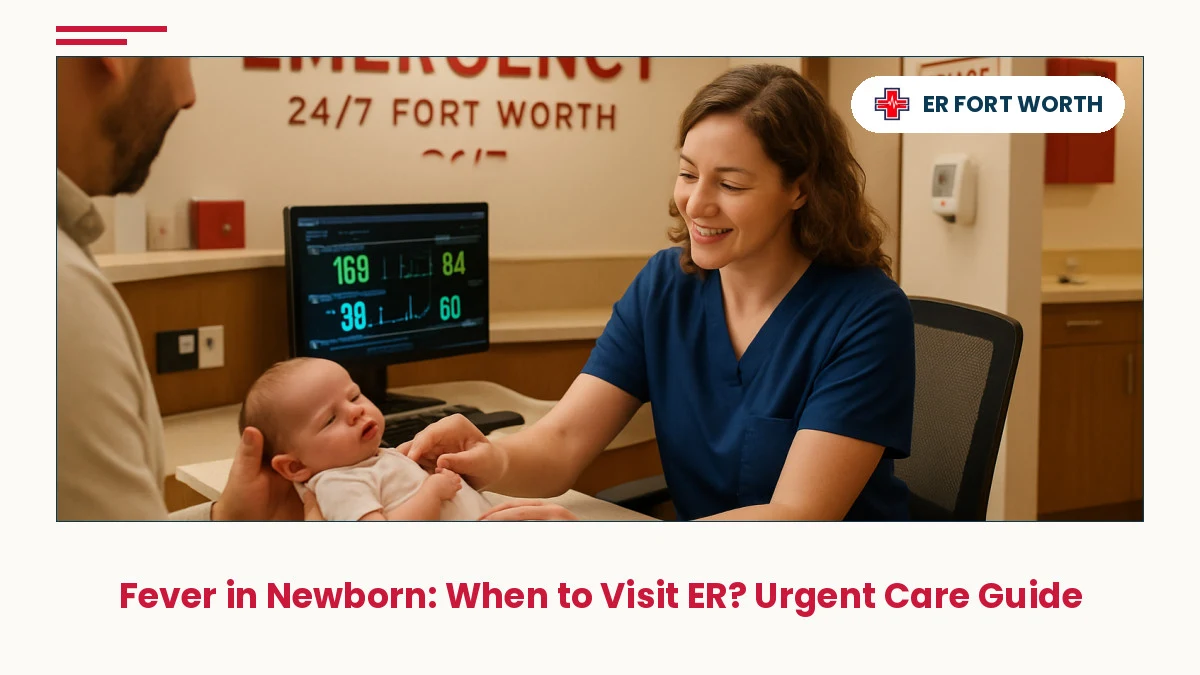
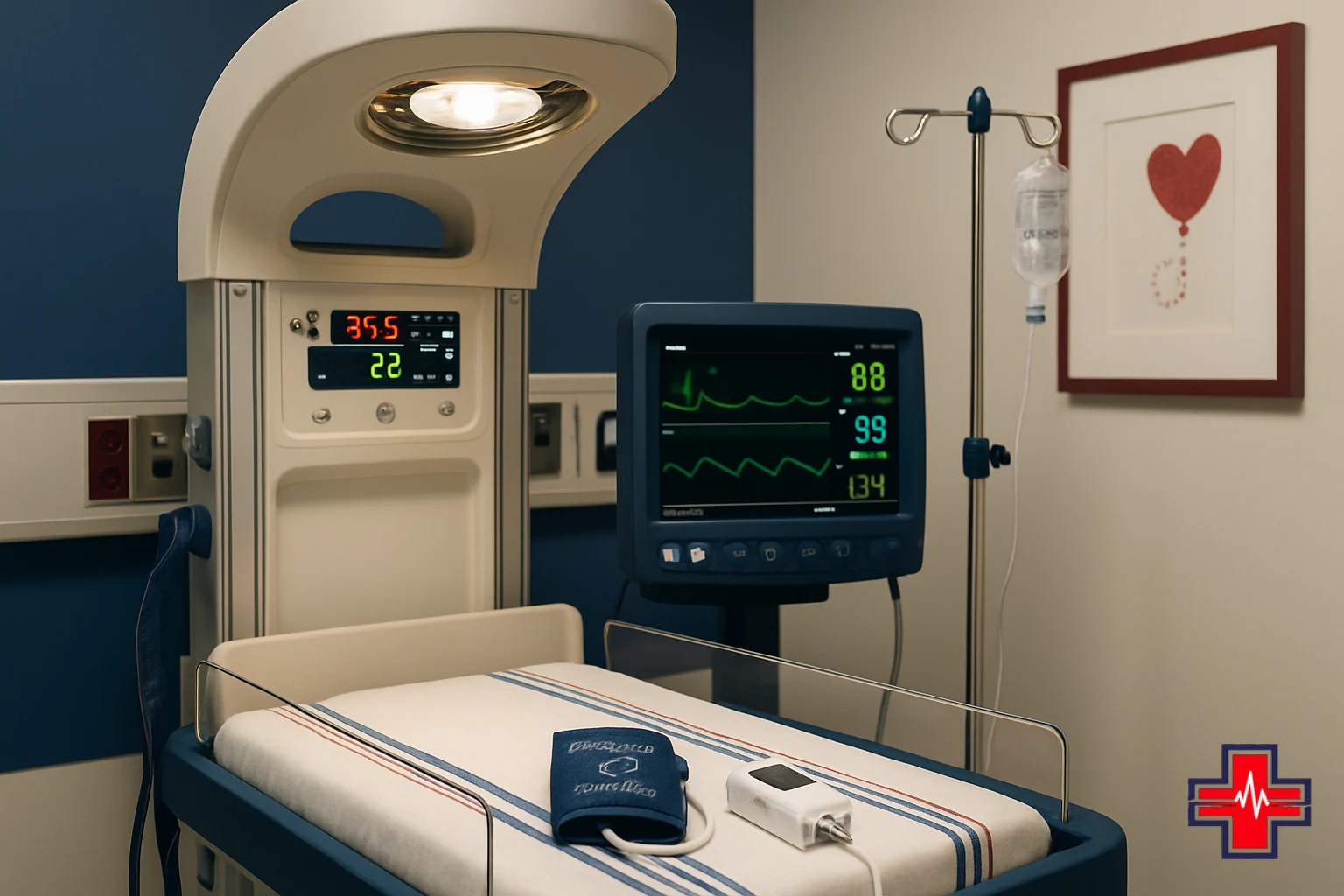
Rapid Triage and Initial Assessment – Your newborn will be seen quickly and placed on a monitor to track heart rate, respiratory rate, oxygen saturation, and temperature. Nursing staff will ask detailed questions about the infant's medical history, delivery circumstances, feeding, hydration, and any recent exposures.
Physical Examination – The emergency physician will perform a thorough head-to-toe examination, looking for signs of infection such as rashes, soft spot bulging, respiratory distress, or signs of poor perfusion. This examination is gentler than it sounds and is designed to identify life-threatening conditions.
Diagnostic Testing – Evaluation of a febrile newborn typically includes:
- Blood culture – A blood sample is sent for culture to identify any bacteria and guide antibiotic selection. This is the most important test because it can confirm or rule out sepsis.
- Complete blood count (CBC) – Part of blood tests to assess white blood cell count and other markers of infection.
- Blood glucose – Low blood glucose can accompany sepsis in newborns.
- Urinalysis and urine culture – To identify UTI, which is a common source of fever in neonates.
- Chest X-ray – If respiratory symptoms are present, imaging may be obtained to evaluate for pneumonia.
- Lumbar puncture (spinal tap) – To obtain cerebrospinal fluid and rule out meningitis. This procedure is performed if meningitis is suspected or if the infant meets certain risk criteria. While the thought of a spinal tap is frightening for parents, it is a critical test that can identify or exclude a life-threatening infection.
Antibiotic Initiation – If fever is confirmed or if the infant appears ill, empiric IV antibiotics will be started immediately, often before culture results are available. This is standard practice because waiting for test results in a potentially septic newborn is not safe. Antibiotics are adjusted once culture and sensitivity results are known (usually 48 hours).
Admission and Monitoring – Most febrile newborns are admitted to the hospital for observation, continued IV antibiotics, and serial monitoring. Occasionally, infants who appear well, meet strict low-risk criteria, and have reliable follow-up may be managed with outpatient observation and close family follow-up, but this is uncommon and requires strong physician-parent partnership.
Fever Management Strategies Before and After ER Visit
While seeking emergency evaluation is the priority, understanding fever management can help you support your newborn's comfort and provide useful information to ER physicians:
Temperature Measurement – As mentioned, rectal temperature is most accurate in newborns. Ensure the thermometer is clean and use a gentle, steady motion. Record the temperature and the time so you can communicate this information to emergency staff. Note whether the fever is persistent or intermittent.
Keeping Records – Document when fever was first noticed, how many times you have measured temperature, any associated symptoms (poor feeding, lethargy, rash), and any recent exposures (visitors, siblings with illness). This timeline is invaluable to the ER physician.
Comfort Measures While Awaiting ER Care – You may gently undress your newborn if the environment is warm and safe, allowing skin exposure to help cool the body. Do not over-dress or swaddle tightly during fever. Keep the infant in a cool (but not cold) room. Ensure adequate hydration—if breastfeeding, offer the breast frequently; if bottle-feeding, offer small, frequent feeds of formula.
Fever-Reducing Medications: Caution in Newborns – Do not give acetaminophen (Tylenol) or ibuprofen (Motrin, Advil) to a newborn without explicit instruction from a physician. These medications are not routinely recommended in infants under 3 months and may mask important signs of infection or cause harm. The goal in a febrile newborn is not to lower temperature but to rapidly identify and treat the underlying cause. Fever itself, while uncomfortable, is generally a sign that the immune system is responding—the danger lies in what is causing the fever, not the fever itself.
After ER Evaluation and Hospital Admission – Once your newborn is hospitalized, the care team will manage fever as part of the overall infection treatment. Follow all medication and feeding instructions given by nursing and physician staff. Ask questions if you do not understand the plan. Skin-to-skin contact (when medically appropriate) and your presence at the bedside support your infant's well-being during hospitalization.
When Never to Delay: Red Flags for Immediate 911 Response
If you are experiencing a life-threatening emergency, call 911 or go to the nearest emergency room immediately.
While bringing a febrile newborn to the ER is always appropriate, certain scenarios demand calling 911 rather than driving yourself:
- Severe difficulty breathing, gasping, or apnea – If your infant stops breathing, gasps, or shows signs of severe respiratory distress (severe retractions, nasal flaring, grunting), call 911. Paramedics can provide oxygen and airway support during transport.
- Unresponsiveness or loss of consciousness – If your newborn is not responding to stimulation or appears unconscious, this is a life-threatening emergency.
- Severe pallor, bluish discoloration (cyanosis), or signs of shock – Pale, grayish, or blue skin; cold extremities; or weak pulse indicate inadequate circulation and sepsis. Call 911.
- Seizure activity – Convulsions or abnormal jerking movements warrant 911 and immediate transport.
- Fever in a newborn less than 1 month old with severe lethargy – The younger the infant and the more seriously ill they appear, the lower the threshold for calling 911.
When in doubt, call 911. Paramedics and ER physicians would rather evaluate an infant who turns out to have a manageable condition than have a critically ill newborn arrive too late for intervention. There is no penalty for erring on the side of caution with a newborn's life at stake.
ER Of Fort Worth is a Fort Worth emergency room available 24/7 with the expertise and equipment needed for rapid newborn assessment. Our ER doctors are experienced in neonatal emergencies and work in coordination with pediatric specialists and hospital partners to ensure your infant receives the highest level of care.
Frequently Asked Questions
At what temperature should I take my newborn to the ER?
Any rectal temperature of 100.4°F (38°C) or higher in a newborn under 3 months old warrants immediate ER evaluation. Do not wait to see if the fever goes away on its own. Prompt medical assessment is essential to rule out serious bacterial infection.
Can I give my newborn fever-reducing medication like acetaminophen?
No. Acetaminophen and ibuprofen are not routinely given to newborns under 3 months without explicit physician guidance. These medications may mask symptoms of serious infection. The goal is to seek ER evaluation and treatment of the underlying cause, not simply to lower temperature.
What if my newborn has a fever but appears well and is feeding normally?
Even a well-appearing newborn with fever requires ER evaluation. Serious infections like meningitis and sepsis can progress rapidly, and a healthy appearance is not a reliable indicator that infection is absent. Early-appearing illness can be deceptive in newborns. Seek immediate care.
Is it safe to drive my febrile newborn to the ER myself, or should I call 911?
If your newborn is alert, breathing normally, and stable, driving to the ER is usually acceptable. However, call 911 if your infant shows signs of severe distress, difficulty breathing, unresponsiveness, or severe pallor. When in doubt, call 911—paramedics can provide support during transport.
Will my newborn need a spinal tap (lumbar puncture) during ER evaluation?
A lumbar puncture may be performed if meningitis is suspected or if your infant meets certain risk criteria. This test obtains cerebrospinal fluid to rule out bacterial meningitis, which is a life-threatening infection. The ER physician will discuss this procedure and answer your questions.
How long will my newborn be in the ER before a decision is made about admission?
Evaluation typically takes 1–2 hours, including rapid triage, physical examination, blood draws, urinalysis, and initial test results. Once blood cultures and other tests are sent, the physician will determine whether admission to the hospital is needed for continued monitoring and IV antibiotics.