
Fever With Nausea and Vomiting: ER Care and Dehydration Risk
Fever accompanied by nausea and vomiting is your body's signal that something requires immediate attention. This combination can rapidly lead to dehydration and mask underlying infections that demand prompt diagnosis and treatment.

In This Article
- Understanding Fever With Nausea and Vomiting
- Dehydration Risk: Why This Combination is Dangerous
- Warning Signs That Require Immediate ER Care
- Common Causes of Fever With Nausea and Vomiting
- What You Can Do at Home Before ER Arrival
- ER Evaluation and Treatment for Fever With Vomiting
- When to Seek Emergency Care in Fort Worth
- Frequently Asked Questions
⚡ Key Takeaways
- Fever with nausea and vomiting lasting more than a few hours warrants evaluation to rule out serious infections or conditions.
- Dehydration can develop rapidly in children and older adults when vomiting accompanies fever, requiring IV fluid replacement.
- A fever above 103°F combined with vomiting and severe symptoms requires immediate ER evaluation.
- Keep track of fluid intake and urination frequency—decreased output signals concerning dehydration levels.
- Do not wait to seek care if fever with nausea and vomiting is accompanied by severe headache, stiff neck, confusion, or difficulty breathing.
Understanding Fever With Nausea and Vomiting
If you are experiencing a life-threatening emergency, call 911 or go to the nearest emergency room immediately.
Fever with nausea and vomiting represents a complex symptom cluster that signals your immune system is responding to an infection or other serious condition. Unlike a simple fever or isolated nausea, this combination accelerates complications and complicates fluid and nutrient absorption. Your body loses fluids through perspiration (from the fever) and through vomiting simultaneously—a double drain that can quickly deplete your hydration status.
This symptom pattern occurs across all age groups but poses particular risk to young children, elderly adults, and anyone with underlying chronic conditions. A child under age 5 with fever above 102°F accompanied by vomiting faces different clinical considerations than an adult, though both require careful evaluation. The overlap of gastrointestinal distress with systemic fever makes it harder to pinpoint the exact cause without medical investigation—which is why prompt assessment at a facility like ER Of Fort Worth becomes essential rather than optional.
Dehydration Risk: Why This Combination is Dangerous
Dehydration isn't simply about drinking less water. When fever with nausea and vomiting occurs, your body enters a state where fluid loss exceeds fluid intake across multiple pathways. The elevated body temperature increases insensible fluid loss through sweating. Vomiting, meanwhile, eliminates fluids and electrolytes (sodium, potassium, chloride) that regulate heart rhythm, muscle function, and nerve signaling.
Even moderate dehydration can cause dizziness, dry mouth, reduced urination, and weakness. Severe dehydration triggers confusion, rapid heart rate, low blood pressure, and organ dysfunction—conditions that demand IV fluid replacement rather than oral hydration alone. This is why fever treatment in an ER setting often includes blood work and IV access: clinicians need to assess electrolyte levels and deliver fluids directly into the bloodstream for immediate correction.
Children dehydrate faster than adults because they have a smaller fluid reserve and their kidneys are less efficient at conserving water. An infant or toddler with fever and vomiting can become seriously dehydrated within hours. Older adults face similar risk due to age-related changes in thirst sensation and kidney function. Monitor for signs of dehydration: decreased urination, dark yellow urine, extreme thirst, dry mucous membranes, lethargy, and sunken fontanel (in infants).
Warning Signs That Require Immediate ER Care
Certain warning signs demand you stop home management and head to the emergency room without delay. If fever with nausea and vomiting is accompanied by any of the following, seek immediate evaluation:
- Fever above 103°F—at this threshold, the risk of serious infection rises significantly.
- Severe headache—especially if combined with neck stiffness, confusion, or sensitivity to light, which may indicate meningitis.
- Difficulty breathing or shortness of breath—suggests respiratory tract involvement or systemic illness.
- Chest pain—warrants chest pain evaluation to rule out cardiac or pulmonary emergency.
- Severe abdominal pain—may indicate appendicitis, gastroenteritis, or other surgical abdomen.
- Confusion, altered mental status, or extreme lethargy—red flags for severe infection or dangerous electrolyte imbalance.
- Unable to keep any fluids down for more than 4 hours—progressive dehydration risk.
- Vomiting blood or material that looks like coffee grounds—indicates GI bleeding.
- Rash that does not blanch (fade) when pressed—may signal meningococcemia or other serious infection.
- Fever lasting more than 3 days without improvement—suggests need for diagnostic investigation.
In the Fort Worth area—including Keller, Alliance, Saginaw, Haslet, Watauga, Roanoke, North Richland Hills, Haltom City, Bedford, Southlake, Grapevine, and Flower Mound—ER Of Fort Worth at 4561 Heritage Trace Parkway provides 24/7 evaluation when these signs appear.
Common Causes of Fever With Nausea and Vomiting
Fever with nausea and vomiting stems from several distinct origins. Viral infections—particularly gastroenteritis (often called stomach flu or food poisoning), influenza, and enterovirus infections—frequently produce this exact triad. Bacterial infections of the urinary tract, ear, throat, or lungs can trigger fever alongside GI symptoms. Some patients with pneumonia experience nausea and vomiting rather than classic respiratory complaints, especially younger children.
Appendicitis classically begins with fever, abdominal pain, and vomiting. Urinary tract infections (UTIs)—particularly in children and pregnant women—can produce systemic symptoms including fever and nausea. Migraines sometimes manifest with high fever and severe nausea, particularly in pediatric patients. Certain medications, blood disorders, and even heat illness (if accompanied by systemic response) may also present with this symptom cluster.
Without proper diagnostic workup—including blood tests, urinalysis, imaging, and physical examination—you cannot reliably distinguish between a self-limited viral illness and a condition requiring antibiotics or emergency intervention. This is why ER evaluation provides clarity when home observation leaves you uncertain.

What You Can Do at Home Before ER Arrival
If you suspect fever with nausea and vomiting but none of the warning signs are present, initial home management may provide temporary relief while you prepare for potential ER evaluation. The goal is to prevent further fluid loss and monitor for deterioration.
- Rest in a cool environment: Avoid heavy blankets. Cool compresses on the forehead or neck may ease discomfort, though do not force rapid cooling, which can cause shivering and increase internal heat production.
- Sip fluids frequently: Offer small amounts (1–2 tablespoons) of oral rehydration solution, broth, or water every 15–20 minutes rather than large volumes, which may trigger more vomiting. Avoid dairy, high-fat foods, and acidic beverages initially.
- Track intake and output: Note the number of wet diapers (infants), frequency of urination (children and adults), and approximate urine color. Dark yellow or amber urine indicates inadequate hydration.
- Monitor temperature: Check fever every 2–4 hours. Temperatures rising above 103°F or fever lasting beyond 3 days warrants ER evaluation regardless of other symptoms.
- Avoid over-the-counter antiemetics: Do not give anti-nausea medications without ER guidance, as they may mask serious conditions or interact with underlying illness.
- Never force food: Allow the digestive system to rest. Once vomiting settles, start with bland foods (crackers, toast, rice) in small portions.
These measures are comfort measures, not substitutes for medical care. If fever with nausea and vomiting persists beyond 4 hours or any warning signs develop, seek immediate ER evaluation.
ER Evaluation and Treatment for Fever With Vomiting
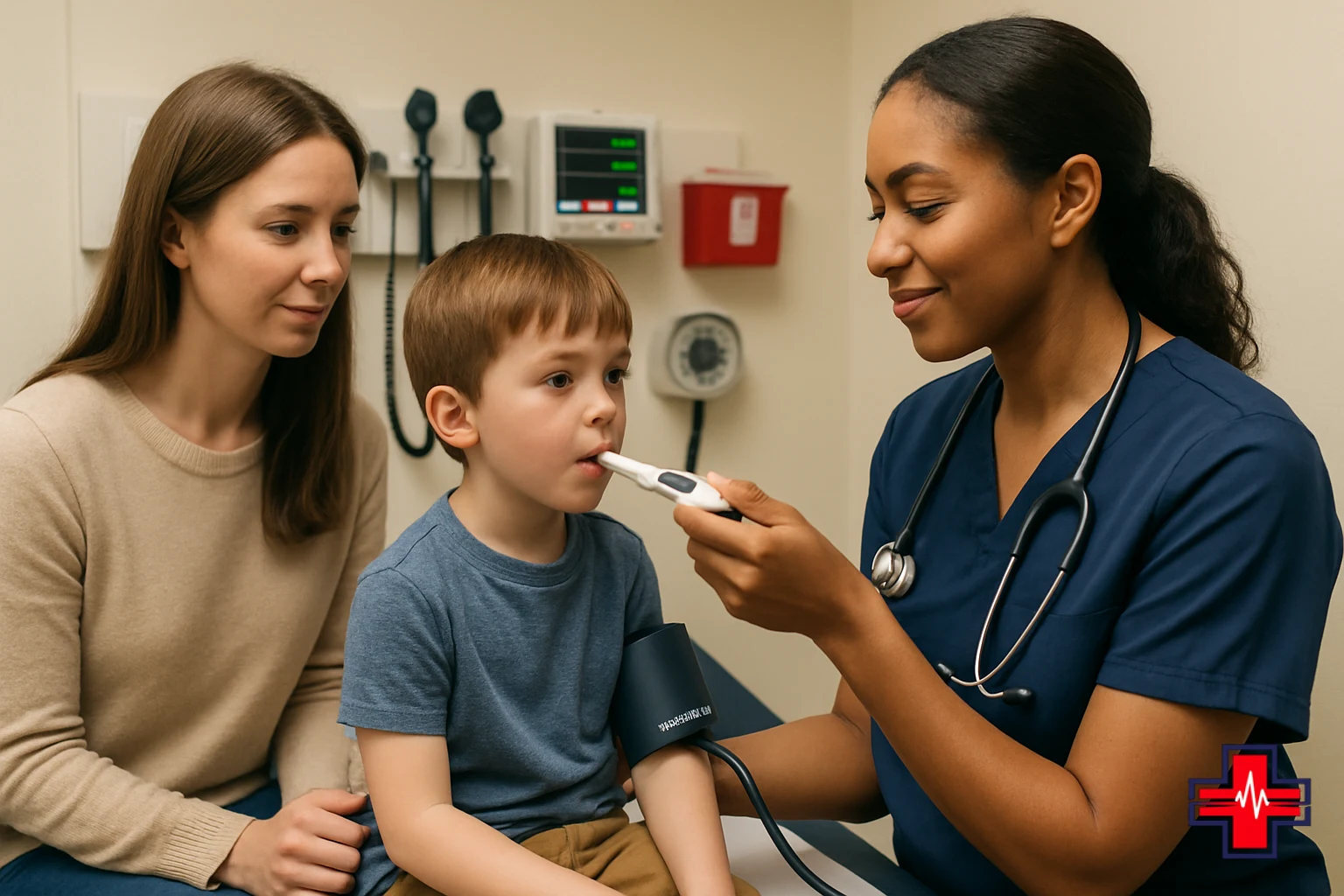
When you arrive at an emergency room, staff will perform a systematic evaluation to identify the underlying cause and correct dehydration. Initial assessment includes vital signs (temperature, heart rate, blood pressure, respiratory rate), physical examination focusing on hydration status and abdominal findings, and a detailed symptom history.
Most patients with fever and vomiting will receive blood tests—including white blood cell count, electrolytes, kidney function, and sometimes blood cultures if serious infection is suspected. Urinalysis and urine culture help identify UTI or kidney infection. Imaging (abdominal ultrasound or CT) may be ordered if appendicitis or other surgical abdomen is suspected. Stool testing may be performed if bacterial gastroenteritis is likely.
Treatment depends on the underlying diagnosis but typically includes IV fluid resuscitation with electrolyte-balanced solutions. IV antibiotics are initiated if bacterial infection is confirmed or strongly suspected. Anti-nausea medications (antiemetics) are administered once dehydration is being corrected, allowing the vomiting to resolve and fluid intake to resume. Fever management focuses on treating the underlying cause rather than simply lowering temperature with acetaminophen or ibuprofen, though these may be recommended once fluid status improves.
Patients are monitored continuously for response to treatment. Most can go home after 1–4 hours once dehydration is corrected and oral intake is tolerated. Those with severe infections or electrolyte abnormalities may require hospital admission for continued IV therapy and observation.
When to Seek Emergency Care in Fort Worth
Residents of Fort Worth and nearby communities—Keller, Alliance, Saginaw, Haslet, Watauga, Roanoke, North Richland Hills, Haltom City, Bedford, Southlake, Grapevine, and Flower Mound—have access to ER Of Fort Worth, a 24/7 freestanding emergency room specializing in rapid diagnosis and treatment of acute illness including fever with nausea and vomiting.
Seek immediate ER care if:
- Fever above 103°F with vomiting and any other concerning symptom.
- Unable to keep fluids down for 4 or more hours.
- Signs of severe dehydration: extreme thirst, dry mouth, dark urine, dizziness, confusion, or decreased urination.
- Fever with vomiting in an infant under 3 months old (always requires evaluation).
- Fever with vomiting in a child under 2 years lasting more than 2 hours.
- Fever with severe headache, stiff neck, rash, difficulty breathing, or chest pain.
- Vomiting persists beyond 24 hours without improvement.
- You suspect food poisoning or contact with contagious illness and symptoms are worsening.
ER Of Fort Worth provides pediatric emergency care for children of all ages, experienced staff trained in managing dehydration and fever-related illness, and rapid diagnostic testing. You can use online check-in to streamline arrival and reduce wait time if your condition is not immediately life-threatening.
If you are experiencing a life-threatening emergency—such as loss of consciousness, unresponsiveness, severe difficulty breathing, or signs of sepsis (confusion, high fever with extreme weakness)—call 911 or go to the nearest hospital emergency department immediately.
Frequently Asked Questions
How long should I wait before going to the ER if my child has fever with vomiting?
If fever with nausea and vomiting persists for more than 4 hours, your child cannot keep fluids down, or any warning signs appear (severe headache, difficulty breathing, rash, confusion), seek ER evaluation immediately. Do not wait overnight hoping it resolves. Dehydration in children can progress rapidly.
Can fever with nausea and vomiting go away on its own?
Mild viral gastroenteritis may resolve within 24–48 hours with supportive care at home. However, fever lasting more than 3 days, worsening symptoms, or signs of dehydration suggest a condition requiring ER evaluation and diagnostic testing to rule out serious infection or complications.
What should I give my child to drink if they have fever and vomiting?
Offer small, frequent sips of oral rehydration solution (containing sodium and glucose for optimal absorption), clear broth, or water. Avoid milk, juice, and sugary drinks, which may worsen vomiting. If vomiting is severe, start with just ice chips or popsicles until the stomach settles slightly.
Is a fever of 101°F with vomiting an emergency?
A fever of 101°F alone is not typically an emergency, but combined with vomiting lasting more than a few hours, inability to keep fluids down, or signs of dehydration, it warrants ER evaluation to identify the cause and prevent complications. Age matters: infants and very young children require earlier evaluation than adults.
Why does the ER give IV fluids for fever and vomiting instead of just oral fluids?
IV fluids bypass the inflamed or irritated digestive system, delivering fluids and electrolytes directly into the bloodstream for rapid absorption. This is essential when dehydration is significant, vomiting is ongoing, or electrolyte imbalance has developed. Oral rehydration cannot work fast enough in these situations.
Can fever with nausea and vomiting be a sign of something serious like meningitis?
Fever with nausea and vomiting can accompany meningitis, especially if combined with severe headache, stiff neck, sensitivity to light, or rash. These are medical emergencies requiring immediate ER evaluation. Any fever with severe headache and vomiting should be evaluated promptly.