
Emergency Laboratory Testing at Fort Worth ER 24/7
When you need answers fast, emergency laboratory testing at ER Of Fort Worth delivers results when it matters most. Our 24/7 point-of-care lab services provide same-day testing and rapid diagnostics to guide urgent treatment decisions.
In This Article
- What Is Emergency Laboratory Testing?
- Point-of-Care Testing vs. Traditional Laboratory Methods
- Stat Lab Testing for Urgent Conditions
- Same-Day Blood Work and Rapid Results
- ER Diagnostic Testing in Common Medical Scenarios
- When to Seek Emergency Laboratory Testing
- Access ER Of Fort Worth 24/7 Lab Services
- Frequently Asked Questions
⚡ Key Takeaways
- Emergency laboratory testing uses point-of-care technology to deliver critical results in minutes to hours, not days.
- Stat lab testing at our Fort Worth ER identifies infections, blood disorders, cardiac events, and metabolic emergencies without delay.
- Same-day blood work results guide immediate treatment decisions for conditions ranging from sepsis to stroke.
- 24/7 ER diagnostic testing is available seven days a week with no appointment needed for urgent care patients.
- ER Of Fort Worth combines rapid blood tests, urinalysis, and blood clot screening to address complex diagnostic challenges in real time.
What Is Emergency Laboratory Testing?
Emergency laboratory testing refers to diagnostic blood work, urinalysis, and other lab studies performed immediately in an emergency department setting to identify life-threatening or urgent medical conditions. Unlike routine lab work ordered by a primary care physician—which may take days for results—emergency laboratory testing prioritizes speed and accuracy to inform treatment decisions that can't wait.
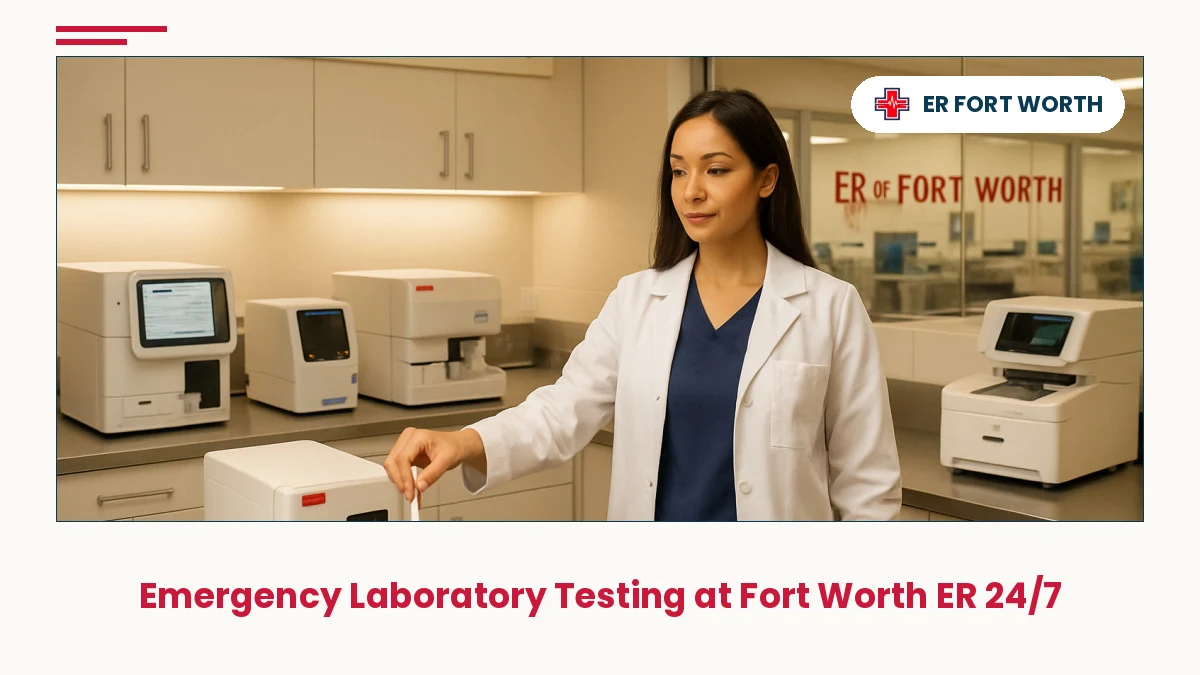
At ER Of Fort Worth, emergency laboratory testing uses state-of-the-art analyzers and trained phlebotomists to collect and process samples within minutes. The goal is simple: determine what's wrong and start treatment quickly. Whether a patient arrives with chest pain, fever, difficulty breathing, or suspected infection, our lab team works in parallel with physicians to accelerate diagnosis and care.
Point-of-care technology has transformed emergency medicine. Rather than sending blood samples to an off-site reference lab and waiting hours or days, many critical tests now run on dedicated analyzers right in the ER, delivering results fast enough to guide immediate clinical decisions.
Point-of-Care Testing vs. Traditional Laboratory Methods
Point-of-care (POC) testing differs fundamentally from traditional laboratory methods. POC tests are performed at the bedside or in the emergency department using compact analyzers, while traditional lab methods send samples to a centralized laboratory facility where they undergo batch processing and more complex analysis.
Point-of-Care Testing Advantages:
- Results available in minutes to one hour
- No transport delays or specimen handling
- Immediate clinical decision-making
- Repeated testing for trending (e.g., cardiac troponin serial measurements)
- Reduced turnaround time in life-threatening situations
Traditional Laboratory Testing:
- More comprehensive test panels available
- Higher sensitivity for rare or complex diagnoses
- Results may take hours to days
- Better for non-urgent diagnostic confirmation
In an emergency department, both methods work together. Blood tests for immediate conditions like acute myocardial infarction, sepsis, or diabetic ketoacidosis rely on POC technology. Confirmatory tests or rare condition screening may still use traditional laboratory methods running in parallel.
Stat Lab Testing for Urgent Conditions
Stat (meaning "immediately" in medical terminology) lab testing prioritizes speed above all else. When a patient arrives with signs of a stroke, severe infection, or acute heart problem, a stat order signals the lab to process results as the highest priority.
Common stat lab scenarios in our Fort Worth ER include:
- Acute Chest Pain: Troponin and other cardiac markers identify heart muscle damage within minutes. Chest pain evaluation relies heavily on rapid cardiac biomarkers and EKG interpretation running simultaneously.
- Fever and Infection Suspicion: Fever evaluation includes white blood cell count, blood cultures, and procalcitonin to identify bacterial sepsis or serious infection requiring immediate IV antibiotics.
- Bleeding or Clotting Disorders: Blood clot assessment uses PT/INR and activated partial thromboplastin time (aPTT) to evaluate patients on anticoagulants or with suspected thromboembolism.
- Respiratory Distress: Shortness of breath cases may require blood gases, lactate, and D-dimer testing to rule out pneumonia or pulmonary embolism.
Each stat result flows directly to the physician caring for the patient, creating a feedback loop that accelerates diagnosis and therapy initiation.
Same-Day Blood Work and Rapid Results
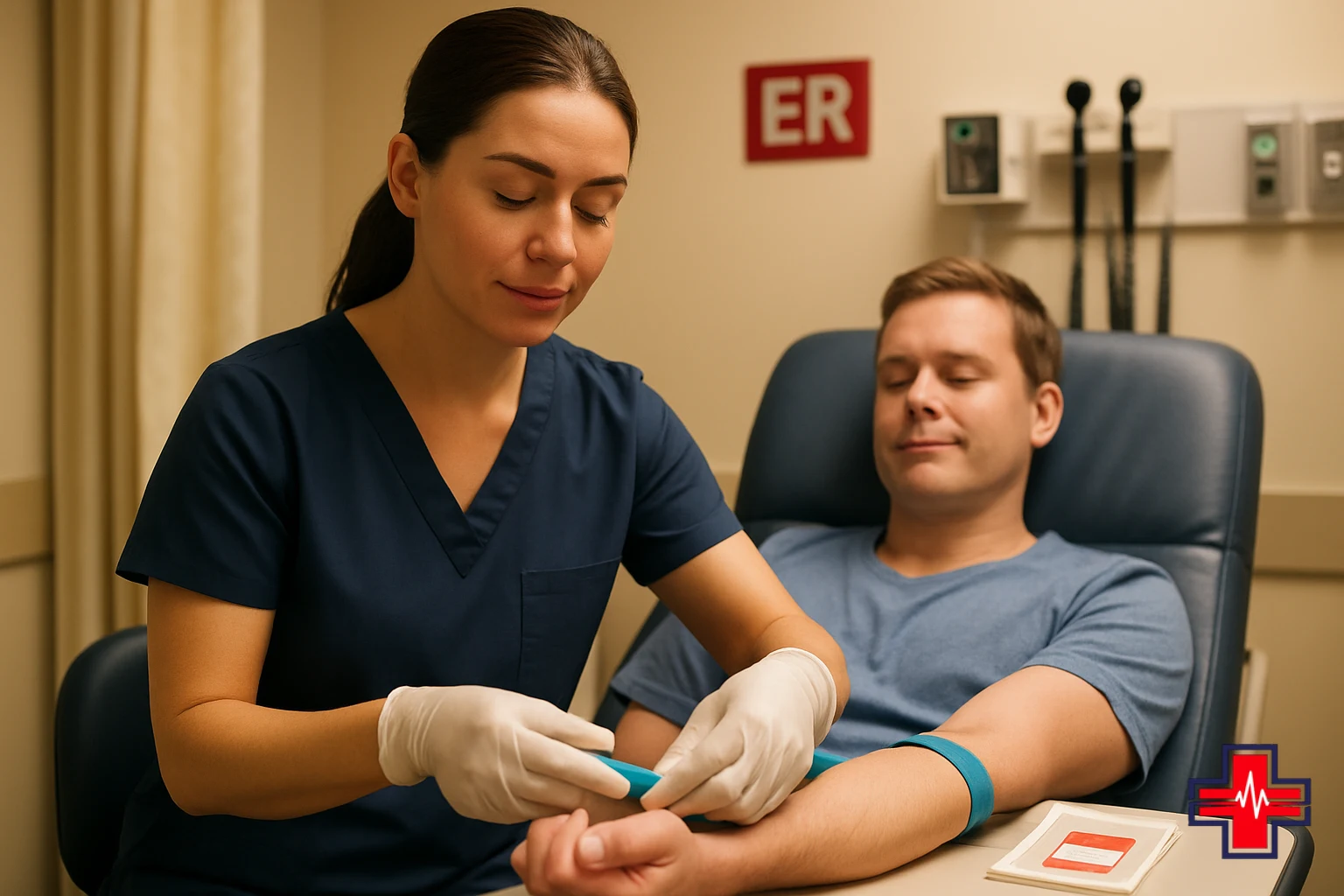
Same-day blood work results are the standard in emergency medicine. When you arrive at ER Of Fort Worth with a medical concern, phlebotomy staff collect samples immediately upon triage or registration. For most emergency laboratory testing, results are available before you finish the initial clinical assessment and imaging studies.
The timeline typically unfolds like this: Sample collection takes 2–3 minutes. The sample travels to our on-site lab analyzer. Most tests complete within 10–30 minutes. Results are transmitted electronically to the physician. Treatment decisions begin within 30–60 minutes of arrival.
For critical tests like troponin (cardiac injury marker), blood glucose, and electrolytes, results may arrive in as little as 5–10 minutes. This rapid turnaround is essential because:
- Patients with acute stroke have a narrow therapeutic window for clot-busting medications
- Septic shock patients need antibiotics within the first hour of recognition
- Severe hypoglycemia or hyperglycemia can cause immediate neurological damage
- Dangerous potassium levels can trigger fatal arrhythmias
ER Of Fort Worth maintains rigorous quality control on all emergency laboratory testing to ensure same-day results are accurate and actionable. Our lab is staffed 24/7 with certified technicians and medical technologists trained in emergency protocols.

ER Diagnostic Testing in Common Medical Scenarios
Emergency laboratory testing addresses a broad range of acute medical problems. Here's how ER diagnostic testing applies to common presentations:
Fever and Suspected Infection: Patients arriving with fever may undergo white blood cell differential, blood cultures, and urinalysis. UTI testing includes urine culture and nitrite detection. Pneumonia assessment uses chest X-ray combined with blood work and sputum cultures.
Chest or Abdominal Pain: Depending on presentation, testing may include cardiac markers, liver function tests, lipase (for pancreatitis), and complete metabolic panel. Chest pain ER evaluation is one of the most lab-intensive presentations, with serial troponin measurements and troponin-negative rule-out protocols.
Pediatric Concerns: Pediatric emergency care labs often include rapid strep tests, rapid flu testing, and age-appropriate metabolic panels. Fever in children may trigger urinalysis and blood culture if serious bacterial infection is suspected.
Allergic Reactions and Rashes: Allergic reaction evaluation may include complete blood count to assess eosinophilia and metabolic panel to check organ function if anaphylaxis is treated.
Trauma and Injuries: Fall and trauma patients receive rapid labs including complete blood count, type and cross (in case transfusion is needed), and coagulation studies. Orthopedic emergencies may require baseline labs before anesthesia for fracture reduction.
Sexual Health Screening: STD testing includes rapid tests for common infections as well as blood draws for syphilis and HIV screening when indicated.
When to Seek Emergency Laboratory Testing
If you are experiencing a life-threatening emergency, call 911 or go to the nearest emergency room immediately.
You should seek emergency laboratory testing at ER Of Fort Worth if you experience any of the following:
- Chest pain or pressure – even if mild or intermittent, requires cardiac markers and EKG
- High fever (≥103°F) with confusion, difficulty breathing, or severe headache – suggests serious infection requiring blood cultures and lab workup
- Sudden severe headache – may warrant lab studies to rule out meningitis or other emergencies
- Difficulty breathing or shortness of breath – emergency lab testing helps identify respiratory infection, blood clots, or cardiac causes
- Severe or persistent vomiting and abdominal pain – requires metabolic panel, lipase, and possibly blood cultures
- Suspected poisoning or overdose – toxicology testing and metabolic assessment guide treatment
- Uncontrolled bleeding or bruising – coagulation studies and platelet count are essential
- Mental status changes, confusion, or altered consciousness – rapid glucose and metabolic panel rule out treatable emergencies
- Severe allergic reaction – while primarily clinical diagnosis, labs assess organ function post-treatment
You don't need an appointment. Walk into ER Of Fort Worth at 4561 Heritage Trace Parkway, Suite 117, Fort Worth, TX 76244, or call 817-945-4200 to confirm our location and current wait times. We're also conveniently located for patients from Keller, Saginaw, Haslet, Watauga, Roanoke, North Richland Hills, Haltom City, Bedford, Southlake, Grapevine, and Flower Mound.
Access ER Of Fort Worth 24/7 Lab Services
ER Of Fort Worth provides emergency laboratory testing and point-of-care diagnostic services around the clock. Our Fort Worth emergency room is staffed with board-certified emergency physicians, experienced ER doctors, and certified lab professionals trained to handle urgent testing needs.
Our on-site laboratory capabilities include:
- Complete and differential blood counts
- Comprehensive metabolic panels
- Cardiac biomarkers (troponin, BNP)
- Blood glucose and lactate
- Coagulation studies (PT/INR, aPTT, fibrinogen)
- Liver and renal function tests
- Urinalysis and urine culture
- Blood cultures for infection screening
- Rapid infectious disease tests (flu, strep, COVID-19)
- Toxicology screening
When you arrive at our facility, you can use our online check-in to speed up registration. Bring a valid ID and insurance card if available. Our staff will triage your condition, order appropriate emergency laboratory testing, and communicate results to your physician quickly.
For more information about our services, visit our Fort Worth emergency room location page or review our full emergency services menu. If you have questions about what to expect, our patient FAQs cover common concerns about ER visits and lab testing.
Frequently Asked Questions
How long do emergency laboratory test results typically take?
Most emergency laboratory tests using point-of-care technology deliver results within 10–30 minutes. Critical tests like blood glucose or troponin may be available in 5–10 minutes. Some tests sent to reference labs may take several hours, but results needed for immediate treatment decisions are prioritized to arrive within your ER visit.
Do I need a doctor's order for emergency laboratory testing?
Yes. An emergency physician must order lab tests based on your symptoms and clinical presentation. Once you arrive at ER Of Fort Worth, our physicians will determine which emergency laboratory testing is appropriate for your condition and order them immediately—no waiting for a separate lab appointment.
Can I get same-day lab results if I go to the ER at night?
Absolutely. ER Of Fort Worth operates 24/7 with full laboratory services available all hours. Whether you arrive at 2 p.m. or 2 a.m., our point-of-care lab and on-site analyzers deliver same-day results.
What's the difference between stat lab testing and routine lab orders?
Stat lab testing prioritizes the highest urgency samples to be processed immediately, often within minutes. Routine lab orders are still processed quickly in an ER but may take longer than stat testing if non-emergent cases are ahead in the queue. In emergencies, stat orders ensure your results come back as fast as possible.
Will I have to pay out of pocket for emergency laboratory testing?
We accept most major insurance plans. Please bring your insurance card to help verify coverage. If you have questions about costs or payment plans, our staff can discuss billing options. We encourage uninsured or underinsured patients to ask about available assistance programs.
Can emergency laboratory testing diagnose all medical conditions?
Lab testing is one tool among many. Diagnosis often requires imaging (X-ray, ultrasound, CT), physical examination, and clinical history. Emergency laboratory testing provides critical data—like blood counts, cardiac markers, or infection indicators—that guide the full diagnostic workup and treatment plan.