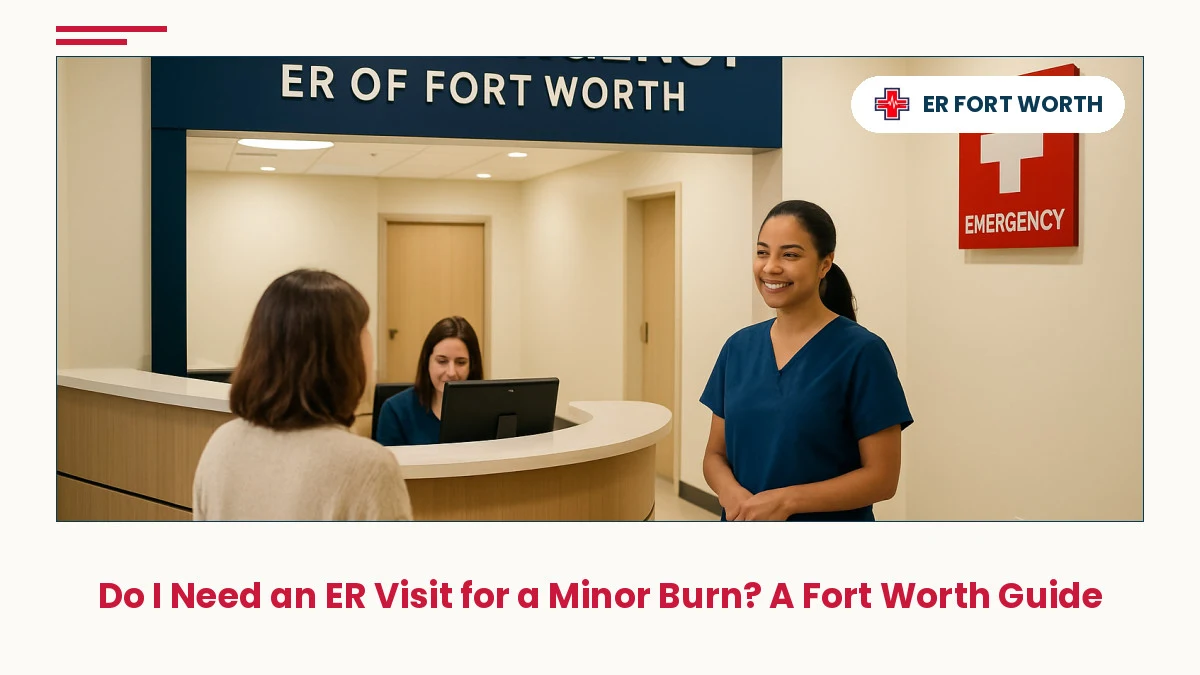
Do I Need an ER Visit for a Minor Burn? A Fort Worth Guide
A minor burn can happen in seconds—a splash of hot coffee, a touch on the stove, or a brief encounter with a hot surface. The question every patient asks is whether a trip to the emergency room is necessary, or if home care will suffice. Understanding the distinction between burns you can safely manage at home and those requiring professional evaluation is essential for Fort Worth residents and families.
In This Article
- Understanding Burn Depth: First-Degree vs. Second-Degree
- When Superficial Burn Care at Home Is Appropriate
- Red Flags That Require Immediate ER Care
- Infection Risk Assessment and Prevention
- Special Burn Locations That Always Need Professional Evaluation
- Fever, Spreading Redness, and Signs of Systemic Infection
- When to Visit ER Of Fort Worth or Urgent Care
- Frequently Asked Questions
⚡ Key Takeaways
- First-degree (superficial) burns affecting small areas can typically be treated at home with cool water, aloe vera, and over-the-counter pain relief.
- Any burn larger than 3 inches in diameter, or any burn on the face, hands, joints, or genitals should be evaluated by an ER physician regardless of depth.
- Blisters that are oozing, redness that spreads beyond the initial burn area, or signs of infection (pus, increasing pain, warmth) warrant immediate ER assessment.
- Second-degree and deeper burns always require professional medical evaluation to prevent complications like scarring, infection, and loss of function.
- When in doubt, call 911 or visit a 24/7 emergency room—delayed evaluation of a moderate burn can lead to serious complications.
Understanding Burn Depth: First-Degree vs. Second-Degree
Not all burns are created equal. The depth of a burn determines whether home treatment is sufficient or professional evaluation is necessary. Medical professionals classify burns by degree, and identifying which type you or a family member has sustained is the first step in deciding whether an ER visit is needed.
First-degree burns (also called superficial burns) affect only the outermost layer of skin, called the epidermis. These burns are characterized by redness, mild swelling, and tenderness but no blistering. The classic example is a sunburn or a brief contact burn from a hot surface. A first-degree burn typically heals within a few days to a week without scarring and can usually be managed at home with proper care.
Second-degree burns (also called partial-thickness burns) extend beyond the epidermis into the dermis, the layer beneath. These burns are more serious and are characterized by redness, significant swelling, blistering, and pain that is often more intense than first-degree burns. The presence of blisters or weeping fluid is a key indicator that a burn has reached the deeper dermal layer, and this type of burn carries a higher risk of infection and scarring. Second-degree burns require professional medical assessment, particularly if they affect a large area or are located on sensitive parts of the body.
Understanding this distinction is critical: if you see blisters forming or if the skin appears darker red, mottled, or feels thick and leathery, you are likely dealing with a second-degree burn or deeper, and professional evaluation is warranted. When in doubt, contacting an emergency room physician by phone or visiting in person is always the safer choice.
When Superficial Burn Care at Home Is Appropriate
If you have determined that your burn is first-degree (superficial), small in size, and located on a non-sensitive area of the body, home treatment may be safe and effective. The following criteria should all be met before deciding to treat at home:
- Size: The burn is smaller than 3 inches in diameter.
- Depth: The skin is red but shows no blistering, weeping fluid, or charring.
- Location: The burn is not on the face, hands, feet, joints, genitals, or over a major joint like the knee or elbow.
- Cause: The burn is from a brief contact with heat (not a chemical or inhalation injury).
- Patient condition: The person is alert and has no signs of shock, respiratory distress, or other concerning symptoms.
If all of these criteria apply, the following home treatment approach is appropriate. First, cool the burn immediately under cool (not cold) running water for 10–20 minutes, or apply a clean, damp cloth. This helps reduce pain and limits the depth of tissue damage. Do not use ice directly on the skin, as this can cause additional injury.
Once cooled, gently pat the area dry and apply a fragrance-free moisturizer or aloe vera gel. Over-the-counter pain relief such as ibuprofen or acetaminophen can help manage discomfort. Cover the burn loosely with a clean bandage to prevent contamination and protect the area from further irritation. Keep the wound clean and dry, and avoid applying home remedies like butter, oil, or toothpaste, which can trap heat and increase infection risk.
Monitor the burn closely over the next 24–48 hours. If any signs of deterioration emerge—spreading redness, blister formation, increased pain despite pain medication, or signs of infection—seek professional evaluation immediately. For residents throughout the Fort Worth area including Keller, Saginaw, and North Richland Hills, ER services are available 24/7 if your condition changes.
Red Flags That Require Immediate ER Care
Several clear warning signs indicate that your burn needs professional evaluation at an emergency room, even if it appears small or superficial at first glance. If you observe any of the following, do not delay—seek immediate medical care:
- Blistering or fluid drainage: Any visible blister, oozing, or weeping fluid indicates a deeper burn affecting the dermal layer.
- Charring or black discoloration: Black, brown, or charred skin indicates a third-degree (full-thickness) burn requiring urgent professional care.
- Size larger than 3 inches: Burns affecting a larger surface area carry greater risks of fluid loss, infection, and systemic complications.
- Rapid spread of redness: If redness extends beyond the initial burn site within hours, infection or deeper involvement may be occurring.
- Severe pain that worsens: Increasing pain despite home treatment or pain medication can signal tissue damage progression.
- Exposure to chemicals or electricity: Chemical and electrical burns require immediate professional evaluation regardless of initial appearance, as damage may extend deeper than visible.
- Difficulty breathing or throat swelling: If the burn involved steam inhalation or occurred in an enclosed space, airway involvement is possible and is a medical emergency.
- Any burn on the face, hands, feet, or genitals: These high-function areas require expert care to preserve mobility and appearance.
If you are experiencing a life-threatening emergency, call 911 or go to the nearest emergency room immediately. For burns in the Fort Worth area that require immediate professional assessment, ER Of Fort Worth at 4561 Heritage Trace Parkway, Suite 117, is open 24/7 and equipped to evaluate and treat burn injuries. Patients from nearby communities including Haslet, Watauga, Roanoke, and Grapevine can reach the facility quickly.
Infection Risk Assessment and Prevention
Even a burn that initially appears minor can become seriously infected if proper precautions are not taken. The burned skin barrier is compromised, making it an ideal entry point for bacteria. Understanding infection risk factors and implementing prevention strategies is essential, whether you are treating a burn at home or following up after professional evaluation.
Certain factors increase infection risk. Burned skin on the hands or feet is at higher risk because these areas are constantly exposed to dirt and bacteria. Burns in warm, moist environments (such as between the toes or in skin folds) are also more prone to infection. Patients with weakened immune systems, diabetes, or poor circulation are at higher overall risk. Older adults and very young children are also more vulnerable to complications.
To minimize infection risk during home care, keep the burn clean and dry. Wash your hands before touching the burn, and use clean (preferably sterile) dressings. Change dressings daily or if they become wet or soiled. Watch for signs of infection: increasing redness that spreads beyond the original burn, warmth radiating from the area, pus or yellowish drainage, increasing pain, or swelling that worsens after the first day or two. Any of these signs warrant professional evaluation, potentially including IV antibiotics if infection is confirmed.
For burns you decide to treat at home, avoid applying creams or ointments containing antibiotics unless specifically directed by a healthcare provider, as these can create a moist environment that promotes bacterial growth. A simple, clean dressing is often sufficient. If you have any doubt about whether infection is developing, contact an ER or urgent care facility. Fort Worth residents and those in surrounding areas including Alliance, Southlake, and Flower Mound can access professional wound assessment 24/7.
Special Burn Locations That Always Need Professional Evaluation
The location of a burn on the body can significantly affect the decision to seek professional care. Burns in certain anatomical areas carry inherently higher risks and should be evaluated by an emergency medicine physician regardless of size or apparent depth.
Burns on the face are always concerning because the facial skin is delicate, the area is highly visible, and scarring or contracture can affect breathing, eating, or emotional well-being. Even a small first-degree facial burn benefits from professional assessment to ensure optimal healing and to rule out any involvement of the eyes, nose, or mouth.
Hand and foot burns require professional attention because these areas contain many small joints and nerves critical for function. A burn that seems minor on the hand can heal with scar contracture, limiting finger mobility or grip strength. Similarly, foot burns can affect walking and balance. These areas demand expert wound management to preserve function.
Burns over joints—such as the elbow, knee, wrist, or ankle—carry risk of contracture (permanent shortening of scar tissue) that can severely limit movement. Even if the burn appears superficial, professional evaluation ensures that the best healing approach is taken to minimize functional loss.
Genital burns are sensitive both medically and emotionally and should always be evaluated professionally to assess for infection risk and ensure appropriate healing in this delicate area.
Burns over the chest or back that are large enough to potentially affect breathing or spine alignment also warrant professional evaluation. Any burn larger than 3 inches in any location should be assessed by a physician, and burns in any of the sensitive locations mentioned above should be evaluated even if they are smaller. When uncertainty exists, the safest approach is to have an emergency medicine physician evaluate the burn in person. ER Of Fort Worth provides this service 24/7.
Fever, Spreading Redness, and Signs of Systemic Infection
A burn that was initially manageable at home can develop complications within the first 24 to 72 hours. One of the most important warning signs is the development of fever or spreading redness around the burn site, both of which can indicate that infection has begun.
If you develop a fever (temperature of 100.4°F or higher) after a burn injury, or if the redness around the burn begins to spread outward in a ring pattern or creeping manner, this suggests that bacteria have invaded the wound and your immune system is mounting a response. Other signs of systemic infection include increased swelling that does not improve with elevation and ice, warmth radiating from the burn area, pus or foul-smelling drainage, red streaks extending from the burn toward the heart, swollen lymph nodes near the burn, or generalized body aches and chills.
These signs demand immediate professional evaluation. An ER physician can assess whether IV antibiotics or other treatments are needed to prevent the infection from spreading. In the Fort Worth area, residents of Keller, Watauga, Haslet, and surrounding communities can access round-the-clock burn infection assessment without the long wait times sometimes seen in hospital-based ERs.
Children are particularly vulnerable to rapid infection spread, so parents should be especially vigilant about monitoring a child's burn for fever or spreading redness. If a child develops any sign of infection after a burn, professional evaluation should not be delayed. Similarly, older adults and those with compromised immune systems should seek prompt professional assessment if any concerning signs appear.
When to Visit ER Of Fort Worth or Urgent Care
Fort Worth residents and families in the surrounding areas have choices when seeking care for a burn. Understanding the difference between an ER and urgent care can help you choose the right facility for your situation.
Visit an emergency room (such as ER Of Fort Worth) if your burn is second-degree or deeper, if it covers an area larger than 3 inches, if it is located on sensitive areas like the face or hands, if it shows any signs of infection, if you have fever, or if you are uncertain whether home care is safe. The ER is equipped with blood tests, advanced wound care supplies, medications, and physicians experienced in treating all types of burns. ER Of Fort Worth, located at 4561 Heritage Trace Parkway, Suite 117, is open 24/7 and serves Fort Worth, Keller, Alliance, Saginaw, and nearby areas.
An urgent care facility may be appropriate for very minor first-degree burns if your primary goal is professional reassurance that home care is safe, though they may not have all the advanced resources needed if complications develop. If there is any uncertainty, the ER is always the safer choice.
For residents of North Richland Hills, Haltom City, Bedford, Roanoke, or Grapevine, professional burn evaluation is readily accessible. Parents concerned about a child's burn should not hesitate to seek pediatric emergency care at an ER, as children's wounds can progress rapidly and professional assessment provides crucial peace of mind.
You can speed your evaluation by using online check-in at ER Of Fort Worth, which allows you to register before arrival and reduce time spent in the waiting area. Having your burn history ready—when it occurred, what caused it, what home care you have already provided, and whether you have any underlying medical conditions—will help the ER physician assess your situation quickly and comprehensively.
A Simple Decision Framework for Minor Burns
To summarize the key decision points, here is a straightforward framework for determining whether your minor burn needs ER evaluation:
Step 1: Cool the burn immediately. Apply cool (not cold) water or a damp cloth for 10–20 minutes. This is the most important first aid step and applies to all burns.
Step 2: Assess the depth. If the skin is red but shows no blisters or fluid, it is likely first-degree. If you see blisters, weeping fluid, or dark discoloration, it is second-degree or deeper.
Step 3: Measure the size. If the burn is 3 inches or larger in any dimension, professional evaluation is recommended.
Step 4: Consider the location. Burns on the face, hands, feet, genitals, or over joints always warrant professional assessment.
Step 5: Assess for red flags. Charring, inability to feel sensation, difficulty breathing, or chemical/electrical exposure demands immediate ER care.
Step 6: Make your decision. If your burn meets any of the criteria for ER care listed above, or if you are uncertain, seek professional evaluation. If it is a tiny first-degree burn on the arm or leg with no other concerns, home care is reasonable—but monitor closely for the next 24–48 hours.
Step 7: Watch for changes. Over the following days, observe for spreading redness, fever, increased pain, infection signs, or changes in appearance. If anything worries you, contact an ER physician.
Fort Worth residents have excellent access to emergency burn care. If you have any doubt or if your burn was not clearly minor from the outset, ER Of Fort Worth (817-945-4200) is available 24/7 to provide expert assessment and treatment. Your safety and rapid healing are worth the visit.
Frequently Asked Questions
How long should I cool a burn with water?
Cool the burn under cool (not cold) running water or with a clean, damp cloth for 10–20 minutes. This step is critical for limiting tissue damage and is appropriate for all types of burns. After cooling, gently pat dry and apply aloe vera or a fragrance-free moisturizer.
Is it safe to apply ice directly to a burn?
No. Direct ice application can cause frostbite-like injury to already-damaged skin. Use cool water or a damp cloth instead. After the burn is cooled, you may apply a wrapped ice pack to the surrounding (unburned) area to reduce swelling, but never place ice directly on the burn.
How do I know if a burn is infected?
Watch for spreading redness beyond the original burn boundary, pus or yellowish drainage, warmth and increasing swelling after the first 24–48 hours, fever (temperature of 100.4°F or higher), red streaks extending from the burn, or a foul smell from the wound. Any of these signs warrants immediate professional evaluation.
Can I use home remedies like butter or oil on a burn?
No. Butter, oil, toothpaste, and other home remedies can trap heat in the wound and increase infection risk. Stick to cool water for initial cooling, then use fragrance-free moisturizer or aloe vera. If prescribed by a physician, antibiotic ointment is appropriate, but do not apply it without professional guidance.
When should I seek ER care instead of treating at home?
Seek ER evaluation if the burn shows blistering, is larger than 3 inches, is located on the face, hands, feet, or genitals, is over a joint, shows signs of charring, is from a chemical or electrical source, or if you develop fever or spreading redness. When in doubt, professional evaluation is the safer choice.
How can I tell the difference between a first-degree and second-degree burn?
First-degree burns are red, swollen, and tender but show no blistering—like a sunburn. Second-degree burns have visible blisters, weeping fluid, and more intense pain. If blisters are present, professional evaluation is recommended.
Is ER Of Fort Worth open for burn evaluation at night?
Yes. ER Of Fort Worth is open 24/7, including nights, weekends, and holidays. You can call 817-945-4200 or use online check-in to register before arrival. The facility serves Fort Worth and surrounding areas including Keller, Alliance, and Saginaw.