
Can You Drain an Abscess at Home Safely? ER Facts
An abscess—a painful collection of pus beneath the skin—might tempt you to drain it yourself, but home drainage carries genuine risks of spreading infection, scarring, and complications. Understanding when to seek professional care can protect your health.

In This Article
- What Is an Abscess and How Does It Form?
- Why Home Drainage of Abscesses Is Risky
- Infection Control and Contamination: What Can Go Wrong
- When You Need Professional ER Care, Not Home Remedies
- Safe Home Care While Awaiting Professional Drainage
- How ER Professionals Safely Drain and Treat Abscesses
- Accessing Abscess Care Near You in Fort Worth
- Frequently Asked Questions
⚡ Key Takeaways
- Home drainage of abscesses risks spreading infection into surrounding tissues and bloodstream, potentially triggering sepsis.
- Improper abscess drainage can leave infection pockets behind, leading to recurrence and chronic complications.
- Professional medical evaluation ensures correct diagnosis—not all painful lumps are simple abscesses.
- Warm compresses and antibiotics may support healing for very small, early-stage skin abscesses, but larger or deep abscesses require professional drainage.
- ER physicians can safely drain, culture, and treat abscesses while monitoring for systemic infection in real time.
What Is an Abscess and How Does It Form?
An abscess is a localized collection of pus, typically formed when the body's immune system walls off a bacterial infection. Your white blood cells migrate to the infected area and die fighting the invading organisms, creating a buildup of dead cells, bacteria, and fluid that appears as a swollen, painful lump under the skin.
Abscesses can develop from minor cuts, follicles, insect bites, or even internal injuries. They may appear anywhere on the body—skin abscesses are most visible, but deeper abscesses in soft tissues or organs present serious diagnostic challenges. The affected area usually becomes warm, red, and increasingly tender as pressure builds inside.
While some very small, superficial skin abscesses may heal on their own with time and warm compresses, many grow larger and more painful without intervention. The body cannot reabsorb the pus on its own, and the pressure can damage surrounding tissue.
Why Home Drainage of Abscesses Is Risky
The temptation to drain an abscess at home is understandable—the pressure and pain are real—but attempting it yourself introduces multiple serious risks:
- Spreading infection deeper: Using unsterile instruments or techniques can push bacteria deeper into surrounding tissues, converting a surface infection into a serious subcutaneous or systemic infection.
- Incomplete drainage: Even if you manage to release some pus, infection pockets often remain behind the abscess wall. These residual bacteria multiply and reform the abscess within days or weeks, sometimes larger than before.
- Bloodstream entry: Aggressive or improper drainage can puncture blood vessels, allowing bacteria direct access to your circulatory system and risking sepsis—a life-threatening inflammatory cascade.
- Scarring and disfigurement: Professional drainage minimizes tissue damage and scarring. Home drainage often leaves permanent marks, especially on visible areas like the face, neck, or hands.
- Misdiagnosis: A painful lump is not always a simple abscess. Cysts, lipomas, inflamed lymph nodes, and other conditions mimic abscesses visually but require different treatment. Draining the wrong lesion wastes time and delays proper care.
Infection Control and Contamination: What Can Go Wrong
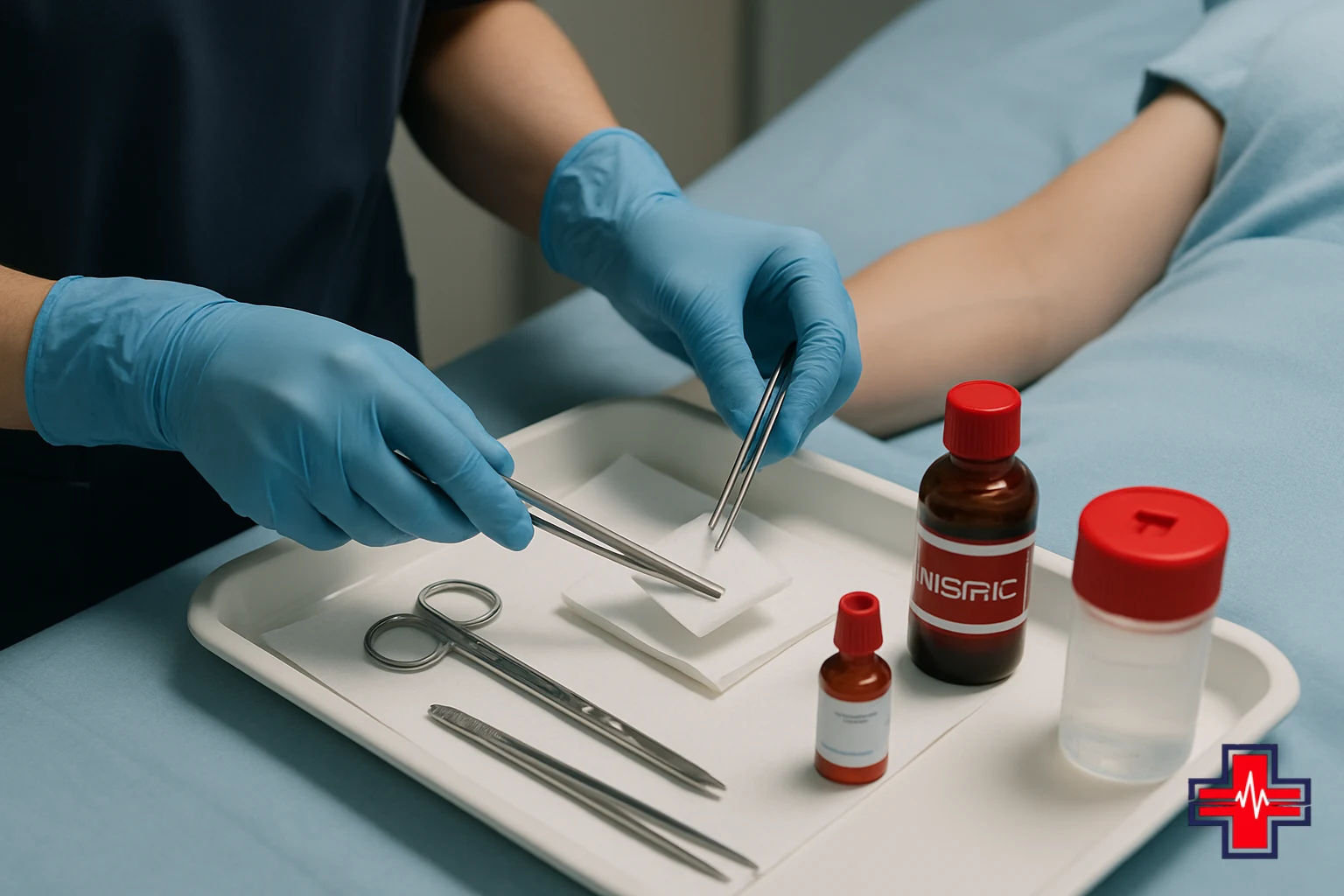
Professional drainage occurs in a sterile environment with trained staff who understand infection control. Your home does not offer equivalent safeguards. Bacteria colonize kitchen counters, bathroom sinks, bedding, and even "clean" towels. When you attempt drainage at home, you inevitably introduce environmental contaminants into the open wound.
Additionally, the pus itself is teeming with live bacteria. If you drain it without proper containment and disposal, you risk contaminating other areas of your body or spreading the infection to family members. Some pathogens—like Staphylococcus aureus, including antibiotic-resistant strains—spread easily through contact and shared objects.
Professional ER staff use sterile instruments, sterile gloves, antiseptic skin preparation, and proper biohazard disposal. They also culture the pus to identify the exact bacterial species and test antibiotic sensitivity, ensuring you receive targeted therapy if needed. Home drainage offers none of these protections.
When You Need Professional ER Care, Not Home Remedies
Seek immediate professional evaluation at ER Of Fort Worth or the nearest emergency room if your abscess exhibits any of these warning signs:
- Rapid growth or enlargement: If the abscess is visibly larger than it was yesterday, professional drainage is urgent.
- Fever or chills: A fever suggests the infection is becoming systemic, which requires antibiotic therapy and possibly IV fluids.
- Spreading redness or warmth: Red streaking radiating from the abscess toward your heart indicates lymphangitis (infection spreading through lymphatic vessels) and requires immediate care.
- Severe pain: Escalating pain signals deepening infection or surrounding tissue involvement.
- Location on face, neck, or near joints: Abscesses in these high-risk anatomical zones are prone to serious complications and should never be drained at home.
- Multiple abscesses or recurrent infection: Recurring or clustered abscesses suggest an underlying condition (e.g., compromised immunity, diabetes) that warrants professional investigation.
- Abscess larger than a pea or marble: Larger abscesses almost always require professional drainage to achieve complete healing.
- Immunocompromised status: If you have diabetes, HIV, take immunosuppressants, or have another condition affecting immunity, any abscess deserves professional care.
When in doubt, calling ER Of Fort Worth at 817-945-4200 or visiting our facility at 4561 Heritage Trace Parkway, Suite 117, Fort Worth, TX 76244 for same-day evaluation is far safer than attempting home drainage.

Safe Home Care While Awaiting Professional Drainage
If you are certain your abscess is very small, at an early stage, and you are actively seeking professional ER evaluation, these conservative measures may provide temporary relief while you arrange care:
- Warm compresses: Apply a clean, warm (not hot) compress to the abscess for 10–15 minutes, several times daily. Heat encourages blood flow and may speed natural healing in early-stage infections. Never apply heat if you have fever or spreading redness, as this may accelerate systemic spread.
- Elevation: Keeping the affected area elevated above heart level reduces swelling and discomfort.
- Avoid touching or squeezing: Resist the urge to squeeze, pick at, or apply pressure to the abscess. Pressure forces bacteria into surrounding tissues.
- Keep it clean and dry: Gently wash the area with soap and water, pat dry with a clean towel, and cover with a sterile bandage if it is draining. Change the bandage twice daily.
- Over-the-counter pain relief: Ibuprofen or acetaminophen can reduce discomfort temporarily, but does not treat the underlying infection.
- Do not apply home remedies like vinegar, essential oils, or toothpaste: These lack evidence and may irritate the skin or introduce new contaminants.
These steps are supportive only and are not a substitute for professional evaluation and drainage.
How ER Professionals Safely Drain and Treat Abscesses
When you arrive at ER Of Fort Worth with an abscess, our emergency physicians follow a systematic, evidence-based protocol to ensure safe, complete treatment:
- Clinical assessment: A doctor examines the abscess, takes a history, and may order imaging (ultrasound or CT) if the abscess is deep, large, or in an anatomically complex location.
- Sterile preparation: The skin surrounding the abscess is cleaned with an antiseptic solution and draped with sterile fields to create a clean operative environment.
- Local anesthesia: The area is numbed with local anesthetic, so drainage is painless.
- Incision and drainage: Using a sterile scalpel, the physician makes a small incision over the abscess. Pus is gently expressed and collected for culture.
- Cavity exploration: The doctor carefully explores the abscess cavity to ensure all loculations (pockets) are drained and that no foreign material or devitalized tissue remains.
- Packing or suturing: Depending on abscess size and location, the cavity may be loosely packed with sterile gauze to maintain drainage, or sutured partially closed to allow continued drainage. Small superficial abscesses may be left open.
- Culture and sensitivity testing: Laboratory analysis of the pus identifies the bacterial species and determines which antibiotics are most effective.
- Antibiotic therapy: If signs of systemic infection exist or the abscess is large, IV antibiotics may be initiated. Otherwise, oral antibiotics are prescribed based on culture results.
- Wound care instructions: You receive detailed aftercare guidance, including dressing changes, signs of complications, and follow-up scheduling.
Accessing Abscess Care Near You in Fort Worth
Fort Worth residents and those in surrounding areas—including Keller, Alliance, Saginaw, Haslet, Watauga, Roanoke, North Richland Hills, Haltom City, Bedford, Southlake, Grapevine, and Flower Mound—have 24/7 access to professional abscess evaluation and drainage at ER Of Fort Worth.
Our facility is equipped to handle everything from small skin abscesses to complex infections requiring imaging and advanced intervention. We accept most insurance plans and offer online check-in to reduce wait times. If you suspect an abscess and are unsure whether it warrants ER care, calling us at 817-945-4200 connects you directly with clinical staff who can advise you immediately.
Do not attempt home drainage. Do not delay seeking care hoping the abscess will heal on its own. The few hours or days you spend waiting increase the abscess's size, your pain, and the infection's depth. Professional drainage is safer, faster, and more complete than any home remedy. Visit our emergency services page to learn more about our capabilities, or head directly to our location in Fort Worth to receive immediate evaluation.
Frequently Asked Questions
Is it ever safe to drain an abscess at home?
No. Even very small abscesses carry infection risks if drained at home using non-sterile technique. The pus contains live bacteria, and incomplete drainage often leaves infection pockets that regrow. Professional drainage in a sterile environment is always safer and more effective.
What happens if I drain an abscess myself and it comes back?
Recurrence is common after home drainage because residual bacteria remain inside the abscess wall. When the abscess reforms, it may be larger, more painful, and at higher risk of spreading deeper into surrounding tissues or entering the bloodstream.
Can antibiotics alone cure an abscess without drainage?
Antibiotics alone rarely cure established abscesses. The pus-filled cavity has limited blood supply, so antibiotics cannot penetrate effectively. Drainage must accompany antibiotic therapy for reliable cure. ER physicians assess each abscess to determine whether antibiotics plus supportive care might suffice or if drainage is necessary.
How quickly should I seek ER care for an abscess?
Seek ER evaluation as soon as you notice a painful, swollen lump that does not improve within a few days. If fever, rapid growth, spreading redness, or severe pain develop, go immediately or call 911 if you suspect systemic infection.
Will draining an abscess in the ER leave a scar?
Professional drainage minimizes scarring through careful technique and proper wound care. Home drainage, by contrast, often causes larger scars because uncontrolled tissue damage occurs. ER physicians take steps to reduce visible scarring, especially on cosmetically sensitive areas.
What should I do if I already drained an abscess at home and it is not healing?
Visit ER Of Fort Worth or an urgent care facility promptly. Tell the physician you performed home drainage so they can assess for residual infection, re-drain if needed, obtain a culture, and prescribe appropriate antibiotics. Do not delay.