
Fall Injury When to Go to ER: Fort Worth Emergency Guide
A fall can happen in seconds, but deciding whether to seek emergency care shouldn't take guesswork. This guide helps Fort Worth residents recognize when a fall injury requires immediate ER evaluation versus home management.

In This Article
- Immediate Red Flags: When to Call 911
- How ER Doctors Diagnose Fall Injuries
- Blunt Trauma Assessment and Internal Injury Screening
- Orthopedic Fracture Imaging and Bone Evaluation
- Concussion Management and Head Injury Protocol
- Post-Trauma Observation and Delayed Symptom Monitoring
- High-Risk Groups and Special Considerations
- Recovery and Follow-Up Care After ER Evaluation
- Frequently Asked Questions
⚡ Key Takeaways
- Head, neck, or spine injuries—even without immediate severe symptoms—warrant immediate ER evaluation to rule out hidden internal damage.
- Severe pain, visible deformity, inability to move a limb, or altered mental status are clear signals to seek emergency care without delay.
- Elderly patients and those on blood thinners face heightened fall injury risk; lower thresholds for ER evaluation apply to these groups.
- ER diagnostic imaging (X-rays, CT scans) can detect fractures and internal injuries that physical exam alone cannot reveal.
- Post-trauma observation protocols help identify delayed symptoms such as concussion, bleeding, or organ injury that may emerge hours after impact.
Immediate Red Flags: When to Call 911
If you are experiencing a life-threatening emergency, call 911 or go to the nearest emergency room immediately.
Certain fall injury scenarios demand immediate 911 activation rather than waiting for a family member to drive you. Loss of consciousness—even if brief—is a critical sign that your brain and central nervous system have suffered significant trauma. Difficulty breathing, severe chest pain, or uncontrolled bleeding all suggest injuries that can worsen rapidly without medical intervention.
Inability to move a limb, severe deformity of an arm or leg, or obvious bone protrusion through the skin indicates orthopedic trauma requiring urgent stabilization. Severe headache accompanied by confusion, slurred speech, or unusual behavior points toward head injury and possible intracranial bleeding. Neck or spine pain following a fall—especially if accompanied by numbness, tingling, or weakness in the arms or legs—warrants spinal immobilization by paramedics before transport to prevent further damage.
Abdominal pain, bruising, or distension after a fall may signal internal organ injury, a condition that can deteriorate without diagnosis. Persistent vomiting, pale or clammy skin, rapid heartbeat, or dizziness suggest shock or hemorrhage. When in doubt, call 911; paramedics can assess you on scene and transport you safely to the nearest ER for full evaluation.
How ER Doctors Diagnose Fall Injuries
The moment you arrive at ER Of Fort Worth or another Fall & Trauma ER facility, staff perform a systematic assessment to identify all injuries, visible and hidden. A nurse collects your history: How did you fall? Do you remember losing consciousness? What body parts hurt? This narrative helps clinicians prioritize which injuries to evaluate first.
Physical examination comes next. Your doctor checks your head for cuts, bumps, or signs of skull fracture. They test your neurological function—memory, orientation, pupil reactivity, balance, and coordination—to screen for head injury and possible concussion. They palpate (gently press) your neck and spine to detect tenderness, step-offs, or deformity. Your abdomen is examined for bruising, rigidity, or pain that might indicate organ damage.
Each limb is assessed for range of motion, pain, swelling, deformity, and neurovascular status (nerve and blood flow). Your doctor asks you to move your toes and fingers, squeeze their hands, and report any numbness or tingling. Strength testing reveals muscle or nerve injury. A careful skin exam documents cuts, abrasions, and bruises—sometimes revealing impact patterns that suggest specific injuries.
Based on examination findings and your description of the fall, your ER doctor orders targeted diagnostic tests. Not every fall requires imaging; a minor tumble with no symptoms often needs only observation. However, any mechanism suggesting significant force, altered consciousness, severe pain, or abnormal exam findings prompts imaging to confirm or rule out fractures, bleeding, and other injuries.
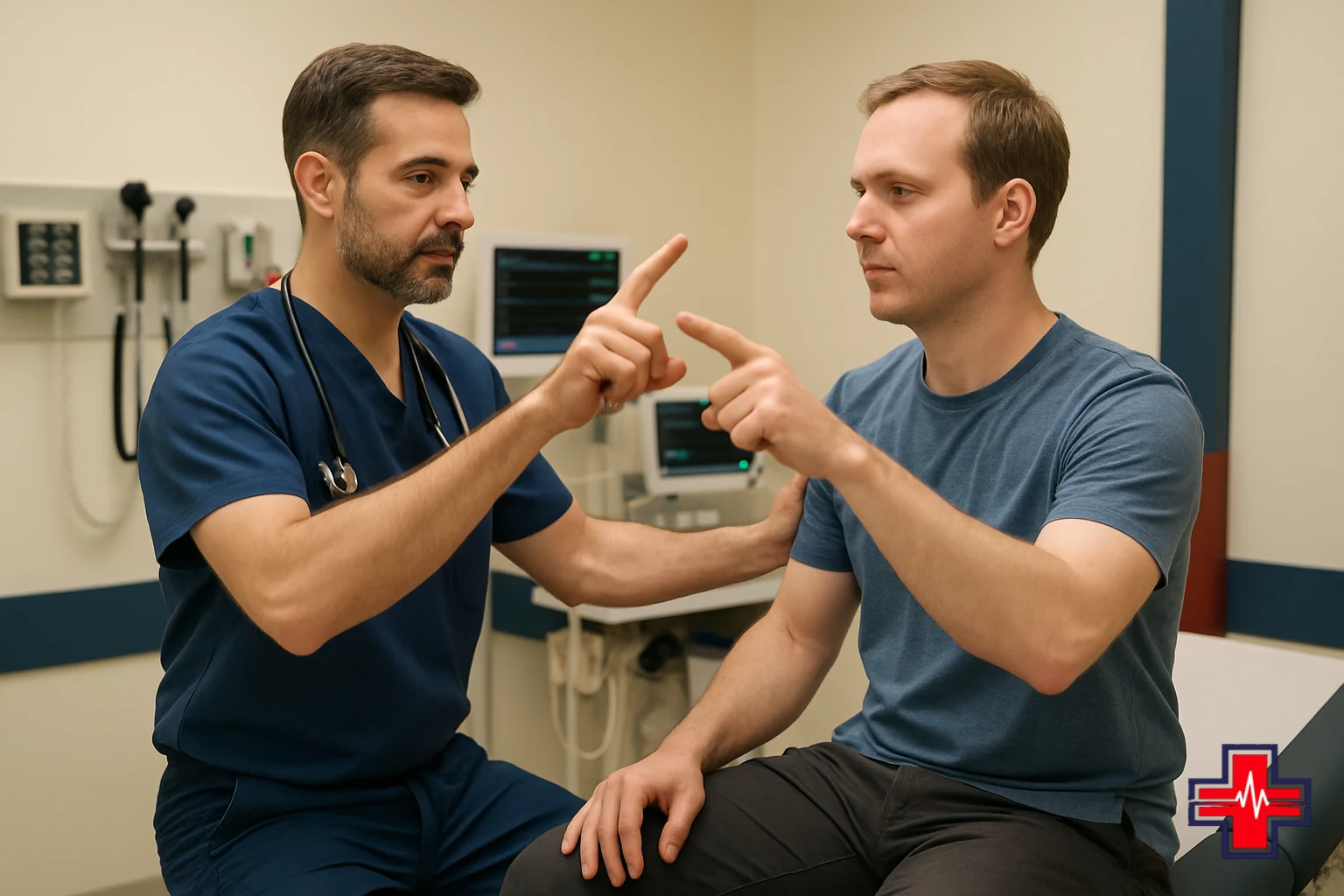
Blunt Trauma Emergency: Internal Injury Screening
Blunt trauma—the blunt-force impact of a fall—can damage internal organs without obvious external wounds. The liver, spleen, kidneys, and lungs are particularly vulnerable. A ER physician trained in trauma assessment follows a systematic protocol to screen for life-threatening internal injuries.
Your ER doctor may order blood tests to check for anemia (suggesting blood loss) or elevated liver or kidney enzymes (indicating organ injury). Focused abdominal ultrasound or CT imaging can reveal bleeding or organ laceration. Chest X-ray assesses for rib fractures or lung injury. Some patients undergo fast exam—a rapid ultrasound scan of the abdomen and chest to detect free fluid (blood) in body cavities.
Patients with significant mechanism of injury (high-speed falls, falls from height, elderly patients who fell at ground level) are monitored closely even if initial imaging is normal. Internal bleeding can be delayed; swelling may develop over hours. This is why post-fall observation is so important in the ER setting. Your vital signs—blood pressure, heart rate, respiratory rate, oxygen saturation—are tracked continuously. Changes in these vital signs or the development of new symptoms prompt repeat imaging or specialist consultation.
Residents of Fort Worth, Keller, Alliance, Saginaw, Haslet, Watauga, Roanoke, North Richland Hills, Haltom City, Bedford, Southlake, Grapevine, and Flower Mound can access 24/7 Fort Worth emergency room care for comprehensive blunt trauma evaluation. Early detection of internal injuries using modern imaging and clinical acumen prevents complications and saves lives.
Orthopedic Fracture Imaging and Bone Evaluation
Orthopedic fracture imaging forms the cornerstone of fall injury diagnosis when bone damage is suspected. X-rays are the first-line imaging for fractures; they are fast, widely available, and expose you to minimal radiation. An X-ray shows the bone architecture and can reveal breaks, dislocations, and some soft-tissue injuries.
Complex fractures—those involving joints or with multiple fragments—may require CT imaging for surgical planning. CT provides detailed three-dimensional information about fracture patterns. Magnetic resonance imaging (MRI) excels at revealing soft-tissue injury: torn ligaments, muscle tears, and cartilage damage that X-rays miss. However, MRI is slower and often reserved for follow-up evaluation after the acute ER phase.
At ER Of Fort Worth and affiliated Orthopedic ER centers, radiologic technologists and ER physicians work in concert to obtain images that answer clinical questions efficiently. Once imaging is complete, your ER doctor interprets the results and explains findings. A simple fracture may be splinted in the ER and referred to orthopedics for definitive care. A displaced fracture or one affecting multiple bones may require urgent orthopedic consultation, sometimes even same-day surgery.
Ankle, wrist, hip, and spine fractures are among the most common fall-related injuries. Hip fractures in elderly patients can be particularly serious, carrying high morbidity and mortality if not surgically repaired promptly. Spine fractures demand special attention to rule out spinal cord injury. This is why imaging is not optional in these scenarios—it is essential to guide safe handling and treatment planning.

Concussion Management and Head Injury Protocol
A concussion is a type of mild traumatic brain injury that occurs when the brain moves inside the skull due to impact. Falls are a leading cause of concussion across all age groups. Contrary to old myths, loss of consciousness is not required for concussion; most concussions occur without any loss of awareness.
Classic concussion symptoms include headache, confusion, memory difficulty, balance problems, sensitivity to light or noise, nausea, and fatigue. Some symptoms appear immediately; others emerge over hours or days. This delayed onset is why ER observation protocols for head injury are so valuable. Your ER doctor asks detailed questions about your state of mind immediately after the fall and in the minutes and hours afterward.
Physical examination for concussion includes:
- Neurological testing: Orientation, memory recall, concentration
- Balance and coordination: Heel-to-toe walking, Romberg test
- Cranial nerve exam: Eye tracking, hearing, facial symmetry
- Reflexes and strength: Deep tendon reflexes, muscle power in limbs
Most concussions do not show abnormality on CT or MRI; imaging is ordered primarily to rule out intracranial bleeding or fracture rather than to confirm concussion. If your exam is entirely normal and you have no risk factors for serious head injury, you may be cleared for home observation. However, you will receive concussion management instructions including rest, gradual return to activity, and warning signs that warrant immediate return to the ER.
If your ER doctor suspects more severe brain injury or if you have risk factors (age over 65, on blood thinners, previous head injuries), Head Injury Observation Protocol monitoring in the ER may be recommended to detect delayed deterioration.
Post-Trauma Observation and Delayed Symptom Monitoring
Post-trauma observation is a critical but often underappreciated component of fall injury management. Some injuries do not declare themselves immediately. Swelling of the brain, bleeding into body cavities, and organ contusion can evolve over hours. This is why ER Of Fort Worth and other emergency facilities keep certain fall patients under observation before discharge.
During observation, your vital signs are monitored continuously or at regular intervals. Serial neurological exams are performed to detect changes in consciousness, memory, or motor function. Repeat laboratory tests (blood counts, metabolic panels) may be ordered to check for developing anemia or organ dysfunction. You are observed for new or worsening symptoms: severe headache, persistent vomiting, abdominal pain, chest pain, shortness of breath, or leg swelling.
The observation window varies depending on injury severity and risk factors. A young person with minor head injury might be observed for 4–6 hours; an elderly patient with significant mechanism of injury may stay longer. Your ER physician decides on discharge readiness based on stability, symptom resolution or improvement, and availability of reliable home supervision. You are discharged with clear written instructions on red-flag symptoms that mandate immediate return to the ER.
Residents seeking ER observation services in Fort Worth can access private or semi-private monitoring rooms where comfort and clinical oversight coexist. Staff answer questions, administer pain relief if needed, and keep family members informed. Observation is not hospitalization—most observation patients go home the same day or after an overnight stay—but it provides the safety net that saves lives by catching deterioration early.
High-Risk Groups and Special Considerations
Not all falls carry equal risk. Certain patient groups face substantially higher morbidity and mortality from falls, and their care thresholds differ.
Elderly patients (age 65+) are the highest-risk group. Age-related bone density loss (osteoporosis) means even low-energy falls can cause fractures. Slower reflexes and balance problems increase fall frequency. Comorbid conditions—heart disease, diabetes, kidney disease—complicate recovery. Medications such as blood thinners amplify bleeding risk. As a result, many ER physicians recommend imaging and observation for elderly patients after even seemingly minor falls. A grandmother who tripped on a carpet deserves evaluation; that fall might have fractured her hip or caused a subdural hematoma that will worsen if missed.
Patients on anticoagulants (blood thinners like warfarin or apixaban) or antiplatelet agents (like aspirin or clopidogrel) face magnified bleeding risk. A fall that might cause minor bruising in a non-medicated person can trigger dangerous internal bleeding in someone on these drugs. ER evaluation is prudent even for apparently trivial falls in this population. Your ER doctor will check your medication list and may order imaging and laboratory tests (PT/INR, CBC) to assess bleeding risk.
Children and adolescents tolerate impact differently than adults. Their bones are softer and more resilient, but their skulls are still developing. A significant fall in a child warrants Pediatric Emergency Care evaluation. Screening for abuse is also part of the protocol if injury patterns seem inconsistent with the reported mechanism.
Patients with neurological conditions (seizure disorder, Parkinson's disease, dementia) may not recall the fall clearly, making history-taking challenging. Their baseline mental status may obscure the effect of new head injury. Falls in this population deserve careful evaluation and observation.
Patients with pre-existing spinal problems (prior fusion, degenerative disc disease, osteoporosis) are at higher risk for severe spinal injury from falls. Even moderate force can cause fracture or cord damage. Low thresholds for spinal imaging apply here.
Recovery and Follow-Up Care After ER Evaluation
Once your fall injury evaluation is complete and the ER physician determines you are stable enough for discharge, the focus shifts to recovery and preventing complications.
Fracture care typically begins in the ER with immobilization (splint, sling, or cast) and analgesic medication, then proceeds to orthopedic care. Your ER doctor provides referral information and discharge instructions. You will likely have an orthopedic appointment within 1–2 weeks; imaging (X-rays you had in the ER) will be provided to the orthopedist. Physical therapy is often prescribed to restore strength and mobility after immobilization ends.
Soft-tissue injuries (sprains, strains, contusions) heal with rest, ice, compression, and elevation (RICE protocol), supplemented by over-the-counter pain relievers or prescription analgesics. Your ER discharge paperwork will detail activity restrictions and expected healing timelines. Worsening swelling, warmth, or redness might indicate infection and warrant follow-up.
Concussion recovery involves physical and cognitive rest. Gradual return to activity—starting with light walking, then increasing duration and intensity—is the recommended approach. Most concussion symptoms resolve within 2–4 weeks, though some individuals experience post-concussion syndrome with lingering headache, concentration difficulty, or mood changes. If symptoms persist, your primary care physician or a neurologist can provide specialized guidance.
Elderly patients recovering from serious falls benefit from back pain or orthopedic rehabilitation and home modification to prevent future falls: removing tripping hazards, installing grab bars, improving lighting, and assessing medication side effects that worsen balance.
If you develop new symptoms after discharge—worsening headache, fever, increased swelling, severe pain not relieved by medication, or chest/abdominal discomfort—do not wait for a scheduled appointment. Return to the ER or contact your primary care physician immediately. Your ER discharge instructions should list specific warning signs and the phone number for 24/7 call-back if questions arise.
Frequently Asked Questions
Should I go to the ER if I fell but feel fine?
Even if you feel fine immediately after a fall, certain circumstances warrant ER evaluation: falls from significant height, falls involving head impact, age over 65, use of blood-thinning medications, or any period of loss of consciousness. Delayed symptoms (headache, dizziness, abdominal pain) can emerge hours after injury. When in doubt, call ER Of Fort Worth at 817-945-4200 to discuss your specific situation.
What tests will the ER doctor order for my fall injury?
Tests depend on your examination and injury mechanism. X-rays are common for suspected fractures. Blood tests check for anemia or organ injury. CT imaging of the head, spine, or abdomen may be ordered if trauma is significant or symptoms warrant it. Not every fall requires imaging; your ER doctor tailors testing to your clinical presentation.
What is the difference between observation and admission?
Observation is short-term monitoring (typically 4–24 hours) in an ER or observation unit to ensure no delayed symptoms develop; most observation patients go home the same day or after one night. Admission means you are hospitalized in a hospital bed under inpatient care, usually for more serious injuries requiring ongoing intensive treatment.
Can a CT scan miss a head injury or concussion?
CT is excellent at detecting skull fractures, bleeding, and swelling but may not show a concussion. Concussion is a functional brain injury often invisible on standard imaging. ER doctors diagnose concussion through careful history, physical exam, and symptom assessment. If CT is normal but you have severe symptoms, further imaging (MRI) or specialist referral may be arranged.
How long should I rest after a fall injury?
Rest duration varies by injury type and severity. Minor sprains may need 1–2 weeks of rest; fractures require 4–12 weeks of immobilization depending on bone type and location. Concussions benefit from 1–2 weeks of cognitive and physical rest before gradual return to activity. Your ER doctor and follow-up specialists will provide personalized guidance.
What should I do if I fall and live alone?
If you can safely move and feel well, try to get up slowly. If you cannot get up or feel dizzy, confused, or in severe pain, call 911. Do not try to move if you suspect spine or hip injury. Keep a phone nearby always, and consider a medical alert system if you are elderly or have frequent falls. Inform a trusted neighbor or family member of your fall.