
Fall Injury Emergency Room: Diagnosis & Immediate Care
Falls are one of the leading causes of unintentional injury in the United States, and prompt medical evaluation can prevent serious complications. Whether you've experienced a fall at home, at work, or in a public space in Fort Worth, Keller, or the surrounding North Texas communities, understanding when to seek emergency care and what to expect during evaluation is critical.
In This Article
- When to Seek Fall Injury Emergency Room Care
- Initial Trauma Assessment and Vital Signs
- Fall Injury Diagnosis & Imaging Protocols
- Blunt Trauma Emergency Evaluation
- Concussion Management & Observation
- Orthopedic Fracture Imaging & Treatment
- Post-Trauma Observation Protocol
- Recovery & Follow-Up Care
- Frequently Asked Questions
⚡ Key Takeaways
- Seek immediate emergency care if you experience loss of consciousness, severe pain, inability to move a limb, or head/neck symptoms after a fall.
- Fall injury diagnosis relies on clinical examination, imaging (X-ray, CT, ultrasound), and laboratory assessment to rule out internal bleeding or organ injury.
- Concussion and spinal cord injury are often invisible but serious—observation and neurological testing help identify these hidden traumas.
- Even low-impact falls can cause significant injury in older adults or those on blood thinners; ER evaluation is safer than watchful waiting.
- ER Of Fort Worth provides 24/7 trauma assessment, advanced imaging, and observation services designed for rapid fall injury diagnosis and stabilization.
When to Seek Fall Injury Emergency Room Care
If you are experiencing a life-threatening emergency, call 911 or go to the nearest emergency room immediately.
Not all falls require emergency care, but certain warning signs demand immediate evaluation at a fall injury emergency room. You should seek urgent care if you have lost consciousness, even briefly; experience severe pain that prevents movement; are unable to bear weight on a limb; have signs of head, neck, or spine injury; or notice numbness, tingling, or weakness after the fall.
Additional red flags include difficulty breathing or chest pain after impact, severe bleeding that does not stop with pressure, signs of shock (dizziness, confusion, rapid heartbeat), or any fall involving a blow to the head. Even if you feel "okay" immediately after a fall, symptoms of serious injury—such as delayed swelling, bruising, or confusion—can develop over hours.
In Fort Worth and nearby communities including Watauga, Haltom City, and Roanoke, ER Of Fort Worth provides 24/7 evaluation for all fall-related injuries. Older adults, people taking blood thinners or anticoagulants, and those with osteoporosis should have even minor falls evaluated by an emergency physician, as these populations face higher risk of serious injury from low-impact trauma.
Initial Trauma Assessment and Vital Signs
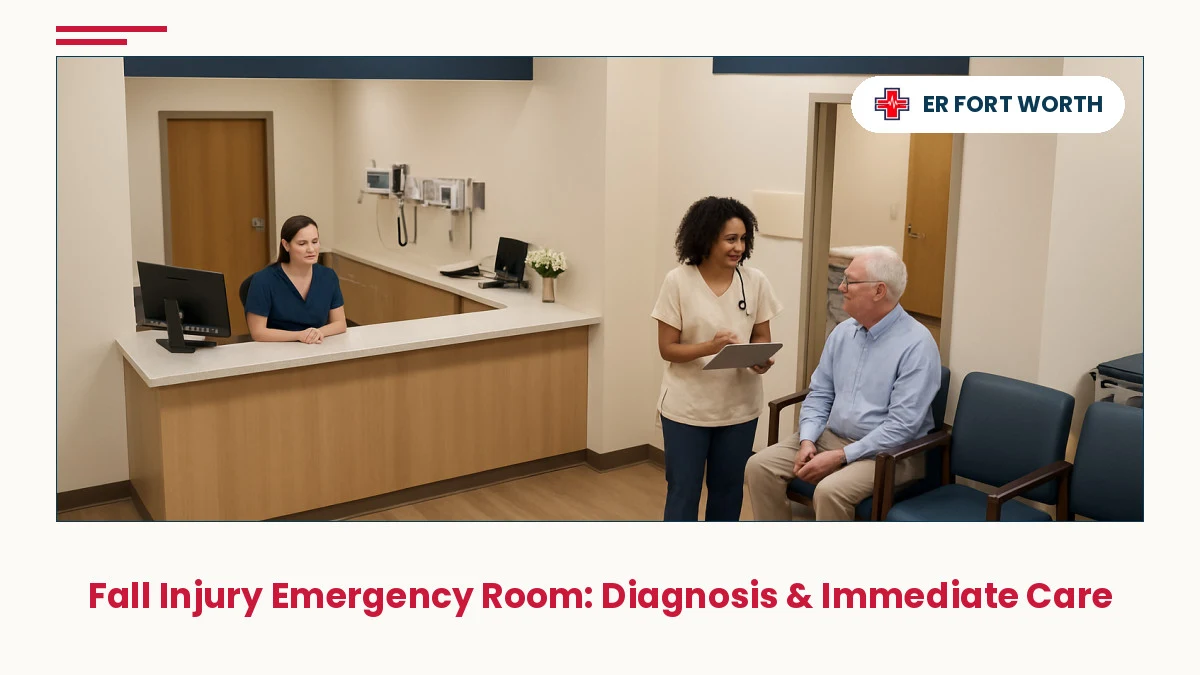
When you arrive at the emergency room with a fall injury, the first priority is a rapid but thorough trauma assessment. Nursing staff will immediately check your vital signs—blood pressure, heart rate, respiratory rate, oxygen saturation, and temperature—to identify signs of shock or internal injury.
The triage nurse will perform an initial history, asking about the circumstances of the fall (height, surface, mechanism of impact), any loss of consciousness, and current symptoms. An emergency physician will then conduct a systematic head-to-toe examination, starting with assessment of mental status and responsiveness, progressing to the spine, limbs, and abdomen.
During this examination, the physician checks for:
- Signs of head injury: lacerations, deformity, pupil reactivity, and neurological responsiveness
- Neck and spine stability: tenderness, deformity, and range-of-motion limitations
- Rib and chest integrity: fractures, flail segments, or breath sounds abnormalities
- Abdominal tenderness or distension suggesting internal bleeding
- Limb alignment, swelling, deformity, and neurovascular status (pulse, sensation, color)
This initial assessment guides the decision to order imaging and determines the urgency of further evaluation. Patients with multiple injuries or high-risk mechanisms are flagged for more aggressive diagnostic workup and observation.
Fall Injury Diagnosis & Imaging Protocols
Accurate fall injury diagnosis depends on targeted imaging tailored to the mechanism and clinical findings. The emergency physician will order specific studies rather than an exhaustive battery, balancing diagnostic accuracy with radiation exposure and cost.
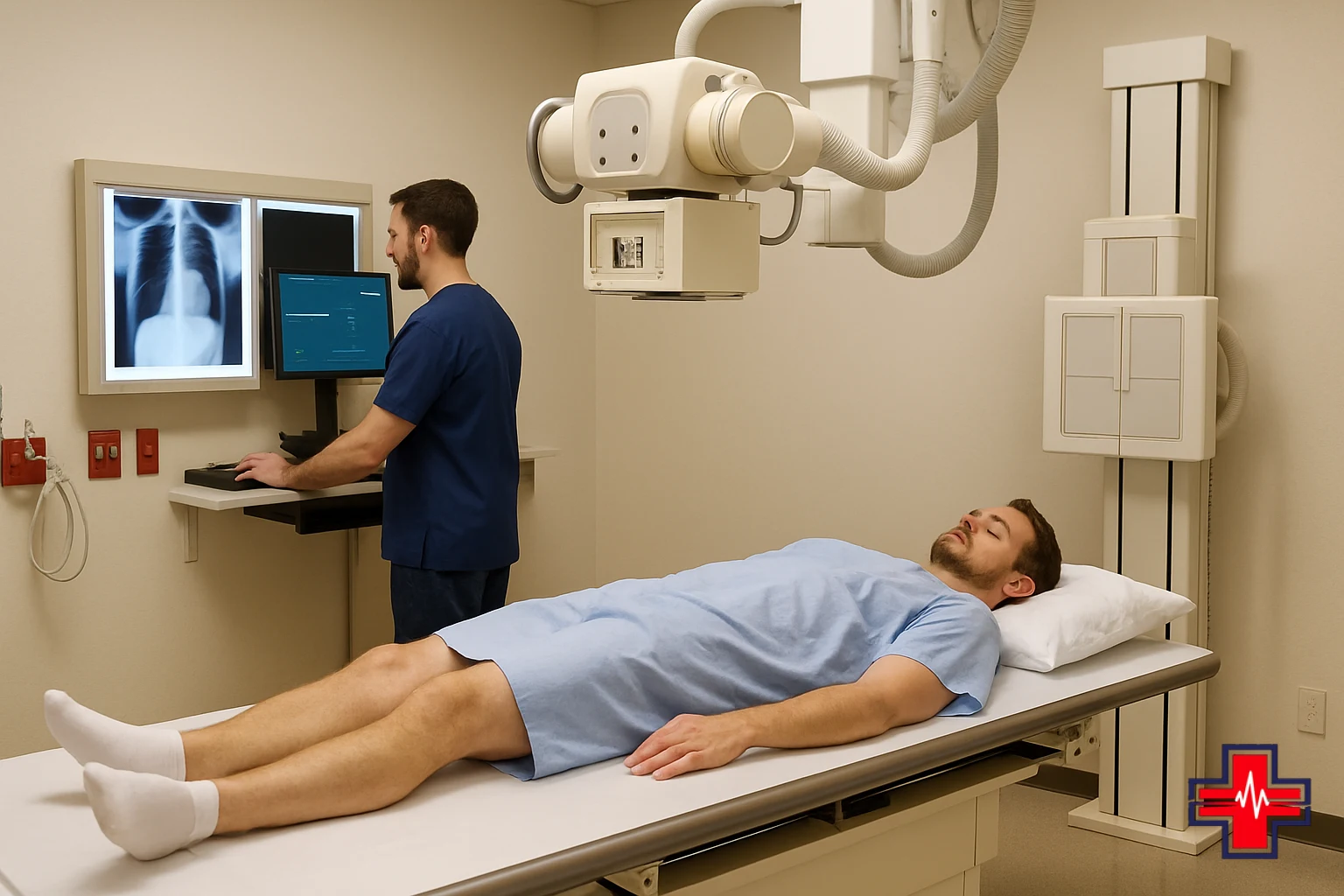
X-ray is the first-line imaging for suspected fractures. Plain radiographs of the affected limb(s), ribs, pelvis, or spine are obtained quickly and can confirm bone breaks, help rule out serious injuries, and guide treatment decisions. Fort Worth ER facilities maintain rapid X-ray turnaround, typically producing diagnostic images within 10–15 minutes.
CT (Computed Tomography) is ordered when head injury, spinal cord injury, or internal organ trauma is suspected. CT scans of the head identify intracranial bleeding (epidural hematoma, subdural hematoma, or subarachnoid hemorrhage), skull fractures, and brain contusion. CT of the spine may be needed if the mechanism suggests potential vertebral fracture or spinal cord injury.
Ultrasound can assess soft-tissue injury, joint effusions (fluid), and in some settings, free fluid in the abdomen suggesting internal bleeding. Modern ultrasound is operator-dependent but rapid and avoids radiation, making it valuable in pregnant patients or those requiring serial imaging.
At ER Of Fort Worth, our blood tests complement imaging by measuring hemoglobin to detect anemia (suggesting bleeding), liver and kidney function to assess organ injury, and coagulation studies if you are on blood thinners. These laboratory markers help distinguish minor from major trauma and guide treatment intensity.
Blunt Trauma Emergency Evaluation
Blunt trauma—the crushing or impact injury common in falls—can cause hidden, life-threatening injuries that are not immediately obvious. The emergency physician's role is to identify these occult injuries through systematic examination and selective imaging.
Closed-head injury is a primary concern in blunt trauma from falls. Even without loss of consciousness, a hard fall can cause brain contusion, diffuse axonal injury, or intracranial bleeding. CT imaging of the head is indicated for any loss of consciousness, severe headache, vomiting, confusion, or mechanism suggesting significant impact.
Rib and chest trauma can fracture ribs, puncture or collapse the lung (pneumothorax), or cause hemothorax (blood in the pleural space). Breath sounds asymmetry, chest wall tenderness, or difficulty breathing prompt rib X-rays and chest imaging. Patients with rib fractures require pain control and respiratory support to prevent pneumonia.
Abdominal blunt trauma may lacerate or contuse solid organs (spleen, liver, kidneys) or rupture hollow organs (intestine), causing internal bleeding without external signs. Tenderness, bruising (seat belt sign), or mechanism involving direct abdominal impact warrants fall and trauma assessment including CT of the abdomen and pelvis or bedside ultrasound.
Pelvic fractures are serious injuries that can occur from high-impact falls or direct blow. Pelvic X-ray and often CT imaging are used to assess fracture pattern and associated injuries. Stable pelvic fractures may be managed conservatively; unstable fractures require orthopedic intervention and careful fluid resuscitation.
The cornerstone of blunt trauma evaluation is a high index of suspicion: if the mechanism suggests potential for serious injury, imaging is ordered even if the patient "looks fine."

Concussion Management & Observation
Concussion is a mild form of traumatic brain injury that results from head impact causing altered brain function. Many concussions are missed or dismissed as minor, yet they carry risk of serious complications if not properly managed. The emergency room's role is to diagnose concussion, rule out more severe intracranial injury, and establish a safe observation and recovery protocol.
Concussion recognition at the point of care relies on clinical features. Patients may report headache, dizziness, sensitivity to light and sound, memory gaps, confusion, or difficulty concentrating. They may not remember the fall itself. Slurred speech, inappropriate behavior, or delayed response to questions signals altered mental status requiring urgent CT imaging.
CT imaging of the head is standard if concussion is suspected, to rule out intracranial bleeding or skull fracture. A normal CT does not exclude concussion (which is a functional injury not always visible on imaging), but it does reassure that no life-threatening bleeding has occurred.
Once intracranial bleeding is excluded, patients with concussion are observed in the emergency room for a period (typically 4–6 hours) to monitor for deterioration. Nursing staff assess mental status, headache severity, and any new neurological symptoms hourly. The pediatric emergency care team applies the same vigilance to children, who are particularly vulnerable to concussion and post-concussion syndrome.
Discharge instructions include a "return precaution" list: patients must return immediately if they develop worsening headache, new confusion, seizures, repeated vomiting, or loss of consciousness. A responsible adult should observe the patient for 24 hours post-discharge. Rest (physical and cognitive) is the primary treatment for concussion; gradual return to activity under medical supervision follows after symptoms resolve.
At ER Of Fort Worth, our concussion management protocol emphasizes patient education and safety monitoring to prevent second-impact injury and long-term post-concussion complications.
Orthopedic Fracture Imaging & Treatment
Falls are a leading cause of fracture across all age groups. Wrist fractures (Colles' fracture), hip fractures (femoral neck or intertrochanteric), ankle fractures, and vertebral compression fractures are common. Rapid and accurate diagnosis using orthopedic fracture imaging determines whether fractures can be managed in the emergency setting or require urgent orthopedic surgery.
X-ray imaging protocol for suspected fracture includes at least two perpendicular views (front and side) to visualize the fracture line, assess displacement, and determine fracture pattern (simple versus comminuted—broken into multiple pieces). In some cases, special views (angled or rotated) are needed to clarify the injury.
CT imaging is ordered when X-rays are unclear, when the fracture involves a joint (intra-articular fracture), or when treatment planning requires detailed assessment of fracture geometry. CT is particularly valuable for complex hip fractures, ankle fractures involving the joint surface, and spine fractures.
Fracture reduction (realigning the bone) may be performed in the emergency room under local anesthesia or procedural sedation. Once reduced, the fracture is typically immobilized with a splint, cast, or sling. The emergency physician determines the urgency of orthopedic consultation: some fractures require same-day or next-day surgical evaluation, while stable, non-displaced fractures may be referred to an orthopedic clinic for follow-up.
In patients from Fort Worth, Keller, Alliance, and Saginaw, fall and trauma care at ER Of Fort Worth includes fracture stabilization and clear handoff to orthopedic specialists, ensuring continuity of care and optimal healing outcomes.
Post-Trauma Observation Protocol
Many fall injury patients do not require hospital admission but benefit from a period of observation in the emergency setting. ER Of Fort Worth maintains dedicated observation spaces where patients are monitored for delayed injury manifestations, reassessed periodically, and discharged once safety criteria are met.
Observation indications include uncertainty about the severity of injury, need for serial physical examinations to detect deterioration, ability to establish a safe home environment, and risk stratification. Patients with isolated head injury, stable rib fractures without pneumothorax, and minor soft-tissue injury are candidates for observation rather than admission.
Monitoring frequency during observation is individualized. Neurological checks are performed every 1–2 hours for head injury patients, looking for changes in mental status, headache progression, or new symptoms. Pain is reassessed and analgesia adjusted as needed. Vital signs are trended to detect late shock or infection.
Observation duration varies by injury type. Head injury patients are typically observed for 4–6 hours post-injury; if they remain neurologically stable and have reliable follow-up, they are discharged. Patients with more significant head injury or concerning imaging may be admitted to an inpatient unit for overnight monitoring.
Discharge from observation requires:
- Stable vital signs and mental status unchanged from arrival
- Pain controlled on oral medication
- Ability to ambulate safely (or injury-specific functional baseline)
- Clear understanding of discharge instructions and return precautions
- Reliable follow-up care arranged (primary care physician, orthopedic surgeon, or neurology)
ER Of Fort Worth provides ER observation services 24/7, allowing safe discharge of many fall injury patients who might otherwise require inpatient hospital admission, reducing unnecessary healthcare costs while maintaining safety.
Recovery & Follow-Up Care
Discharge from the emergency room is not the end of fall injury care; structured follow-up is essential to optimize healing, prevent complications, and restore function.
Fracture follow-up requires orthopedic evaluation, typically within 1–2 weeks. The orthopedic surgeon confirms fracture healing trajectory, may adjust immobilization, and plans rehabilitation. Weight-bearing restrictions, range-of-motion exercises, and gradual return to activity are tailored to the specific fracture and patient age.
Concussion recovery follows a gradual return-to-activity protocol. Patients begin with physical and cognitive rest (limiting screen time, work, and strenuous activity). As headache and dizziness improve over days to weeks, activity is slowly increased. Return to sports or high-risk activities requires medical clearance and ideally involves a healthcare provider trained in concussion management.
Pain management is an ongoing consideration. While emergency analgesics control acute pain, chronic post-injury pain may develop, especially after significant soft-tissue injury or fracture. Primary care physicians or pain specialists can provide longer-term strategies, including physical therapy, medications, and psychological support.
Physical therapy and rehabilitation accelerate recovery and reduce the risk of long-term disability. Therapists design exercises to restore strength, range of motion, balance, and functional capacity. Early mobilization (within days of fracture, if safe) prevents muscle atrophy and stiffness.
Reassurance and monitoring for complications is part of follow-up. Patients are educated on warning signs: increasing swelling or pain despite treatment, signs of infection (fever, drainage), loss of sensation or function, or persistent headache and cognitive problems. Residents of North Richland Hills, Haslet, Bedford, and surrounding areas can readily access primary care follow-up to manage these issues.
Recovery from significant fall injury is not instantaneous; many patients require weeks to months of rehabilitation and medical supervision to achieve full functional recovery. The emergency room's role is to diagnose injury accurately, stabilize the patient, and establish a pathway to ongoing care that supports optimal healing.
Frequently Asked Questions
Should I go to the ER after a minor fall if I feel okay?
If you are over 65, take blood thinners, or have osteoporosis, yes—seek ER evaluation even for low-impact falls, as these populations have higher risk of serious injury. If you experience any head symptoms (headache, dizziness, confusion), inability to move a limb, or severe pain, visit the ER immediately. When in doubt, call ER Of Fort Worth or your doctor for guidance.
What imaging is done for a fall injury emergency room visit?
Imaging depends on your mechanism of injury and examination findings. X-rays are standard for suspected fractures. CT of the head is ordered for any head injury with loss of consciousness, altered mental status, or severe headache. Ultrasound or CT of the abdomen is performed if internal bleeding is suspected. Blood tests assess for anemia and organ injury.
How long will I be observed in the ER after a fall?
Most patients with minor head injury are observed for 4–6 hours. Patients with more serious findings may require longer observation or admission. The emergency physician determines observation duration based on injury severity, symptom stability, and home safety factors. Some patients are discharged after initial evaluation if imaging is reassuring and they are neurologically normal.
What is the difference between a concussion and a more serious brain injury?
A concussion is a mild traumatic brain injury that affects function but typically does not show bleeding or fracture on CT. More serious brain injuries include intracranial bleeding (epidural, subdural, or subarachnoid hematoma), brain contusion, or skull fracture—all visible on imaging and requiring urgent intervention. CT imaging distinguishes these injuries and guides treatment.
Can I go home after an ER visit for a fall injury, or will I be admitted?
Many fall injury patients are discharged home after ER observation and imaging. Admission is reserved for patients with serious fractures requiring surgery, significant head injury with imaging abnormalities, spinal cord injury, or inability to safely manage at home. The emergency physician discusses admission versus observation based on your specific injuries and circumstances.
Where can I get fall injury emergency room care in Fort Worth?
ER Of Fort Worth at 4561 Heritage Trace Parkway, Suite 117, Fort Worth, TX 76244 is open 24/7 for fall injury evaluation. We also serve patients from Keller, Alliance, Saginaw, Haslet, Watauga, Roanoke, North Richland Hills, and surrounding communities. Call 817-945-4200 for questions or check in online.