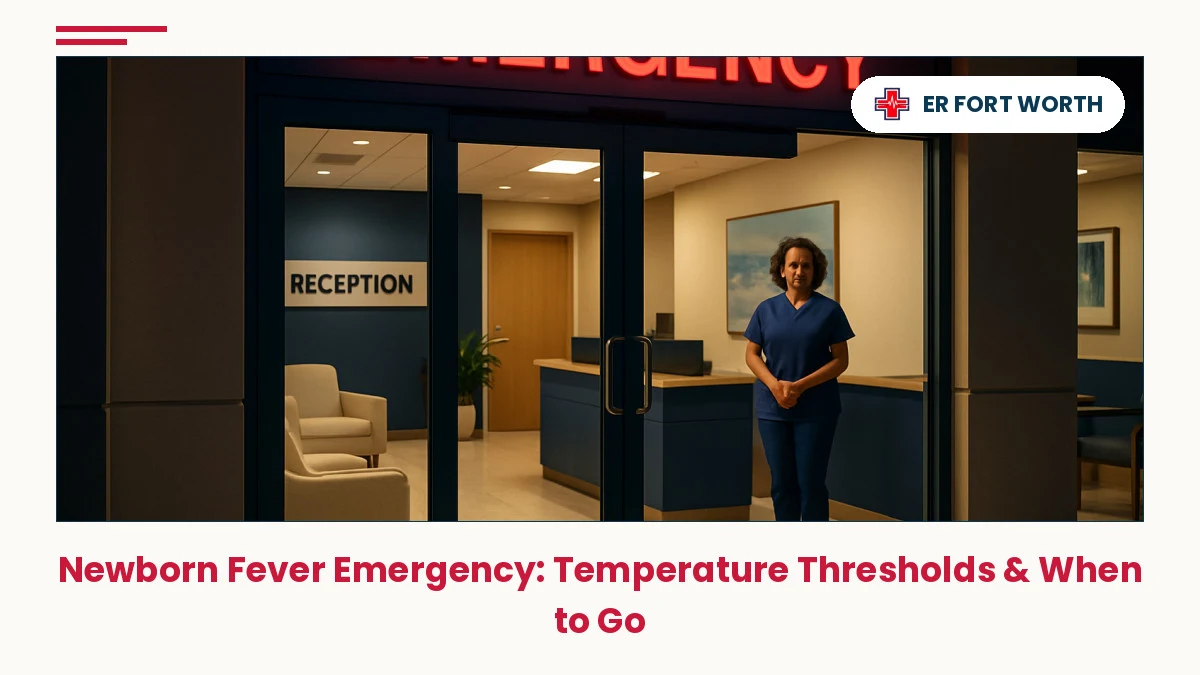
Newborn Fever Emergency: Temperature Thresholds & When to Go
A fever in a newborn is never routine—even a modest temperature elevation can signal a serious infection requiring immediate evaluation. Understanding the clinical thresholds and warning signs that warrant an ER visit can help you protect your infant during those critical early weeks.
In This Article
- Fever in Newborn: Temperature Thresholds and Age Milestones
- When Is Fever in a Newborn a Medical Emergency?
- Warning Signs: When to Seek ER Care Immediately
- What to Expect: Newborn Fever ER Evaluation Process
- Safe Fever Management at Home Before Reaching the ER
- Common Causes of Newborn Fever and Infection
- Fort Worth Pediatric ER Care: When and How to Access It
- Frequently Asked Questions
⚡ Key Takeaways
- A rectal temperature of 100.4°F (38°C) or higher in a newborn under 3 months is a medical emergency requiring immediate ER evaluation.
- Behavioral changes—lethargy, irritability, poor feeding, or weak cry—may be more significant than the fever itself in newborns.
- Do not wait to call your pediatrician or visit the ER if your newborn shows fever plus difficulty breathing, seizures, unresponsiveness, or persistent crying.
- ER blood tests and cultures help identify whether the fever is viral or bacterial, guiding life-saving antibiotic therapy.
- Fever in infants 3 to 36 months requires prompt evaluation, especially if temperature exceeds 102°F or other symptoms appear.
Fever in Newborn: Temperature Thresholds and Age Milestones
If you are experiencing a life-threatening emergency, call 911 or go to the nearest emergency room immediately.
The definition of fever changes dramatically across early infancy. A rectal temperature of 100.4°F (38°C) or above in an infant under 3 months of age is considered fever and demands medical attention. This threshold is deliberately conservative because infections in newborns—particularly bacterial sepsis—can escalate rapidly and without obvious early warning signs.
For infants aged 3 to 6 months, a fever of 101°F (38.3°C) or higher warrants same-day evaluation by a pediatrician or ER. Between 6 months and 3 years, a fever above 102°F (38.9°C) is generally significant, though behavioral symptoms and the duration of fever matter just as much as the number on the thermometer.
The reason for this tiered approach is straightforward: newborns have immature immune systems and cannot yet mount the robust inflammatory response that older children display. Consequently, a serious bacterial infection may present with minimal systemic signs. A slight fever in a 2-week-old can mask meningitis, bacteremia, or urinary tract infection—conditions that require urgent antibiotics to prevent devastating complications.
Temperature measurement in newborns should be done rectally using a digital thermometer for accuracy. Armpit and ear readings are less reliable in very young infants and may lead to false reassurance.
When Is Fever in a Newborn a Medical Emergency?
Any fever (rectal temperature ≥100.4°F) in a newborn under 3 months is an automatic reason to contact your pediatrician or proceed directly to a 24/7 emergency room. This is not a guideline to interpret—it is a hard rule established by pediatric organizations because the consequences of missed infection are severe.
For infants 3 to 36 months old, fever alone may not always necessitate ER care if the child appears well, is feeding normally, and has no other concerning symptoms. However, if fever persists beyond 3 days, rises above 102–103°F, or occurs alongside other symptoms, an ER evaluation becomes urgent.
Several factors increase the urgency even further. If your newborn or young infant has a fever and was recently hospitalized, was born prematurely, or has an underlying medical condition (heart disease, immunodeficiency, lung problems), the fever should be evaluated immediately, even if it is lower than the standard threshold. Premature infants in particular remain immunologically immature for several months corrected age, making them especially vulnerable.
Additionally, fever accompanied by signs of illness—such as persistent crying, inability to be consoled, unusual lethargy, or poor feeding—requires urgent ER assessment, regardless of how high the temperature is. Trust your parental instinct: if something feels wrong, seeking immediate medical evaluation is always the safer choice.
Warning Signs: When to Seek ER Care Immediately
Certain signs demand immediate activation of 911 or direct transport to the nearest emergency room. Do not delay or attempt home management if your newborn or young child exhibits any of the following:
- Difficulty breathing or rapid, labored breathing: Retractions (skin pulling in around ribs or neck), grunting, or stridor are red flags for serious respiratory infection or sepsis.
- Unresponsiveness or extreme lethargy: A baby who cannot be aroused, does not react to stimulation, or seems unusually limp requires emergency evaluation.
- Seizures or unusual jerking movements: Fever-related seizures in young children, while sometimes self-limited, always warrant ER assessment to rule out meningitis or encephalitis.
- Persistent vomiting or refusal to feed: Inability to keep fluids down combined with fever raises dehydration and serious infection risk.
- Rash that does not blanch when pressed: A petechial or purpuric rash (small red or purple spots that do not turn white when you press them) can signal meningococcal sepsis—a true emergency.
- Excessive crying or inconsolability: A baby who cries persistently and cannot be soothed, especially if fever is present, may have meningitis or another serious infection causing pain or irritation.
- Abdominal distension, severe vomiting, or bloody stools: These suggest possible bowel infection or complications requiring urgent ER imaging and labs.
If you observe any combination of fever plus the above warning signs, do not wait for office hours or attempt telephone consultation alone. Proceed directly to a 24/7 emergency room or call 911 for safe transport.
What to Expect: Newborn Fever ER Evaluation Process
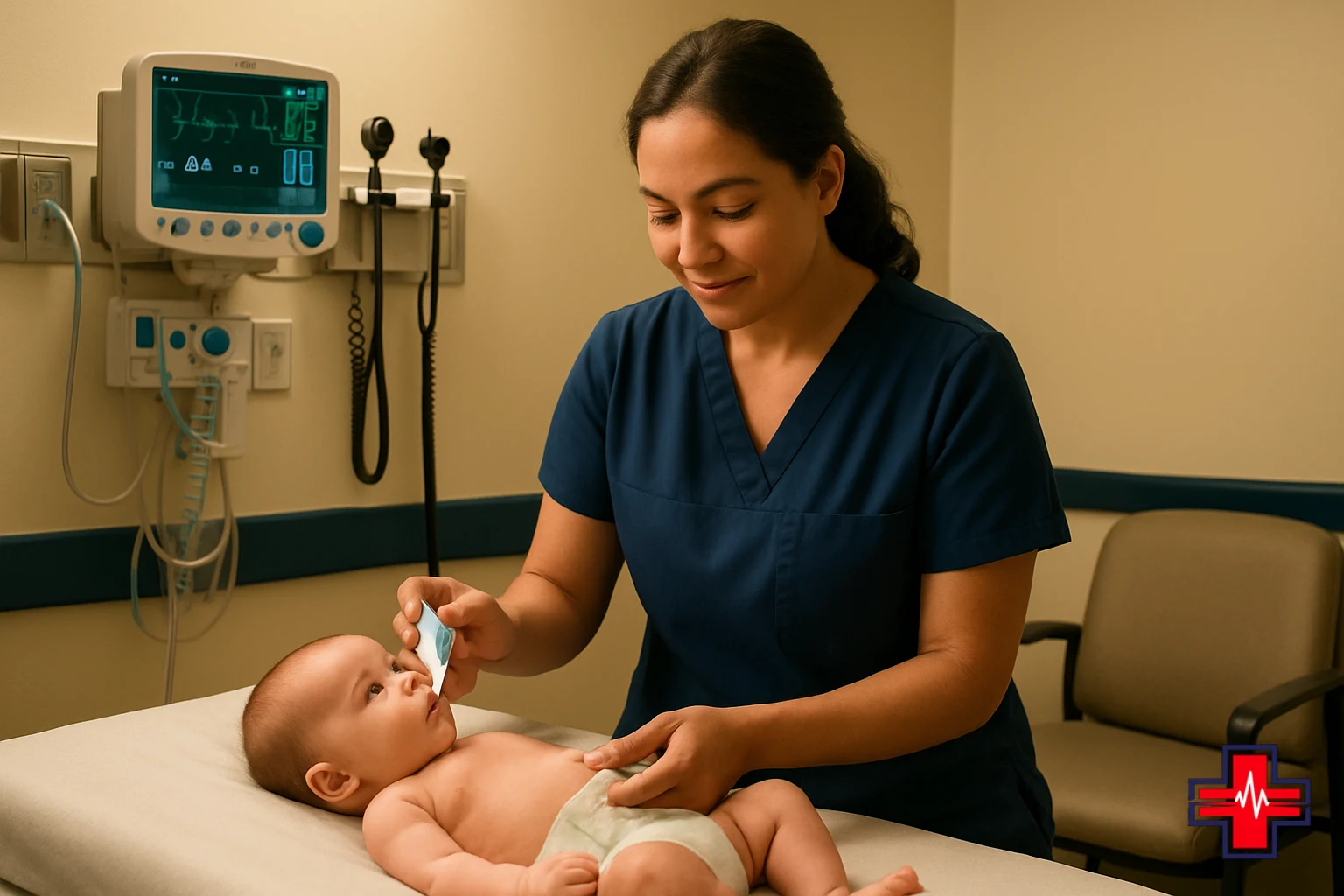
When you arrive at ER Of Fort Worth or another emergency department with a febrile newborn, the triage nurse will assess your baby's vital signs immediately. You can expect the evaluation to proceed swiftly and follow a standardized protocol designed to identify serious infection quickly.
The ER team will take a detailed history: birth history (full-term or premature), feeding pattern, urine and stool output, recent sick contacts, and any medications or recent procedures. A thorough physical exam follows, with special attention to signs of infection—skin appearance, lymph node enlargement, abdominal tenderness, and neurological responsiveness.
Blood tests are standard in febrile newborns under 3 months. These typically include a complete blood count (CBC) to assess white cell count and markers of infection, a blood culture to identify bacterial organisms, and metabolic screening. Urinalysis and urine culture are also performed, as urinary tract infections are common in newborns and can present with fever alone.
Depending on clinical suspicion, a lumbar puncture (spinal tap) may be recommended to test cerebrospinal fluid for bacterial meningitis. While this procedure causes parental anxiety, it is a critical tool in newborns, where meningitis can hide behind minimal symptoms. Pediatric emergency care teams are trained to perform this safely with appropriate comfort measures.
If serious bacterial infection is suspected based on labs or clinical appearance, IV antibiotics are started immediately, often before culture results return. This empiric approach can be lifesaving when sepsis is present. Once cultures identify the specific organism and antibiotic sensitivity, therapy can be refined.
Safe Fever Management at Home Before Reaching the ER
If you have reason to suspect your newborn has a fever but cannot reach the ER immediately (for example, during a brief transport delay), gentle measures can make your baby more comfortable without delaying care:
- Remove excess clothing: Light cotton clothing and a single blanket allow heat to dissipate. Bundling a febrile infant in heavy blankets can trap heat and raise temperature further.
- Maintain a cool (not cold) environment: Adjust room temperature to comfortable levels. Avoid ice baths or excessive cooling, which can cause shivering and paradoxically raise internal temperature.
- Offer frequent feeding: Breast milk or formula supports hydration and energy. A baby with fever loses fluids more rapidly than usual.
- Do not use fever-reducing medications without ER or pediatric guidance: Acetaminophen or ibuprofen may be given in newborns only on physician instruction, as they can mask symptoms and delay recognition of serious illness.
Under no circumstances should you delay seeking emergency care to attempt home fever management. The goal is comfort during transport, not treatment of the underlying infection.
Common Causes of Newborn Fever and Infection
Understanding the infections that cause newborn fever can help you recognize why prompt evaluation is non-negotiable.
Bacterial sepsis: Infection of the bloodstream with bacteria such as Group B Streptococcus (GBS), E. coli, or Listeria monocytogenes can develop within the first week of life, especially in infants born to mothers with inadequate prenatal GBS screening or intrapartum antibiotic prophylaxis. Early-onset sepsis may present with fever, lethargy, feeding difficulty, or respiratory distress.
Meningitis: Bacterial meningitis in newborns presents subtly—fever, irritability, poor feeding, or a high-pitched cry may be the only signs. The classic stiff neck of older children is absent in infants. A bulging fontanel (soft spot) is a late sign.
Urinary tract infection (UTI): UTIs are the most common serious bacterial infection in febrile infants beyond the first week of life, yet fever may be the only symptom. Urinalysis and urine culture identify these infections, which respond rapidly to appropriate antibiotics.
Pneumonia: Pneumonia in newborns may present with fever, mild cough, or subtle breathing changes. Chest X-rays and cultures guide management.
Viral infections: Respiratory syncytial virus (RSV), influenza, and other viral pathogens can cause fever in infants. While many viral infections are self-limited, the ER visit rules out bacterial coinfection and ensures the infant can maintain hydration and oxygenation.
The reality is that ER evaluation cannot reliably distinguish between serious bacterial infection and benign viral fever by clinical appearance alone in newborns—hence the conservative approach of evaluating all fever in infants under 3 months.
Fort Worth Pediatric ER Care: When and How to Access It
ER Of Fort Worth operates 24/7 and welcomes newborns and pediatric patients from Fort Worth, Keller, Alliance, Saginaw, Haslet, Watauga, Roanoke, North Richland Hills, Haltom City, Bedford, Southlake, Grapevine, and Flower Mound. When your newborn develops fever, you do not have to wait for your pediatrician's office to open—immediate evaluation is available anytime, day or night.
The facility is equipped with pediatric emergency care resources, including trained staff comfortable managing newborns, rapid laboratory turnaround, and direct admission pathways to higher-level care if needed. Online check-in can reduce waiting time if your newborn's condition is stable enough for brief processing delays, though acutely ill infants bypass standard check-in protocols.
If your newborn shows signs of life-threatening emergency—severe respiratory distress, unresponsiveness, or seizure—call 911 for ambulance transport. If your infant has fever with any of the warning signs listed earlier, drive directly to the ER or call 911; do not risk transport delay by calling your pediatrician first.
Bring your baby's medical records, a list of any medications, and details about prenatal history, delivery, and feeding patterns. This information accelerates diagnosis and reassures the clinical team about your infant's baseline health.
Parents should know that a ER visit for newborn fever, while potentially anxiety-provoking, is a sign of good judgment and responsible care. The vast majority of febrile newborns who receive prompt evaluation recover fully, and those with serious infections benefit enormously from early recognition and treatment.
Frequently Asked Questions
At what temperature should I take my newborn to the ER?
A rectal temperature of 100.4°F (38°C) or higher in an infant under 3 months is a clinical fever requiring ER evaluation. Do not wait for the temperature to go higher or for additional symptoms to appear.
Can I give my newborn fever-reducing medicine before going to the ER?
Do not give acetaminophen, ibuprofen, or other fever-reducing medications to a newborn without explicit instruction from the ER or your pediatrician. These drugs can mask symptoms of serious infection and delay proper diagnosis.
Is fever always a sign of infection in a newborn?
Fever in a newborn is always medically significant and requires evaluation, even if it turns out to be caused by a minor viral illness. The ER assessment rules out serious bacterial infection and sepsis.
What should I do if my newborn has fever and a rash?
A rash combined with fever in a newborn requires emergency ER care. If the rash does not blanch (turn white) when you press it, this is a red flag for sepsis and warrants 911 call or immediate ER transport.
How long does a newborn fever ER evaluation typically take?
While wait times vary, the ER prioritizes febrile newborns for immediate assessment. Blood cultures, urinalysis, and initial labs typically take 1–2 hours. If serious infection is suspected, IV antibiotics begin within the first hour.
Can I stay with my newborn during ER procedures?
Yes, parents are encouraged to remain with their newborn throughout triage, examination, and most procedures. This provides comfort to your baby and allows you to give important history to the clinical team.