
ER Lab Tests Results: How Long Do They Take?
When you're at the emergency room, waiting for lab results can feel endless. Understanding how long ER lab tests take—and why some results come back in minutes while others require hours—helps you manage expectations and plan your care journey.
In This Article
- What Affects ER Lab Test Turnaround Time?
- Stat vs. Routine Labs: Priority and Speed
- Common ER Lab Tests and Their Timing
- Point-of-Care Testing: Rapid Results at Your Bedside
- Why Some Specialty Tests Take Much Longer
- How to Prepare for ER Lab Tests
- Getting Results After You Leave the ER
- Frequently Asked Questions
⚡ Key Takeaways
- Most routine ER lab tests return results within 1–2 hours; stat (priority) tests may deliver answers within 15–60 minutes.
- Blood cultures, cultures from body fluids, and some specialty tests require 24–72 hours because they involve bacterial growth processes.
- Your clinical symptoms determine test priority—chest pain or fever with confusion trigger stat orders; routine UTI screening does not.
- ER Of Fort Worth performs rapid blood work, urinalysis, and point-of-care testing onsite, eliminating shipping delays to outside laboratories.
- Test complexity, specimen type, and laboratory workload all affect turnaround time beyond the initial draw or collection.
What Affects ER Lab Test Turnaround Time?
ER lab results timing depends on multiple interconnected factors, and understanding them helps explain why your neighbor's blood test came back in 30 minutes while yours took two hours. The most critical variable is test complexity—a simple blood glucose check requires only a finger-stick and a glucometer, while a comprehensive metabolic panel involves automated chemistry analyzers that process dozens of analytes simultaneously.
The specimen type also matters enormously. Whole blood drawn into a standard tube travels through a centrifuge, quality-control steps, and analyzer processing before results print out. Urine samples may require immediate dipstick analysis (5 minutes) or culture incubation (48+ hours). Spinal fluid, joint aspirates, or body cavity fluids demand specialized handling, microscopy review, and sometimes microbiology workup—all of which extend turnaround.
Laboratory workload is often overlooked but significant. During a busy Friday night in Fort Worth, when the ER at Heritage Trace Parkway receives multiple trauma patients, cardiac events, and sepsis cases, the lab processes hundreds of specimens. Stat tests jump the queue, but routine orders may experience modest delays simply because skilled technicians and analyzers are running continuously. Early morning hours typically see faster turnaround for non-stat work because the lab queue is lighter.
Finally, instrument availability and reagent inventory affect speed. If a chemistry analyzer requires recalibration or a reagent cartridge is depleted, even routine tests may pause briefly. Most modern ERs, including ER Of Fort Worth, maintain redundant equipment to minimize these bottlenecks, but they remain part of the clinical reality.
Stat vs. Routine Labs: Priority and Speed
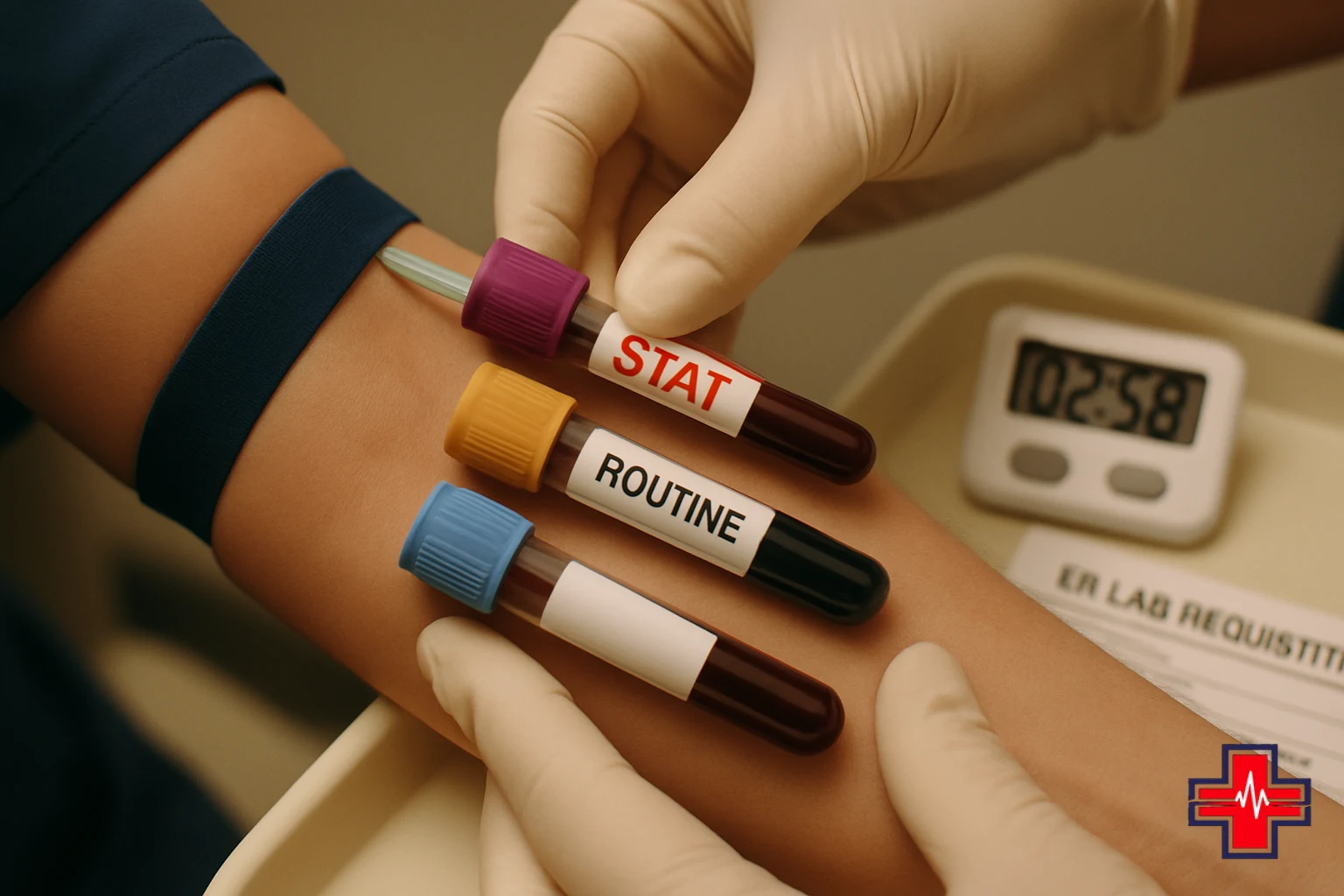
When you arrive at the ER complaining of chest pain, difficulty breathing, or altered mental status, your physician orders lab work as stat (short for statim, meaning immediately in medical Latin). Stat labs bypass normal queue processing and go directly to the front of the analyzer or technician's workflow. In many ER settings, stat blood draws are collected into stat-labeled tubes that are rushed to the lab and processed within 15–60 minutes, depending on the specific test.
By contrast, routine labs are processed in standard order, typically completing within 1–2 hours. The distinction is clinical: a patient with crushing substernal chest pain and risk factors for heart attack receives stat troponin and complete blood count; a patient with an ankle injury and normal vital signs receives routine plain films and routine bloodwork if needed at all.
Your provider's clinical assessment determines the priority level. High fever with confusion, rapid heart rate, or low blood pressure warrants stat testing for infection markers, blood cultures, and lactate—all to expedite diagnosis of sepsis or meningitis. A suspected urinary tract infection in a stable patient typically receives routine urinalysis and culture, which may take several hours for the urinalysis result and 24–48 hours for culture confirmation.
Blood tests at ER Of Fort Worth include both stat and routine protocols, with our medical team prioritizing based on your presentation. The ER physicians understand that every minute counts in true emergencies, which is why stat capability exists in the first place.
Common ER Lab Tests and Their Timing
Complete Blood Count (CBC) measures red blood cells, white blood cells, platelets, and hemoglobin. A routine CBC completes in 10–30 minutes once the sample enters the analyzer. This test helps identify infection (elevated white cell count), anemia (low hemoglobin), or bleeding disorders (low platelets). Routine processing takes 1–2 hours from draw to report.
Basic Metabolic Panel (BMP) covers kidney function, electrolytes, glucose, and liver markers. Modern chemistry analyzers run this panel in under 20 minutes of instrument time, but specimen transport, quality checks, and system verification add 1–2 hours total. This test is essential when assessing dehydration, electrolyte imbalance, or acute kidney injury.
Troponin testing detects heart muscle injury and is critical for patients with chest pain. High-sensitivity troponin assays return results in 30–60 minutes. Many ERs, including those serving Keller, Saginaw, and Haslet, now offer rapid troponin protocols that allow rule-out of acute myocardial infarction within 2–3 hours using serial testing.
Urinalysis can be performed as point-of-care testing (dipstick result in 2–5 minutes) or sent for microscopy review (15–30 minutes). If your symptoms suggest UTI treatment, urinalysis happens fast; culture confirmation to identify the bacteria takes 24–48 hours.
Blood glucose is available in seconds via fingerstick capillary testing at the bedside. Venous glucose runs through the chemistry analyzer and returns in under an hour.
Lactate measurement, often ordered in sepsis or shock, completes within 15–30 minutes because it uses rapid point-of-care analyzers. Elevated lactate indicates tissue hypoperfusion and drives aggressive fluid resuscitation and antibiotic decisions.
Pregnancy tests (beta-hCG) run on immunoassay platforms and return within 30–60 minutes for routine processing, or 15–20 minutes if stat priority is assigned.
Point-of-Care Testing: Rapid Results at Your Bedside
One of the most significant advances in emergency medicine is point-of-care testing (POCT), which brings laboratory-grade analysis directly to the patient's bedside or a nearby treatment station. Rather than sending specimens to a distant lab, nurses and physicians can run tests in the ER itself, eliminating transport time and reducing turnaround from hours to minutes.
Common POCT platforms in modern ERs include:
- Blood glucose meters—result in seconds
- Troponin rapid assays—result in 10–15 minutes
- Lactate analyzers—result in 2–3 minutes
- Urinalysis dipsticks—result in 2–5 minutes
- Coagulation monitors (INR/PT)—result in 2–3 minutes
- Blood gas analyzers—result in 1–2 minutes
ER Of Fort Worth utilizes POCT for common emergencies, allowing your physician to assess oxygenation, acid-base status, electrolytes, and cardiac injury markers almost instantaneously. For patients in shock, respiratory distress, or suspected acute coronary syndrome, these rapid turnarounds are literally life-saving because treatment decisions happen in real time rather than after a lengthy laboratory delay.
If you're receiving care for chest pain ER assessment in Fort Worth, point-of-care troponin testing helps your physician rule out a heart attack faster than traditional central lab processing ever could. Similarly, rapid lactate measurement in a septic patient identifies tissue hypoperfusion within minutes, triggering immediate interventions.

Why Some Specialty Tests Take Much Longer
While routine labs return within hours, certain specialty tests require biological growth processes or specialized expertise that cannot be expedited. Understanding why is important so you don't feel abandoned when your provider says "results in a few days."
Blood cultures are ordered when your physician suspects bacteremia or sepsis. The specimen is placed in incubation bottles containing nutrient broth and held in automated incubators that monitor for growth continuously. Most organisms grow within 24–48 hours, but some slow-growing bacteria may require up to 5 days. Once growth is detected, the organism is isolated, identified via MALDI-TOF mass spectrometry (1–2 hours), and tested for antibiotic sensitivities (additional 24 hours). Total turnaround: 24–72 hours or longer. This delay is frustrating but necessary—premature reporting could misidentify the pathogen and compromise antibiotic therapy.
Urine and wound cultures follow similar timelines. The specimen sits on selective media to allow pathogenic growth while inhibiting normal flora. Results depend on organism type: E. coli grows quickly (24–36 hours), while some fastidious organisms require 48–72 hours.
CSF (cerebrospinal fluid) analysis from a lumbar puncture includes cell counts, chemistry, Gram stain, and culture. Cell counts and chemistry return within 1–2 hours, but bacterial culture may take 48–72 hours. Viral PCR testing, if ordered, can return within hours at specialized reference labs but not always immediately at bedside.
Toxicology and drug screening vary widely. Rapid immunoassay screens (for common drugs of abuse) return in 30–60 minutes. Confirmatory GC-MS testing or comprehensive toxicology panels may require 24–48 hours or referral to an outside lab.
Many ERs refer specialty tests—rare immunology markers, specialized microbiology identification, complex genetic panels—to external reference laboratories. ER Of Fort Worth can facilitate these referrals, but processing occurs off-site, extending turnaround accordingly.
How to Prepare for ER Lab Tests
Once your ER physician determines which lab tests you need, nursing staff will prepare you for specimen collection. While fasting is not always required in emergencies (unlike elective lab appointments), certain tests are affected by recent food intake. Your ER team will explain any relevant restrictions specific to your situation.
Hydration status matters for some tests. If you're severely dehydrated, your red blood cell count may artificially appear elevated due to hemoconcentration, and kidney function tests may show temporary elevation. Your physician accounts for this context when interpreting results.
Medications you're taking should be documented, as some drugs affect lab values. Anticoagulants influence coagulation tests; certain antibiotics affect kidney or liver markers. The ER intake nurse will ask about recent medications, supplements, and herbal products.
Stay calm during the draw. Anxiety and physical tension can cause hemolysis (rupture of red blood cells), which invalidates certain tests and requires redraw. If you have a history of difficult IV access, inform your nurse upfront; ER staff are skilled at obtaining samples via alternative sites if needed.
For blood tests ER services, ER Of Fort Worth staff are trained in rapid, efficient specimen collection that minimizes patient discomfort and sample quality issues. Once your specimen is collected, it's logged, labeled with your unique identifier, and routed to the appropriate analyzer or testing station immediately.
Getting Results After You Leave the ER
In many cases, your ER visit ends before all lab results return. Cultures may still be incubating; specialty tests may be pending at reference labs. Your ER physician will explain which results are pending and how you'll receive them. Modern ERs use electronic health record (EHR) systems that allow patients to view results online within days of completion. Some results appear within hours after you've left the facility.
Before discharge, you should receive clear instructions: who to contact if results are abnormal, how to access your patient portal, and what to do if you develop new symptoms while awaiting results. If your UTI treatment at the ER included a urinalysis showing infection but culture results are still pending, your discharge paperwork will outline antibiotic recommendations and follow-up steps.
For cultures and other delayed tests, your primary care physician may receive results first and contact you with instructions. If you don't hear from anyone within the expected timeframe, don't hesitate to call your ER or physician's office to check status. Abnormal results require action—whether that's starting antibiotics, adjusting medications, or scheduling specialist follow-up—so communication is critical.
Follow-up care is part of the ER process. Results that aren't handled during your visit don't disappear; your medical team remains accountable for ensuring you receive them and understand what they mean for your health. ER Of Fort Worth and our partner physicians in the Fort Worth, Keller, Alliance, Saginaw, and North Richland Hills areas coordinate closely to ensure seamless follow-up care.
When and Why Your ER Physician Orders Stat Lab Tests
Your physician's decision to order lab work as stat versus routine reflects the clinical urgency of your presentation. Stat orders are reserved for situations where test results directly drive immediate treatment decisions. If you arrive with shortness of breath, chest pain, and a concerning EKG, your troponin, BNP, and complete blood count become stat priorities—because if you're having a heart attack or pulmonary embolism, your physician needs answers within 30–60 minutes to initiate antiplatelet therapy, anticoagulation, or thrombolysis.
Similarly, a patient with fever, altered mental status, and neck stiffness receives stat CBC, comprehensive metabolic panel, blood cultures, and lumbar puncture—because rapid diagnosis of meningitis or sepsis is essential. Hours of delay could mean the difference between successful treatment and catastrophic outcome.
By contrast, a patient with mild ankle pain and normal vital signs receives routine radiographs and routine blood work (if any) because the clinical urgency is lower. Results within 1–2 hours are acceptable because no immediate life-threatening diagnosis is suspected.
Your ER physician balances clinical judgment, test complexity, and resource allocation every time a lab order is written. Understanding the why behind stat versus routine ordering helps you trust the clinical process and manage expectations about result timing. Trust that your medical team at Fort Worth emergency room is operating with your immediate safety and best outcomes in mind.
Frequently Asked Questions
How long do blood test results take in the ER?
Most routine blood tests return within 1–2 hours. Stat tests (ordered for acute symptoms like chest pain or severe infection) may return within 15–60 minutes. Cultures and specialty tests can take 24–72 hours.
Can I get lab results the same day I visit the ER?
Yes, for most routine and stat tests. Blood glucose, urinalysis dipstick, troponin, lactate, and basic metabolic panels typically complete during your ER visit. Cultures and specialty tests may continue processing after discharge and be available within days.
What is a stat lab test, and why is it faster?
Stat means the test is processed with highest priority and bypasses the normal queue, going directly to the analyzer or technician. Stat testing is ordered for acute, potentially life-threatening conditions where results directly drive immediate treatment—such as chest pain, sepsis, or altered mental status.
Why do blood cultures take so long?
Blood cultures require incubation in special bottles that allow bacteria to grow under controlled conditions. Most organisms are detectable within 24–48 hours, but some grow slowly and may require up to 5 days. Once growth is detected, the organism must be identified and tested for antibiotic resistance, adding additional time.
Can I check my ER lab results online?
Many modern ERs, including ER Of Fort Worth, use electronic health record systems that allow patients to view results through a secure patient portal within hours or days of completion. Ask your discharge nurse for instructions on accessing your portal.
What if my ER lab results show something abnormal—will my doctor call me?
Yes, abnormal results typically trigger contact from your ER physician or primary care doctor, especially if treatment is needed before your next office visit. Always provide clear contact information during your ER visit so your medical team can reach you with important findings.