
Can You Put Ice on a Burn? Why Cold Water Is Better
The instinct to grab ice when a burn happens is strong—but it's one of the most common mistakes in burn first aid. Learn the correct approach to cooling a burn and when to seek emergency care at ER Of Fort Worth.
In This Article
- Ice vs. Cold Water: Why Ice Is Harmful
- Understanding Burn Types: Thermal, Chemical, Electrical & Radiation
- Immediate First Aid: The Right Way to Cool a Burn
- Assessing Burn Severity: When Home Care Isn't Enough
- Common Burn Mistakes to Avoid
- When to Visit ER Of Fort Worth for Burn Treatment
- Care After Cooling: Dressing and Follow-Up
- Frequently Asked Questions
⚡ Key Takeaways
- Never apply ice directly to a burn; use cool running water for 10–20 minutes instead to avoid frostbite-like injury to already-damaged skin.
- Different burn types (thermal, chemical, electrical, radiation) require different immediate responses—know which calls for water and which demands evacuation.
- First-degree burns cause redness; second-degree burns blister; third-degree burns appear white, leathery, or charred—severity determines whether home care or ER visit is needed.
- Remove jewelry and tight clothing immediately after cooling, as swelling can trap items and cut off circulation.
- Seek emergency care at ER Of Fort Worth for burns larger than 3 inches, deep burns, burns on joints or the face, or if you're unsure of severity.
Ice vs. Cold Water: Why Ice Is Harmful
The reflex to grab ice from the freezer during a burn emergency is understandable but medically incorrect. Applying ice directly to burned skin can cause additional injury through a process similar to frostbite, where extreme cold damages tissue that is already compromised. Burned skin loses its protective barrier and ability to regulate temperature, making it hypersensitive to further thermal stress.
Cold running water is the gold standard for initial burn cooling. Water at a comfortable temperature (around 60–65°F) cools the burned area without shocking the tissue or creating a secondary cold injury. The flowing action also gently removes surface contaminants and helps prevent infection. Ice cubes or ice packs constrict blood vessels excessively and can cause vasoconstriction that paradoxically worsens tissue damage—the opposite of what you're trying to achieve.
Many people in Fort Worth, Keller, and nearby communities don't realize that running cool tap water is often already at the optimal temperature. You don't need to add ice or chill the water further; simply hold the burn under flowing water or immerse it in a clean bowl of room-temperature water for 10–20 minutes, depending on burn size and depth.
Understanding Burn Types: Thermal, Chemical, Electrical & Radiation
Thermal burns are the most common—caused by flame, hot liquids, steam, or contact with hot surfaces. Immediately cool with running water. A child pulling a pot of boiling water off a stove, or an adult touching a hot stovetop, both represent thermal burns.
Chemical burns require a different approach. Never use water as the first step if the chemical is unknown or highly reactive (e.g., certain industrial compounds). For common household chemical burns (drain cleaner, paint thinner), remove contaminated clothing, then rinse copiously with cool running water for at least 15–20 minutes. If the chemical container is available, check the label for specific guidance. For chemical burns, proceed directly to ER Of Fort Worth or call 911 if the burn is extensive or involves the face or eyes.
Electrical burns carry hidden dangers—current may have damaged tissue deep beneath the skin surface. Never cool an electrical burn with water before ensuring the power source is off and the person is no longer in contact with electricity. Once safe, apply cool water if the burn is minor and localized. However, electrical burns almost always warrant professional evaluation at an emergency room because internal damage is difficult to assess visually.
Radiation burns (from sun exposure, tanning beds, or occupational exposure) manifest gradually and may not appear immediately. Cool the area with water if blistering or pain develops, then seek medical advice. Severe radiation burns require ER assessment.
Immediate First Aid: The Right Way to Cool a Burn
Step 1: Stop the burning process. Remove the person from the heat source. If clothing is on fire, use a blanket or cool water to extinguish flames. Do not panic or run—running accelerates oxygen flow to flames.
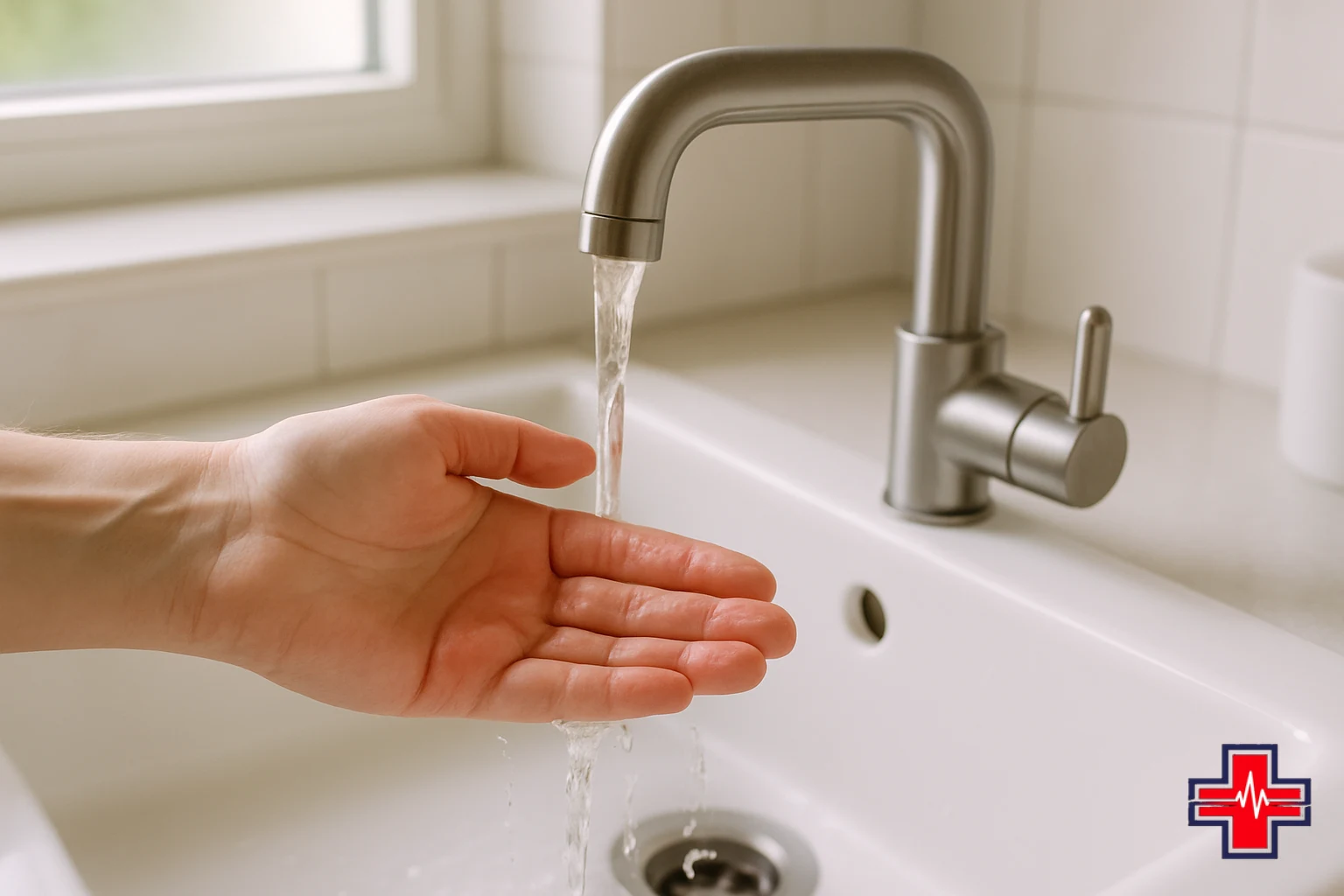
Step 2: Cool the burn with running water. Hold the burn under cool running water or immerse it in a clean bowl or bucket of cool water for 10–20 minutes. Do not use ice, ice packs, or ice water. The water should feel cool and comfortable to your hand—not painfully cold. If the person is in extreme pain, you can pause briefly, but resume cooling as soon as tolerated.
Step 3: Remove constrictive items. Gently remove jewelry, watches, rings, bracelets, and tight clothing from the burned area before swelling occurs. Once swelling sets in, removing items becomes extremely difficult and may require cutting off a wedding ring or bracelet at an ER.
Step 4: Cover the burn loosely. After cooling, cover the burn with a clean, dry cloth or sterile gauze to prevent contamination. Avoid adhesive bandages directly on the burn—they can stick to damaged skin and cause further harm upon removal.
Step 5: Elevate if possible. Prop the burned limb on a pillow or elevated surface to reduce swelling. This is especially important for burns on the hand, arm, leg, or foot.
For residents in Haslet, Saginaw, Watauga, and surrounding areas in the Fort Worth region, if you're unsure whether your burn warrants ER care, call ER Of Fort Worth at 817-945-4200 for guidance. Our team can help you determine whether home care is appropriate or if you should come in for evaluation.
Assessing Burn Severity: When Home Care Isn't Enough
First-degree burns affect only the outermost layer of skin (the epidermis). These appear red, may be slightly swollen, and are painful to touch. Sunburn is a common first-degree burn. No blistering occurs. First-degree burns are typically managed at home with cool water, mild pain relief, and moisturizer. They heal within a few days to a week.
Second-degree burns damage the epidermis and extend into the dermis (the second layer). These burns blister, appear red or mottled, and are extremely painful. The skin may be weeping or oozing clear fluid. Second-degree burns larger than 3 inches or located on sensitive areas (face, joints, genitals, hands) require ER evaluation. Even smaller second-degree burns should be assessed by a healthcare provider to rule out infection risk and determine appropriate wound care.
Third-degree burns destroy all layers of skin and may extend into underlying fat, muscle, or bone. These appear white, leathery, charred, or translucent. Paradoxically, third-degree burns may be less painful initially because nerve endings are destroyed. Any third-degree burn is a medical emergency—call 911 immediately. Do not wait or attempt home treatment.
When in doubt, err on the side of caution. If you live in North Richland Hills, Roanoke, Grapevine, Southlake, or Flower Mound and are uncertain whether a burn is serious, visit ER Of Fort Worth or a nearby emergency facility. Our team can assess severity, prescribe appropriate treatment, and prevent complications.

Common Burn Mistakes to Avoid
Don't apply ice directly. As discussed, ice causes additional tissue damage. Stick to cool running water.
Don't use butter, oil, or ointments immediately. These trap heat and prevent cooling. Wait until after the burn is fully cooled and you've determined home care is appropriate. Only then can you apply a thin layer of an antibiotic ointment if desired.
Don't pop blisters. Blisters are nature's sterile dressing. Popping them removes the protective fluid and dramatically increases infection risk. Let blisters rupture on their own, and keep the area clean and dry.
Don't assume a burn will heal fine if it looks small. A small burn can still be deep. A burn the size of a coin but very dark or charred may be a third-degree burn and requires ER evaluation.
Don't delay seeking care because you're embarrassed or unsure. Emergency rooms treat burn injuries around the clock. Staff at ER Of Fort Worth are trained in burn assessment and will not judge you. If you're in Keller, Alliance, Haltom City, or Bedford and experience a significant burn, don't hesitate to come in or call ahead.
Don't use home remedies like vinegar, toothpaste, or egg white. These can introduce bacteria and complicate wound care. Cool water and clean dressings are proven; folk remedies are not.
When to Visit ER Of Fort Worth for Burn Treatment
Seek emergency care immediately (call 911 or go to the nearest ER) if:
- The burn is larger than 3 inches in diameter or covers a large area of the body.
- The burn is deep (appears white, charred, or leathery—suggesting second or third-degree).
- The burn is on the face, hands, feet, genitals, joints, or any area that affects movement or appearance.
- The person is a child, elderly, or has medical conditions that weaken immunity.
- The burn involves inhalation of smoke or fumes (respiratory burns).
- The burn is electrical or caused by chemicals.
- The person shows signs of shock: dizziness, confusion, rapid heartbeat, or pale skin.
Seek ER evaluation within a few hours if:
- A second-degree burn is small but you're unsure of appropriate care.
- Pain is severe or not relieved by over-the-counter pain medication.
- Signs of infection develop: increasing redness, warmth, pus, or fever.
- You notice the burn is not healing as expected after a few days.
ER Of Fort Worth, located at 4561 Heritage Trace Parkway, Suite 117, is available 24/7 for burn injuries and urgent care needs. Our team can perform detailed wound assessment, blood work if needed, and prescribe IV antibiotics or pain management for more severe burns. If you call ahead at 817-945-4200, you can also use our online check-in system to reduce wait time.
Care After Cooling: Dressing and Follow-Up
Once you've cooled a burn and determined it's appropriate for home care, proper dressing is essential to prevent infection and promote healing.
For first-degree burns: After cooling, you may apply a lightweight moisturizer or aloe vera gel. Keep the area clean and avoid picking at any peeling skin. Avoid sun exposure to the healing burn. Most first-degree burns heal within a week without scarring.
For minor second-degree burns approved for home care: After cooling and drying, apply a thin layer of antibiotic ointment (such as bacitracin or neomycin). Cover with a non-stick sterile gauze pad. Change the dressing daily or more frequently if it becomes wet or soiled. Do not use adhesive bandages directly on the burn. Watch for signs of infection: increasing redness beyond the original burn boundary, warmth, pus, or fever. If any develop, visit an urgent care center or ER promptly.
Pain management: Over-the-counter pain relievers like ibuprofen or acetaminophen can help. Take as directed on the package. If pain is severe, don't wait—seek ER care.
Follow-up care: Even if a burn appears to heal well at home, consider a follow-up visit to an urgent care or primary-care provider within a few days to ensure no complications develop. Deeper burns may benefit from professional wound care, topical antibiotics prescribed by a doctor, or assessment for scarring.
For pediatric burns or if you're caring for a child in Fort Worth, Keller, or nearby areas, pediatric emergency care expertise is especially important. Children's skin is more delicate, and they may not communicate pain or symptoms clearly, so professional evaluation is recommended for any but the most minor burns.
Frequently Asked Questions
Can I use ice water instead of regular cool water for a burn?
Ice water is colder than necessary and may cause additional damage to already-compromised skin. Use cool tap water—around 60–65°F—which is both effective and safe. If your tap water is warm, let it run briefly before cooling the burn, or use water from the refrigerator if needed, but avoid ice cubes or ice packs.
How long should I cool a burn with water?
Cool the burn for 10–20 minutes, depending on size and depth. Larger burns may benefit from the longer duration. Once the burn stops throbbing or feels numb (which can take 10–15 minutes), you can stop. Do not cool for longer than 20 minutes continuously, as prolonged cooling can cause hypothermia in small children.
What if I have a chemical burn? Should I use water?
For most household chemical burns, cool running water is appropriate after removing contaminated clothing. However, some industrial chemicals react dangerously with water. Check the product label or call Poison Control (1-800-222-1222) for specific guidance. When in doubt, seek immediate ER care—do not delay trying home treatment for chemical burns.
Is it okay to apply aloe vera gel right after a burn happens?
No. First cool the burn thoroughly with water, then allow it to dry. Applying aloe or any ointment before cooling traps heat and worsens the injury. Wait until cooling is complete and the skin is dry before applying aloe or other topical treatments.
When should a burn prompt a visit to ER Of Fort Worth?
Seek ER care immediately for burns larger than 3 inches, deep or charred burns, burns on the face or joints, electrical or chemical burns, or any burn that shows signs of infection. If you're uncertain, call ER Of Fort Worth at 817-945-4200 to ask. It's always better to be safe than risk serious complications.
Can a small burn become infected if left untreated at home?
Yes. Even small burns can become infected if exposed to bacteria or if the wound is not kept clean and dry. Watch for increasing redness, warmth, pus, or fever. If infection develops, seek ER or urgent care evaluation promptly to prevent serious complications.