
First Aid for Broken Arms: RICE Protocol & Immobilization
A broken arm demands swift, careful action—both at home and at the emergency room. Understanding the right first aid for broken arms can reduce pain, prevent complications, and set the stage for proper healing.
In This Article
⚡ Key Takeaways
- Immobilize the arm immediately using a sling or splint to prevent further injury and reduce pain.
- Apply the RICE protocol—Rest, Ice, Compression, Elevation—within the first 48 hours of injury.
- Seek emergency care if you suspect a fracture; X-rays and professional assessment are essential.
- Never attempt to straighten or realign a broken arm yourself; let trained medical professionals handle manipulation.
- Swelling, severe pain, numbness, or color changes in the hand require urgent evaluation at an ER.
Immediate Steps for a Broken Arm
If you are experiencing a life-threatening emergency, call 911 or go to the nearest emergency room immediately.
The first moments after a broken arm injury are critical. Your primary goal is to prevent further damage and reduce shock to the body. Start by moving the injured person away from the source of injury if it is safe to do so. Keep the arm as still as possible—avoid moving the wrist, elbow, or shoulder.
If the skin is broken, apply gentle pressure with a clean cloth to control bleeding, but do not remove any object that may be impaled in the arm. Support the injured arm in the most comfortable position, typically against the body or on a pillow. If the hand or fingers are pale, cold, or show signs of poor circulation, seek immediate emergency care. Never attempt to straighten or realign a broken arm yourself; manipulation without professional guidance can cause nerve damage or increase bleeding.
Stay calm and reassure the injured person. Anxiety can increase heart rate and pain intensity. If you are alone with a child, do not leave them unattended; call for emergency services and stay on the line for guidance.
RICE Protocol: Rest, Ice, Compression, Elevation
The RICE protocol is the gold standard for initial broken arm care at home and is most effective when applied within the first 48 hours of injury. Each component serves a specific purpose in managing pain and swelling.
Rest: Complete immobilization is essential. Stop all activity involving the injured arm, and avoid any motion that causes pain. Rest does not mean lying in bed all day—rather, it means protecting the arm from unnecessary stress and strain. Keep the arm in a sling or splint throughout the day and while sleeping.
Ice: Apply ice packs wrapped in a towel or cloth directly to the injury site for 15–20 minutes at a time, four to six times daily. Never apply ice directly to bare skin, as this can cause frostbite. Ice reduces inflammation and numbs pain by constricting blood vessels. After the first 48 hours, you may alternate between ice and heat as tolerated, though ice remains the primary choice for acute swelling.
Compression: Wrap the arm gently with an elastic bandage or compression sleeve. The wrap should be snug enough to reduce swelling but not so tight that it restricts blood flow. You should be able to insert one finger under the bandage. Loosen the compression if the hand becomes cold, numb, or pale, as these signs indicate impaired circulation.
Elevation: Keep the arm raised above the level of the heart whenever possible—use a sling, pillow, or cushion to support the arm while resting. Elevation uses gravity to reduce fluid buildup in the tissues and decreases swelling and pain. When lying down, prop the arm on several pillows to maintain this position throughout the night.
Immobilization and Splinting Techniques
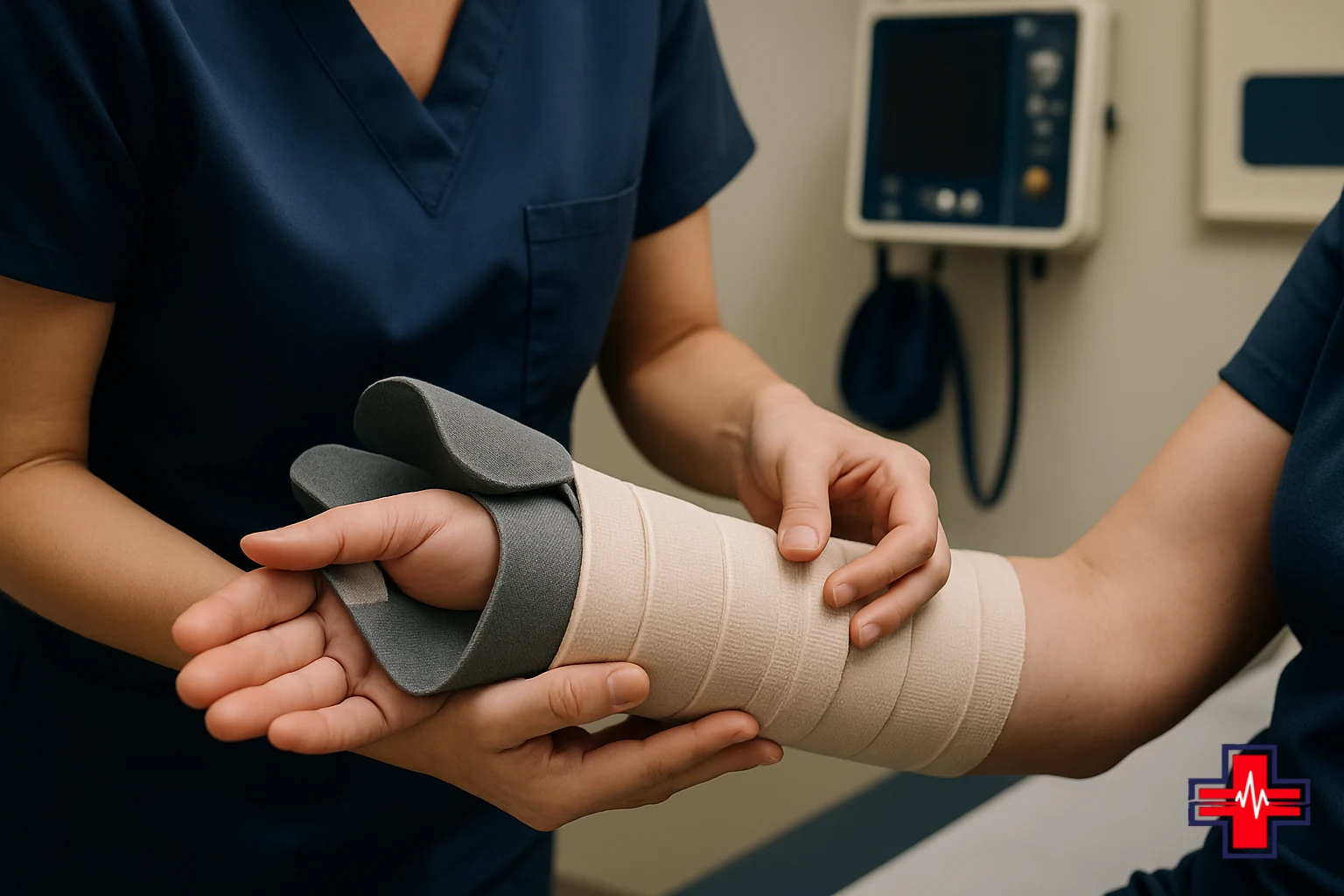
Proper immobilization is a cornerstone of broken arm first aid steps. A sling, splint, or cast prevents movement that could aggravate the fracture and cause additional injury to surrounding tissues, nerves, and blood vessels.
Sling Support: A triangular sling is one of the simplest and most effective tools for immobilizing a broken arm. To apply a makeshift sling, use a scarf, towel, or cloth folded into a triangle. Place the injured arm across the body at a 90-degree angle to the torso. Drape the cloth so that the forearm rests in the material, then tie the ends around the neck, ensuring the arm is supported without cutting off circulation.
Rigid Splinting: A splint provides firmer support than a sling alone. Foam or padded splints can be purchased at pharmacies, or you can fashion one from rolled newspaper, foam pipe insulation, or a pillow. Position the splint along the underside of the forearm and secure it with elastic bandages or tape, ensuring the elbow and wrist are supported and immobilized. The goal is to prevent any movement of the fracture site.
Arm Immobilization Board: For more severe fractures or upper-arm breaks, a rigid immobilization board may be necessary. This is typically applied by emergency personnel or medical staff. Do not attempt to create a complex splint if you lack training; a simple sling combined with rest is often sufficient until professional evaluation.
Regardless of the immobilization method, ensure that fingers, hands, and forearms remain visible so you can monitor for changes in skin color, temperature, or sensation. Numbness, tingling, or a blue or white appearance of the hand are signs of circulation compromise and require immediate medical attention.
When to Seek ER Care for Arm Fractures
While some minor arm injuries can be managed with home care and a follow-up visit to an urgent care or primary-care physician, certain situations demand immediate evaluation at an emergency room. If you are in the Fort Worth area or nearby communities such as Keller, Alliance, Saginaw, Haslet, Watauga, Roanoke, North Richland Hills, Haltom City, Bedford, Southlake, Grapevine, or Flower Mound, ER Of Fort Worth is available 24/7 for orthopedic emergencies.
Seek immediate ER care if:
- You suspect a fracture and cannot move or feel your hand or fingers normally.
- The arm is bent at an abnormal angle or the skin is broken.
- There is severe pain, swelling, or bruising that worsens despite RICE protocol.
- The hand or fingers are pale, cold, or blue in color—signs of reduced blood flow.
- You have numbness, tingling, or a pins-and-needles sensation in the hand or fingers.
- The injury involved high-impact trauma, such as a motor vehicle accident or fall from a height.
- There is an open wound with active bleeding that will not stop after 15 minutes of direct pressure.
- You suspect a fracture involving the wrist, elbow, or shoulder (upper-extremity fractures often require imaging and specialist evaluation).
An emergency room can perform rapid imaging studies, including X-rays, to confirm the fracture, assess its severity, and rule out associated injuries. Fall & trauma evaluations at an ER ensure comprehensive assessment of not only the arm but also potential injuries to the head, spine, or chest from the mechanism of injury.

Broken Arm Care at Home: Recovery Essentials
After an initial ER evaluation, diagnosis, and immobilization, much of your broken arm recovery takes place at home. Adherence to medical guidance and consistent care practices accelerate healing and reduce the risk of long-term complications.
Medication and Pain Management: Your ER physician or primary-care provider may recommend over-the-counter pain relievers such as ibuprofen or acetaminophen to manage discomfort and inflammation. Take these as directed, with food if they upset your stomach. If pain is severe or worsening despite medication, contact your healthcare provider or return to the ER.
Sling and Immobilization Compliance: Wear your sling or cast exactly as prescribed, even when at home. Resist the temptation to remove it early or "just move it a little"—each movement can disrupt the healing fracture. Ensure that the immobilization device remains clean and dry; if it becomes wet or damaged, contact your healthcare provider immediately for replacement or repair instructions.
Follow-Up Appointments: Schedule a follow-up appointment with your orthopedist or primary-care provider within one to two weeks of your ER visit. These visits allow monitoring of healing progress and adjustment of your care plan as needed. Imaging studies may be repeated at intervals to confirm proper alignment and progression toward full healing.
Activity Restrictions: Avoid any activity that puts weight on or stresses the injured arm. This includes lifting, pushing, pulling, or contact sports. Gradual return to normal activities should occur only under the guidance of a healthcare provider or physical therapist, typically after the immobilization period ends and imaging confirms healing.
Sleep and Comfort: Sleeping can be challenging with a broken arm. Position yourself so that the arm remains elevated and supported by pillows. Some people find relief by sleeping in a reclining chair initially. Discuss pain management options with your provider if sleep is significantly disrupted.
Complications and Warning Signs
While most uncomplicated arm fractures heal well with proper care, awareness of potential complications ensures you seek help promptly if problems arise.
Compartment Syndrome: This rare but serious condition occurs when swelling within the muscle compartment of the arm restricts blood flow and oxygen supply to tissues. Warning signs include severe pain out of proportion to the injury, pain with passive finger extension (straightening), hand numbness or tingling, and pale or cold skin in the hand. These symptoms demand immediate ER evaluation, as compartment syndrome can lead to permanent disability if untreated.
Nerve or Blood Vessel Injury: Fractures can sometimes damage nearby nerves or blood vessels. Symptoms include weakness, loss of sensation, color changes in the hand, or a lack of a pulse at the wrist. If you notice these signs at any point during your recovery, return to the ER immediately.
Non-Union or Malunion: Occasionally, a fracture does not heal properly or becomes misaligned during healing. This may result from inadequate immobilization, premature activity, or poor blood supply to the fracture site. If you experience persistent pain, visible deformity, or loss of arm function after your immobilization period, contact your orthopedist for repeat imaging and reassessment.
Infection in Open Fractures: If your fracture involved a break in the skin, there is a risk of bone infection (osteomyelitis). Signs include fever, increased pain, redness, warmth, or drainage from the wound. Report these symptoms immediately to your healthcare provider or the ER.
Swelling That Will Not Resolve: While some swelling is normal, persistent or worsening edema despite elevation and compression may indicate a blood clot or other vascular complication. If your hand remains significantly swollen for more than a week despite RICE protocol, seek evaluation.
ER Of Fort Worth: Your Orthopedic Partner
When a broken arm requires emergency assessment and care, orthopedic ER services in Fort Worth are available around the clock. ER Of Fort Worth, located at 4561 Heritage Trace Parkway, Suite 117, Fort Worth, TX 76244, is a 24/7 freestanding emergency room equipped with rapid imaging, experienced emergency physicians, and orthopedic specialists who assess and manage fracture care from the moment you arrive.
When you visit ER Of Fort Worth with a suspected broken arm, our team will perform a thorough physical examination, obtain X-ray imaging to confirm the fracture and assess its severity, and initiate appropriate immobilization and pain management. We also evaluate for associated injuries that may have resulted from the same mechanism of trauma.
Our compassionate staff understands that fractures are frightening and painful. We prioritize clear communication, explaining your diagnosis and treatment plan in terms you can understand. If your fracture requires specialist surgical intervention or inpatient admission, we coordinate seamless transfer to an appropriate facility.
For residents of Fort Worth and surrounding communities including Keller, Alliance, Saginaw, and beyond, ER Of Fort Worth is your trusted partner in orthopedic emergency care. You can call us at 817-945-4200 with questions, or visit us immediately if you suspect a broken arm. Consider using our online check-in service if time permits, so that registration is underway before you arrive.
Remember: If you are experiencing a life-threatening emergency, call 911 or go to the nearest emergency room immediately. Do not delay seeking care if you suspect a serious fracture or if circulation, sensation, or pain worsens.
Frequently Asked Questions
What is the RICE protocol, and how does it help a broken arm?
RICE stands for Rest, Ice, Compression, and Elevation. Rest immobilizes the arm to prevent further injury. Ice reduces swelling and pain for the first 48 hours. Compression with a bandage decreases fluid buildup. Elevation above the heart uses gravity to reduce swelling. Together, these steps minimize complications and ease recovery during the critical first days after injury.
Can I treat a broken arm at home without going to the ER?
Not all broken arms require immediate ER care, but a proper diagnosis is essential. If you suspect a fracture, you should see a healthcare provider for imaging (X-ray) to confirm the break and assess its severity. Minor, uncomplicated fractures can sometimes be managed as an outpatient with immobilization and follow-up care, but any sign of circulation problems, numbness, severe pain, or deformity requires emergency evaluation.
How long does a broken arm take to heal?
Healing timelines vary based on the fracture location, severity, and individual factors. Most simple arm fractures heal within 5–8 weeks of immobilization. More complex fractures, especially those involving the wrist or elbow, may require longer periods of immobilization and physical therapy. Your orthopedist will provide a specific timeline based on your fracture type.
What are the warning signs that my broken arm needs emergency care?
Seek emergency care immediately if your hand or fingers become pale, cold, blue, or numb; if pain is severe or worsening; if the arm is bent at an odd angle; if there is an open wound; or if you notice signs of infection such as fever or wound drainage. Any concern about circulation, sensation, or alignment warrants an ER evaluation.
Should I apply ice or heat to my broken arm?
Ice is the first choice for the first 48 hours after injury, applied for 15–20 minutes four to six times daily to reduce swelling and pain. After 48 hours, some people benefit from alternating ice and heat, though ice remains preferable for acute swelling. Never apply heat immediately after injury, as it can increase inflammation. Always wrap ice in a towel to protect the skin.
Is a homemade sling safe, or do I need a professional one?
A properly applied homemade sling using a scarf, towel, or cloth can be safe and effective for initial care. The key is ensuring the arm is supported at a 90-degree angle and that circulation is not compromised. However, if your arm is very painful, significantly swollen, or you suspect a severe fracture, seek professional evaluation so that a proper splint or cast can be applied.